I interviewed Sjef van Beers about Gamer Keyboard Wall Piece #2 on Saturday, November 15, 2025 at IDFA DocLab in Amsterdam, Netherlands.
This is a listener-supported podcast through the Voices of VR Patreon.
Music: Fatality
Podcast: Play in new window | Download
Rough Transcript
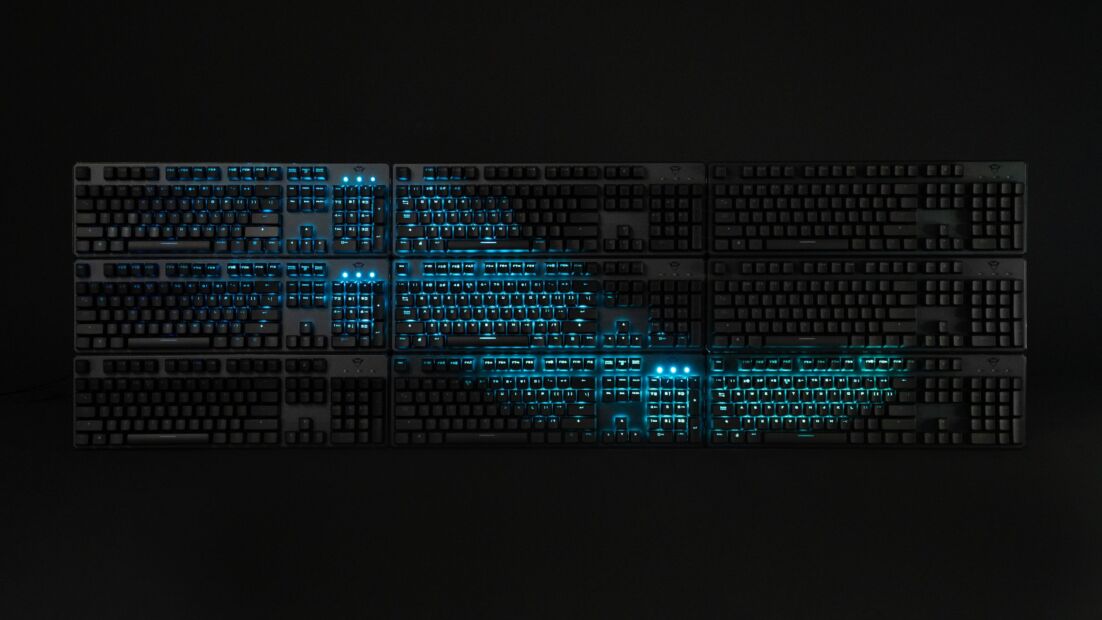
[00:00:05.458] Kent Bye: The Voices of VR Podcast. Hello, my name is Kent Bye, and welcome to the Voices of VR Podcast. It's a podcast that looks at the structures and forms of immersive storytelling and the future of spatial computing. You can support the podcast at patreon.com slash voicesofvr. So continuing my series from IFA Doc Lab 2025, today's episode is with Shefan Beers, who has an installation art piece called Gamer Keyboard Wall Piece No. 2. And so... This is essentially a matrix of like three keyboards that are kind of the light up keyboards that have LEDs underneath the lights. And so he kind of swapped it out and created his own like hardware and software interface so that he could basically translate these keyboards into like a low pixel count screen where he's able to have text that is scrolling by. So he's kind of reflecting upon kind of aftermath of Gamergate culture and kind of the stereotypical ideas of gamers, but also kind of more feminist critiques of this kind of incel culture. But also, you know, this idea of rejection and what's it like to have a rejection plot, which is, you know, from this book, a novel called Rejection, that was a part of the Paris Review, that a piece that's called The Rejection Plot, The Rejection Plot. So, yeah. So yeah, it's kind of reflecting on digital culture in different ways and kind of using these ways of kind of hacking hardware technology in a unique way. I also had a chance to actually go out and do this experience where you have these self scanners, which is essentially like in Europe, they have these scanners. We could go scan barcodes and then put the different objects from the grocery store into your basket. And then you're basically kind of have an automatic payment because you somehow connect your credit card to it. But yeah, He's able to take some of these self scanners and hack them so that when you're walking around the store, it's basically like a scavenger hunt. You're trying to find these different objects, you scan them and you get a video where he's kind of reflecting upon how this specific grocery store was trying to create things that was easier for you to get, you know, these different refrigerators and different technology. And he's kind of reflecting more broadly around how There's this promise that technology is going to make our lives easier, but at the end of the day, the amount of emotional labor that we do on these different domestic tasks hasn't really dramatically gone down. That's the deeper point that he's using these different technologies to explore these different critiques. So we're covering all that and more on today's episode of Voices of VR podcast. So this interview with Chef happened on Saturday, November 15th, 2025 at IFA Doc Lab in Amsterdam, Netherlands. So with that, let's go ahead and dive right in.
[00:02:49.855] Sjef van Beers: My name is Stefan Beers, I'm an artist from Netherlands and usually when people ask me like a type of art I make, I tell them that I work with digital media that one could encounter on a daily basis. So that could be keyboards, that could be self scanners in the supermarkets, that could be Instagram, it could be a web page, you know.
[00:03:13.595] Kent Bye: Great. Maybe you could give a bit more context as to your background and your journey into becoming an artist.
[00:03:19.157] Sjef van Beers: So I studied, I did my bachelor's at a department called Interaction Design in Arnhem, which has a couple of years ago renamed itself to Design Art Technology, which covers the contents of the studies a bit better, I think. And that was basically my entry point there. into my practice, it's not that much to it. I mean, it's a very nice and unique education, I think, that was very carefully set up and curated, I guess, you know, the teachers and the course. You know, so, like, through that, I, you know, visited media art festivals in the Netherlands, exhibitions, yeah, sort of got into all this.
[00:04:01.195] Kent Bye: And maybe you could tell me a bit about what the project is that you're showing here at the DocLab.
[00:04:06.280] Sjef van Beers: Yes, I'm showing Gamer Keyboard Wall Piece 2, which is the second work in this series. It's probably going to be a triptych. And the aim of the series is to take the online stereotype of the gamer and to come up with a new political identity for it. So all these works in the series will be a number of keyboards that are mounted on the wall. And as they are these gamer keyboards, they have these illuminated keys, you know, the backlit RGB keys. I put those keyboards together to then turn those keys into pixels, so to speak. So these keyboards become like some kind of low-res display on which I show basically a video that features text and so far little abstract animations, although this one has one with a little pill that's a bit figurative. Hopefully we're going to make a third version that's even bigger and that can do more elaborate imagery that would be fun.
[00:05:15.934] Kent Bye: Yeah, so you're sort of transforming these gamer keyboards into a screen or with pixels that is sort of like a low res version. But still, I was really quite amazed to see how high fidelity and the resolution that as I'm watching it, my mind just kind of surrenders to it just becoming another screen. So it was really quite a transfixing type of experience just to watch these lights and see. to see the messages that are coming through. And so maybe you could give a bit more context for what you had to do in order to get this to work, if you had to hack into the firmware or the software or how you're able to transform a keyboard into a screen.
[00:05:49.949] Sjef van Beers: Yeah, yeah, thanks. Yeah, so I did this together with Jelle Rijt, who works on hardware, and Ibo Ibelings, who works on software. And then this work was actually tidied up at the back of it by Sjoerd Mol. So what we did, like, I came to these guys, who I also know via my studies, by the way. I came to them and said, like, hey, I want to try this. Do you think... I don't know exactly how it went. I think it's just like years ago. I think I went to Ibo first being like, hey, I want to do this stuff with the keyboards. Do you think we can get into the software of these devices? And he was like, yeah, we probably can do it, but it's going to be quite some work. And then we're one software update or one... Keyboard taken off the market and then, you know, we have to do it all over again. So we got Jelle involved who, he can design PCBs, circuit boards. So what we did is I screwed open these keyboards, took out the original circuit boards. We scanned it. Jelle made a new design that we can then put in and it has the LEDs on. in the same places, but it also has some other components, like an Ethernet port, so we can link all these keyboards together. And then there's a microprocessor sending out the video, and it's basically like one big LED string. And to your point about the fidelity, actually this work, I'm really happy with this, because it's very readable, which comes in a big part thanks to the fact that we got the frame rate up. The first work was two by two keyboards, and it had a frame rate of 30 FPS. This one is 3x3 keyboard, so it's even more LEDs. But the frame rate is... The video I make on my computer is 120 FPS, but I think it's a little slower in person once it's on the keyboard, but it's between 90 and 120. Maybe it's 120. I'm not sure. I would have to check with Ibo. But, you know, it really works, especially for the text, because you have just so much more, like, in-between frames, so your eyes can sort of piece together. You know, like, I think it's called, like, aliasing or anti-aliasing. I don't know the exact term. But, yeah, basically the idea of, like, when you have text, you know, it's a curve, and you have to plot it on the pixels. And, like, yeah, because the text is moving, it's like, what do you call it? Like a ticker? Yeah.
[00:08:12.423] Kent Bye: Yeah, it's like the chyron at the bottom of a TV news. It's like the text that's just kind of scrolling by.
[00:08:17.227] Sjef van Beers: Yeah, like with the stocks on it or whatever. Yeah, like it's coming by. Yeah, so it's moving. So thereby, yeah, because you have so many frames, like for instance, like the curve of a lowercase a, you know, gets plotted on these non-evenly distributed pixels, like multiple times per second, which makes it better to read. Like I think that really helps. Like I've been able to put more text into this work, I think, even though the runtime of the work is lower than the first one. I mean, also the canvas is bigger, but yeah.
[00:08:47.779] Kent Bye: Yeah, and so it doesn't sound like you've actually changed any of the LED hardware. So all of the visuals that we're seeing, is that something that was already baked into these keyboards that you get these? Because you end up having lots of different colors, and I was just amazed of how you're able to kind of use the lights that are underneath the key. It feels like blur effects or effects that you're able to have much more fluid dynamics in a way that's like... As I look at it, it's like, okay, well, each key is going to be a pixel, but the pixels actually are kind of blurring in between the other ones where you're able to really paint with this light in a way that goes beyond just what I would expect with the light coming out of the keys. Because the lights are underneath the keys, you're actually getting this additional light that's flooding out that gives an additional kind of uncanniness in terms of like looking at it for a screen, but also something that my brain just sort of coheres as another screen. Yeah.
[00:09:42.785] Sjef van Beers: Yeah, I think, yeah, so I'm not sure if, like, my new circuit boards, like, I do think we have, like, the brightest, biggest LEDs we could fit in. I think, I'm not sure, like, maybe the original keyboards had, like, three millimeter LEDs and these ones have five millimeter. I don't, I'm not sure. Oh, so you did replace the LEDs? Yeah, yeah, yeah, we made, like, we made a new circuit board. Like, we took the old one out, scanned it in, and designed, like, yellow designed a new one. that then fits into these keyboards. But I guess in the lights, did you change the lights out or are the lights the same? No, there are new lights. They're in the same places. But yeah, maybe they're a bit brighter, but I'm not sure. I think they're usually quite bright in these gamer hardware, like RGB keyboards, yeah.
[00:10:30.902] Kent Bye: Yeah, there's also a little dead spots that are above the keys where you would normally have... It's on the upper right-hand corner where there's spots where there's not as much, but there's at least three lights that are there that also are extra bright that then... Somehow, or like as I'm watching, I was like, there should be black places there, but then the lights are brighter. So my brain just sort of like makes sense of it in a way that fills in the gaps. It was sort of a weird illusion in a way that I was expecting it to not work, but it manages to have extra brightness that then kind of fills in and my brain just kind of accepts it.
[00:11:06.024] Sjef van Beers: Yeah, there are these three indicator lights for when your caps lock is on, when your num lock is on, and a third one. On the original circuit board, these are not the flat LEDs, but the ones that are sticking out, like the little bulbs. Well, obviously, I took the original PCBs out, and they were gone. But then, yeah, we had to scan, and Jelle said, like, you know, like, there are lights here. Like, we can make, like, a tiny resin 3D print of, like, fake little bulbs. And we, like, glue that to the inside of the keyboards, and then we have the LEDs behind them. And then I did actually, in preparation of this, I did have to... dim those lights because they're so bright and the other leds obviously have the keys in front of them which you know dim them a lot actually if you would see the work without the fronts of the keyboards on it's incredibly bright So, yeah, for the final video, I put, like, this little mask of, like, some dark spots with, like, X number of transparency over just to, like, cover it up. But, no, yeah, I'm really happy. Like, when we got to, like, oh, we can actually do the resin print. Oh, we can, like, we were, like, oh, yeah, now we're getting into it. Now it's coming together. That was really fun. Yeah. And, yeah, now I'm happy with, like, it's obviously sort of tough to get text or imagery on there. So like any sort of extra little lights that I can use, I'm happy to have it, yeah.
[00:12:36.144] Kent Bye: Yeah, and so it sounds like you're making a video and that somehow there's a translation from the video that then gets rendered into what are these pixels. Or just curious how this process works of instead of rendering a single pixel, it's somehow have to cover more space. Or how do you do that translation from the pixels into this kind of LED approach to get these visuals?
[00:12:57.935] Sjef van Beers: Yeah, so this is what Ibo Ubelinks worked on mostly, the software developer I collaborate with. If I remember correctly, I think he first made a script where he could use a vector file that I think I already made or Jelle made for the PCB where we have the coordinates of every LED on the keyboards. And then he places those on a canvas in the same way that the keyboards will be mounted together on the wall. And then from that, he gets all the coordinates of all the keyboards. And then he made a script where I make a video of a certain resolution. And then for every coordinate, for every place where there's an LED, he basically does eyedropper tool in Photoshop for every LED, for every frame. And I think it becomes, in the end, this really long text file of just... Yeah, a really long string of color values that the Raspberry Pi in the piece can read and send out to this LED string.
[00:14:03.177] Kent Bye: And because there's colors, is there also length of, like, turn this on to this color for this length? I'm just curious how, like, it sounds like there's some sort of unique code that's being sent over to render it out. And I'm just curious if you just hand over the video and then the video is translated into somehow this kind of intermediary machine code that then is able to translate it in a way that is able to, to the best of its ability, match what the video is.
[00:14:28.004] Sjef van Beers: Yeah, yeah, yeah. From what I understand, because EvoMate is super easy for me to use, all I do is I render the video. We have this script, and it's even baked in that as soon as it's done rendering, it gets sent to Raspberry Pi. So yeah, as far as I know, if I'm remembering correctly, it really just picks all the colors. So for every frame, it just has all these color values for every LED. So I think it's 109 LEDs per keyboard. So multiply that by nine, multiply that by 120 frames per second for a little over five minutes. It's like tons of numbers just being sent through the work, yeah.
[00:15:08.857] Kent Bye: OK, so because it's like 120 frames per second, it's just, you know, is it on or off, or what value it is, and what color value from like a, is it like RGB from 0 to 255? Yeah, yeah, I think so, yeah. OK, so, wow, OK. And so it sounds like on your end that you are able to then do most of your work on the video, and then make the video, and then how long does it take to be able to take like a rendered out video and then translate it into the machine? I don't imagine it's operating in real time, or can it run in real time?
[00:15:37.705] Sjef van Beers: I think, like, theoretically it could, but the way we have the software right now, it takes quite a while to translate it, so to speak. Yeah. Now, I think I updated the work this week, and I think it takes, like, 15 minutes or so for this 5-minute, 25-second video, yeah. Okay.
[00:16:02.974] Kent Bye: All right. So let's talk a bit about the content of the piece because you're showing text and there's a number of different quotes and phrases. And maybe you could just expand on this starting point of wanting to create a new political identity for gamers. And just give me a little bit more context for where you began with the different type of content that you wanted to feature.
[00:16:20.928] Sjef van Beers: Sure, yeah. I think... I'm not sure exactly when this started. I think it was at least five years ago. Over five years ago. I was always drawn to this hardware of this gamer subculture. I think it's very beautiful, very productive aesthetically. I'm appropriating it in my work, of course. I think it works very well. And I'm interested in... politics, I guess, to a certain degree. I'm interested in the sort of relations between media and politics, the internet. So obviously there's Gamergate in 2014, which sort of has this long tail into, yeah, what we see today still, I guess, unfortunately. I kind of relate to a certain extent to like this sort of incel type gamer stereotype guy. Like I can sort of relate to like loneliness or maybe being a bit socially inept. Like they kind of lose me at the point where you sort of resort to like violence or aggression or like that sort of stuff. Or like, yeah, just getting mad at other people instead of looking at yourself. So I found those things very interesting. I think also a lot of political debate, especially in online circles, stuff like Twitter or whatever, in comment sections, is very counterproductive. And I kind of like to approach things from an empathic kind of view, from sort of good faith perspective. Yeah, these things just came together. I don't know what came first, if it was the fact that a gamer keyboard essentially is a screen, or this idea that, oh, I want to work with this subject matter. But at some point, it came together and turned into this series.
[00:18:16.434] Kent Bye: Yeah, you mentioned isolation, and there's a quote that's in your piece that is around isolation, and maybe you could just elaborate on that quote and what that was really getting at.
[00:18:26.388] Sjef van Beers: Yeah, I think there's two sentences that I put together. The first one is, isolation is... I have to remember it right. I wrote it so long ago. Isolation is an incubator and accelerator for radicalization, which I think I took from a Twitch stream of Joshua Citarella, the artist and podcaster, I guess now. who's been doing extensive research on online radicalization, on online politics. Started this Discord server art community, doing research that I'm also in. So yeah, I think it came from one of his lives. I tried to look it up. I tried to sort of like, because the entire work is patchwritten. So I really like to have every reference ready. But this is the only one where I couldn't exactly trace it back. But I'm... 99% sure that it came from one of his live streams. It was about COVID, I think, but I think it applies in a broader sense. And then the second sentence that I paired with is, isolation is a tool of psychological terrorism that is deployed daily on teenage boys. And that comes from bell hooks, the will to change, which is all about masculinity and non-patriarchal ways for men to exist.
[00:19:41.849] Kent Bye: There's also a quote that was around alienation or like there's a story of rejection and that my recollection of it was something along the lines of the story of rejection is kind of a self-fulfilling prophecy. Or you can always go back to that where it doesn't have a plot. It's just like the rejection becomes something that is ruminated on or maybe you could just elaborate on what that was.
[00:20:04.215] Sjef van Beers: Yeah, yeah, I think it's about, like, the rejection plot is, like, it doesn't exist because, you know, like, it immediately stops, so then the person who's rejected has to sort of fill it in themselves, and I think it ends with, like, your life can't move forward, so it moves sideways. That comes from American writer Tony Tulithamuthi, who wrote, his second book is called Rejection, and it's this novel in stories, so it's all fiction stories about rejection, and then From what I understood, there was one chapter that was going to be non-fiction, but then he cut it from the book and he published it in the Paris Review. And that sentence is from that non-fiction chapter, which is really good also. Yeah, so he talks about rejection as a plot device, but I think that sentence resonated with me. Yeah, I think it sort of relates to... Maybe not even, I think, the way he talks about rejection in that piece or where that sentence is in the article is very much about, like, an interpersonal rejection. But I think it could even be broader, like, if you have the sense that you're rejected from society or, like, whatever. Yeah, like, you can sort of, like, isolate yourself, like, have this thing that, like, your life is not moving forward. Yeah, to me it made sense to put it in that place, yeah. Yeah.
[00:21:20.905] Kent Bye: Yeah, and the last quote that I wanted to mention, and then we can sort of talk more around the themes, was a tweet that someone had written that was around, like, if you are going to go have sex with a dude and he's got two screens and a light-up keyboard, then just leave. And then it shows how many retweets and likes that it got. And so maybe just elaborate on that tweet as kind of a part of the discourse. Yeah.
[00:21:42.952] Sjef van Beers: Yeah, yeah, two monitors and a light-up keyboard. I think that became sort of a meme. And this tweet was like the earliest example of that phrase that I could find online, you know, with the Wayback Machine and whatnot. It's kind of hard to find these things online. Because I think the account has been deleted, searching Twitter has become really tough once Elon Musk took over, especially for stuff that's a bit older. But yeah, I think that meme contains, or that tweet contains, like the work opens with that tweet. I think it portrays this online stereotype of the gamer quite well. Simultaneously, it also affirms some of these beliefs, like these incel beliefs about sexual market value, you know, the idea that your looks make up your value, your sexual market value, but then also, like, yeah, you know, the way you dress or the way you, well, apparently, like, have gamer hardware in your room. Also, I think it's just very funny. I think I have like a Keep an Arena board for this project, which I titled Two Munners and a Light Up Keyboard. I feel like it's so exemplary of this stereotype that I'm trying to play with.
[00:23:00.034] Kent Bye: Yeah, it's interesting because my first introduction to this work before I saw it was in the conversation I had with the co-curators of IFA Duck Lab and then Nina Van Doren. Her description of it was that there were feminist critiques that were kind of deconstructing different aspects of gamer culture. And so when I saw it, I was like, oh, OK. I sort of was orienting towards this kind of like feminist critique perspective. But as I listen to you, it's actually, well, maybe you are kind of more identifying with that incel. Or I'm sort of I guess as I was watching it, I was primed by that conversation. But because as I'm watching it, I'm not seeing who is saying things like who the quote is from. It's just sort of an attributed. And so I'm seeing these texts. passed by and I'm sort of like coming to a realization of what you're trying to say and then as I'm talking to you I'm saying oh well maybe there's like a little bit more nuance or differences of how you were juxtaposing him so just curious to hear a little bit more elaboration on that yeah well I think
[00:23:54.992] Sjef van Beers: I don't want to make any illusions about my work changing the world or whatever, but I do want to keep... Also writing the blurb for the exhibition, it's hard with this kind of stuff because I don't want to have people already form an opinion about the piece before they actually encounter it. And this is kind of touchy subject matter for that, I guess. Like for me, it's important that you can just see the work without reading the blurb, like without reading the exhibition text and sort of get what it's about. For me, it's important that people are not immediately turned off by the work. Like, I mean, there's bell hooks quotes in there, like this is feminist theory, but I don't like to put in a word like ideology or a word like patriarchy just because I think that a lot of people are like certain people that I would still like to work to resonate with would dismiss it like on sites. And I don't want to exclude those people from enjoying the work. I think those people could benefit from seeing the work. Yeah, so I'm very careful with where to cut off these quotes, how to put them in. I think I was very happy I did a kind of last minute update this week that I think there is a sort of linear through line now through this piece, especially also because it's like the second one, like the first piece is really just... It's a poem, it could maybe even be like a Reddit or forum post about like this neat incel basement dweller guy and like sort of more mental health stuff, like isolation, anxiety. And this piece is really like sort of gaps, yeah, sort of bridges it to the third work where it's like we start from this, yeah, like rejected incel kind of guy, but then we also end with like a more constructive, better way of being person. Yeah, so it was hard to piece it all together, but in the end I think I'm content with what it says now.
[00:26:08.427] Kent Bye: Yeah, they sent me a little preview video of it as well that I saw. And I was like, I think I need to just like see it in person to see it. And I think to actually see it and see the light and lighting effects, because anytime you try to capture it, any sort of mediated version of it, it's going to have some sort of loss of the fidelity of that light and the impact of the light. But I do think that what you're able to create is this real light show of sorts where you're able to kind of see the text clearly. And it's a 3 by 3 matrix, which ends up being around the 16 by 9 type of aspect ratio. And as you move forward, do you hope to expand that out? Or do 4 by 4? Or are you happy with this form factor?
[00:26:46.325] Sjef van Beers: Yeah, we do have circuit boards for a 4 by 4 iteration in my workshop. It needs soldering done, whatever. yeah so definitely making that and yeah again like in theory it could be extended endlessly i mean we'll run into some stuff with like frame rate and we'll have to maybe do like synchronization with a second microprocessor or whatever but it also like gets expensive so like for now i'm really happy that i'll probably be able to make this 4x4 version which hopefully can also contain a bit more detailed imagery would be nice, interesting to play with. So I'm looking forward to that. Yeah, I would totally be up for making a giant wall. It would seem cool, but there's no immediate plans yet.
[00:27:31.618] Kent Bye: Yeah, and just to elaborate a little bit on the themes of Gamergate, but also feelings of isolation and rejection, I'm just curious to hear any more elaboration on your sort of relationship to gaming, but also where you were at when the Gamergate was happening, and your kind of read on what that was for people that may not be familiar with it, and how you start to interpret that. Why is that something that you're drawn to? to now in terms of it being kind of an early indication or warning sign of where this turn towards this certain type of politics that was maybe a first indication of something now as we look back on it.
[00:28:07.017] Sjef van Beers: Yeah, yeah, yeah. So, like, okay, so I always, like, very carefully say it's about the online stereotype of the gamer. Because, like, also, like, you know, the term Capital G Gamer, that's... It's so, sort of, been through so much. You know, it's a sort of term that's been, I guess, at some point, maybe still is... sort of trying to be gate-capped by a certain type of person, even though I think when you look at research, a large majority of any type of people does engage with video games on a somewhat regular basis. Like, I have a PlayStation at my house, which hasn't been turned on in months, but... Like, yeah, like, I don't know, I'll play a game on my phone. Like, I've never identified with the label, for sure. But, again, it's more about this online stereotype. It's more about, you know, like, these jokes that I would see on my Twitter feed. I think that's what I'm very much engaged with on a daily basis. So, yeah. Yeah. Like, that's definitely how I sort of approach the work. And then in terms of gamergating, in terms of political stuff, yeah, like, to me, like, online culture, like, I'm very interested in online culture, the way it intersects with politics. And I think this is, like, yeah, what you said. It was, like, the earliest, like, the first seeds of, like, the sort of system we're in today, which makes it so interesting. And also it's been, like... I think people describe it like Gamergate as a playbook to describe what it was. It was like Gamergate was like when journalists put out like feminist critiques of video games and then a certain subset of online people were upset with that. They had the feeling like, you know, the feminists are coming to take our games from us. So then they started this sort of online hate campaign campaign. like just cooking up a storm which then was reported about in media and sort of created this narrative and it was blown out of proportion like they sort of had these tactics to cook up a media storm even though there wasn't that much substance or like not that many people were upset but it was yeah like they sort of had this way of gaining traction online. And I think I've seen it being called like a playbook that keeps getting added to, which is now being used for a lot of reactionary conservative political movements.
[00:30:36.877] Kent Bye: Yeah, and there's also reminded of a quote that was in your piece that was around these teenage Xbox players who always knew the right slur to use to describe someone and that they were almost empaths. Maybe you could just elaborate on that quote.
[00:30:51.897] Sjef van Beers: Yeah, I wanted to just have one more sort of funny internet culture reference in. And I had this screenshot of a TikTok that said, why do these little boys in Xbox parties always know what slurs to call you? And then the top comment says, they're empaths. And I sort of like that. I mean, it's also a bit cynical, maybe. It's a bit ironic. But I kind of like the fact that you can recognize empathy in these people that are being mean. I think that's meaningful. I think that can be beautiful. So, yeah.
[00:31:25.973] Kent Bye: Yeah, it's interesting to think around the meme culture, but also shitposting and the ways that it's able to reflect different aspects of our culture or what's happening online. Yeah, I'm just curious what draws you to this kind of online culture in a way that you're trying to reflect upon it and take it out of the... One of the things that Nina has said was that Your piece is taking these things that you would normally see in a screenshot or on social media, but it's in this kind of artistic context where you're able to decontextualize it but also recontextualize it in a way that as you're putting it together in this kind of really beautiful painting with lights, with LED lights, on the context of these gamer keyboards, you're sort of like creating a new medium under which to contextualize some of this stuff. So I'm just curious to hear kind of your interest in this online culture and the ways that you use your art to kind of recontextualize it.
[00:32:15.999] Sjef van Beers: Yeah. Yeah, I mean, like I'm naturally drawn to this online culture, but it's super interesting, fun to engage with. I think it's also meaningful because it's a very large part of a lot of people's lives, even though it may be. And I mean, this has been changing over the past couple of years, but yeah. like, you know, usually wouldn't get reported on or taken seriously the same way a lot of other stuff does. And I mean, it's like, there's also been like almost a pendulum swing where it almost then got, you know, overestimated compared to like, I don't know, cable TV or whatever. But yeah, no, I think it's always interesting. It's fast moving. It's, yeah, it's very interesting to me. And I think in terms of, yeah, recontextualizing it in the art, I think... Yeah, like, I'm interested in that. I mean, I love, you know, new media arts. Like, again, this is, you know, the discussion about the terms, what you would call it. You know, like, you know, from, like, early 90s net arts to, like, whatever is happening today. Yeah, I love that stuff, and I think it's interesting to work with, yeah, with these media that we encounter every day. I don't exactly have, like, elaborate tactical plans about, like, the way I sort of appropriate or like preserve things in my work I like what is it like I have this arena board you know like when I encounter something I take a screenshot I upload it where I paste the link and I just like collect the stuff that sort of resonates with me that I think makes sense that's interesting and then I reflect on it and sort of try to make sense of it through the work
[00:33:58.533] Kent Bye: Yeah, that makes sense. Love to hear a little bit more of a sneak peek of your playroom that you're going to be having here. So with DocLab, you have these more experimental prototypes. And Casper shared a little bit around what this experience is going to be. And I'm a little hesitant to even hear more, but I'm going to be there, and we're not going to have a chance to talk. And so I'm just kind of curious to hear how you're sort of working with other forms of technology to either hack into it or recontextualize it in different ways.
[00:34:26.638] Sjef van Beers: Yeah, yeah, yeah. So I'm assuming that a large part of the people listening to this podcast is from the U.S.
[00:34:33.821] Kent Bye: Yeah, yeah.
[00:34:34.561] Sjef van Beers: Yeah. So maybe like in the supermarkets here, we have these things called self scanners. Like I think everyone's familiar with the self checkout, you know, the touch screen and whatever. But we also have these like handheld barcode scanners that you can take with you into the store and you can like scan the products and then put them in your bag immediately. Like it would sort of save time at the checkout. And I've been working with those for the past year, one and a half year. It's like this bigger research project into the relations between the supermarkets, domestic labor and regular labor, or paid labor, I should say, and technology. And it sort of comes together in this self-scanner project. So I've made already various video installations with these scanners. I have this lecture that is controlled by one of these self-scanners where I unpack a shopping bag and I scan every product and it controls my slides, which I also do at the playroom. But then, yeah, ultimately the end goal, of course, would be to take these self-scanners back to the supermarkets, like to their natural habitat, and then have some sort of intervention with them where they don't operate the way that we're used to, but they do something else. So yeah, that's been like, again, I'm working with Ibo Ibelinks here, who's helping me with software. Like that's been on our list for like at least a year and we never got the chance to do it. But now for the playroom, we, yeah, we, we made the first demo, the first proof of concept and, So that's what we're going to do. I'm going to do the lecture first, and then we're going to hand out the scanners. We're going to walk to a nearby Albert Heijn supermarket. And yeah, it'll be this little scan and click type of game, where it's like you get instruction, like a description of a product you're supposed to scan. And once you find and scan it, you'll be rewarded with a little video. And we repeat that for like six videos or so.
[00:36:29.867] Kent Bye: So because I'm from the United States, I haven't been familiar with these self-scanners. So is there a certain brand that they all use? And as you do this installation, it sounds like you're going to be handing people your own scanners. When we're in the grocery store and they see these scanners, are they going to think that we're stealing them? Or maybe you could just elaborate on a little bit of this process.
[00:36:51.275] Sjef van Beers: Yeah, and it's just been very fun to work all out with the producers of IDFA.club as well. Luckily, the supermarket we're going to doesn't have self-scanners. I don't know if they never had them or if they don't use them anymore. Also, we were thinking of just putting stickers on them. And I don't know, they've written me an official letter on IDFA paper that says this is an artistic experiment. It's very nice of them that they did that. But Yeti self-scanners, it's actually a fun story. I've been diving into this for a while. It is one company that makes them and it's been quite interesting because I think it's an American company that makes them now called Zebra. It used to be called Symbol, but I think they merged. The funny thing is that they actually started with the Albert Heijn in the 1980s. They started with the very first prototypes. And then I think the real widespread self-scanner was this model from the 90s. And it was a collaboration between TNO, which is this Dutch government-funded organization for technical research, which can be applied for companies. So it's been a collaboration between that government organization, the Albert Heijn, that supermarket chain, and then this American company symbol.
[00:38:06.067] Kent Bye: Okay. And so I'll have my own experience with it because I'm going to come in and come check it out. I'm really excited to see what that experience is. But it sounds like, in essence, you're using these different ways of kind of reflecting on the relationship between technology and labor. I know that once Jeff Bezos and Amazon bought Whole Foods United States, then a lot of the cashiers moved into more self-checkout. So just the ways how these billionaires like Jeff Bezos and just – capitalism in general than just as a way that you can use of technology to kind of displace labor in different ways. And so any other kind of further elaboration on the themes that you're trying to explore there?
[00:38:46.294] Sjef van Beers: Yeah, I think it's definitely interesting. Also, when you consider the work of the cachet, it's not that old. It's a couple... The person who would scan these products for you, barcodes have only been around for 50 years or so. This work has been changing a lot over the past 100 years, and for me... The research draws a lot from this book called After Work by Helen Hester and Nick Cernick, which sort of is about when we talk about automation, we always talk about the automation of paid work, but not of domestic work. But if we want to move to a fully post-work society, what would that look like? What would that entail? How would we sort of have to shift things around? So that's been a big, big part of my inspiration. And they mentioned one historian called Ruth Swartz Cohen, and she did this research I think in the 70s, where she sort of compared the hours that people would spend on domestic labor before and after domestic appliances entered the home, which she called the industrial revolution in the home. And turns out that the amount of hours we spend on domestic work didn't decline that much. Like really from like, just like two hours less on like, I don't know, like a 26 hour average or something. Which is interesting, because it means it's definitely easier to clean your house when you have a vacuum cleaner, or it's easier to cook when you have an oven or a microwave. But yeah, it means that a lot of standards changed, and then I think that a lot of the way these standards shifted, like the supermarket helped to shift those. Nice.
[00:40:21.133] Kent Bye: And what's next? What are you working on here next?
[00:40:24.608] Sjef van Beers: Currently? Ooh, no, like, really, like, these two projects that we're talking about now, the Gamer Keyboard series and the Self Scanner stuff, like, those have really been, like, my two big research projects, and both of them sort of coming to an end. Like, the Scavenger Hunt thing is really, like, the last iteration we want to do with... with the self-scanners and these, yeah, this gamer keyboard wall piece series. I'm really looking forward to making the third one. Like, really want to get that going. Like, the circuit boards have been in my workshop for more than a year. Like, I really, like, I never get around to it. I really have the time now that the second one is completely finished. Yeah, and after that, I kind of want to just take some time to think about what's next, really, yeah. I don't have anything on the shelves just yet, but, yeah, sure, things will come up.
[00:41:08.679] Kent Bye: Hmm. Awesome. And finally, what do you think is sort of the ultimate potential of these forms of immersive art and entertainment and what they might be able to enable?
[00:41:19.984] Sjef van Beers: Oh, like, it's funny that you say immersive arts, because that's like, again, like, back to this, like, sort of the discussion about the terms and the words. It's, yeah, like, I never consider that really. To me, it's really just like, I don't get why you wouldn't work with contemporary media. Like, if you want to make arts in any way, shape or form, like, why not consider it? I'm not saying everyone should be making software interventions or hardware installations, but you reflect on the world you see around you. To me, it doesn't make sense to not then reflect on the stuff I see online, the devices I see around me.
[00:42:05.575] Kent Bye: Yeah, and just as a reference of the conversation we had before we started recording is because my podcast is named The Voices of VR Podcast. And there's a way in which that, you know, your piece obviously isn't VR. And then it's in this kind of liminal interdisciplinary space. And so I think with Casper Sonnen and Nina Van Doren, when I was having the conversation with them as the co-curators of IFA DocLab, you know, they have this similar situation where they're asking artists and people like yourself to come to a documentary festival and they're like, well, how's this documentary? And so they've started to use the term perception art to describe this kind of new emerging forms of immersive art, immersive entertainment, immersive storytelling, and, you know, things that I've been covering in the context of VR and XR, extended technology, augmented reality, mixed reality, artificial intelligence, all these things are kind of blurred together, which I can call XR, but XR is a really weird term. So, I mean, I guess it's a larger comment of me trying to figure out, like, do I rebrand what I'm doing to sort of cover all of this stuff? But for me, I think of it as like immersive art as a nice umbrella term that is kind of more neutral and I think explains it and also immersive storytelling. And that within that, there's lots of other things that are also in there that just happen to be like, the more that I understand what's possible with the technology, there's still a part of that that I'm covering, but also seeing how artists like yourself are kind of using all of these interdisciplinary modes to explore. So yeah, I don't know if you have any other thoughts or comments on describing or finding a place of where your art fits in all these different intersections of things that are happening right now in the art scene.
[00:43:39.542] Sjef van Beers: Yeah, I think like when I'm forced to sort of like pick a lane, I kind of usually go with like new media artist, new media art, which, you know, again, like it's also so many problems arise with that term. You know, what is new? You know, every artistic medium is a medium. So like then why media art as I guess also it's a bit of a more old fashioned term maybe compared to immersive. I don't know.
[00:44:05.405] Kent Bye: Yeah. Last night when Casper Sonnen was introducing DocLab 2025 edition, which is the 19th edition, he's thinking back to 2007 and saying, oh, when we started, it was new media and we're still calling it new media. And he's like, is it really even new anymore? So yeah, there's like transmedia was a term for a while. And, you know, there's different waves that this emerging technology mashed up with kind of ways that people are using it for art and storytelling and the different terms that have been over the years. So yeah, it's something that I've struggled with as well.
[00:44:35.060] Sjef van Beers: So yeah, it's just like, like stuff with a plug, you know, it's like hard to run and like, or something goes wrong at exhibition and like collectors don't like to buy it. And yeah, no, yeah. It's hard to sort of come up with a, with a nice term for it. Yeah.
[00:44:49.324] Kent Bye: Nice. And is there anything else that's left unsaid that you'd like to share with the broader community of emerging technologists, creative technologists, XR creators, immersive artists, artists in general, whatever terms they self-identify as? Any final thoughts or anything else that's left unsaid you'd like to share with the broader immersive community?
[00:45:07.259] Sjef van Beers: Ooh, I think we covered so much. Nothing from my end here. Thank you so much.
[00:45:12.944] Kent Bye: Yeah, thank you. Yeah, I really enjoyed your piece. And, you know, one other, I guess, associative link that comes up is this light and space movement where the use of light to kind of express art. There's something around the LEDs and the way that you're using the keyboard. And it felt like this evocative way of how light is all kind of blending together in a way that was surprising. And because I have an expectation and it's recontextualizing that expectation of what's even possible with these technologies that we use each and every day. So yeah. Yeah, and also just the deeper themes that you're exploring is also kind of a reflection on online culture right now. So just appreciate the inquiry and recontextualization of some of these different themes. And, yeah, just an opportunity to sit down with you to help break it all down. So thanks again for joining me here on the podcast. Yeah, thanks for having me. That's all that we have for today, and I just wanted to thank you for listening to the Voices of VR podcast. If you enjoyed the podcast, then please do spread the word, tell your friends, and consider becoming a member of the Patreon. This is a listen-supported podcast, so I do rely upon donations from people like yourself in order to continue to bring you this coverage. You can become a member and donate today at patreon.com slash voicesofvr. Thanks for listening.