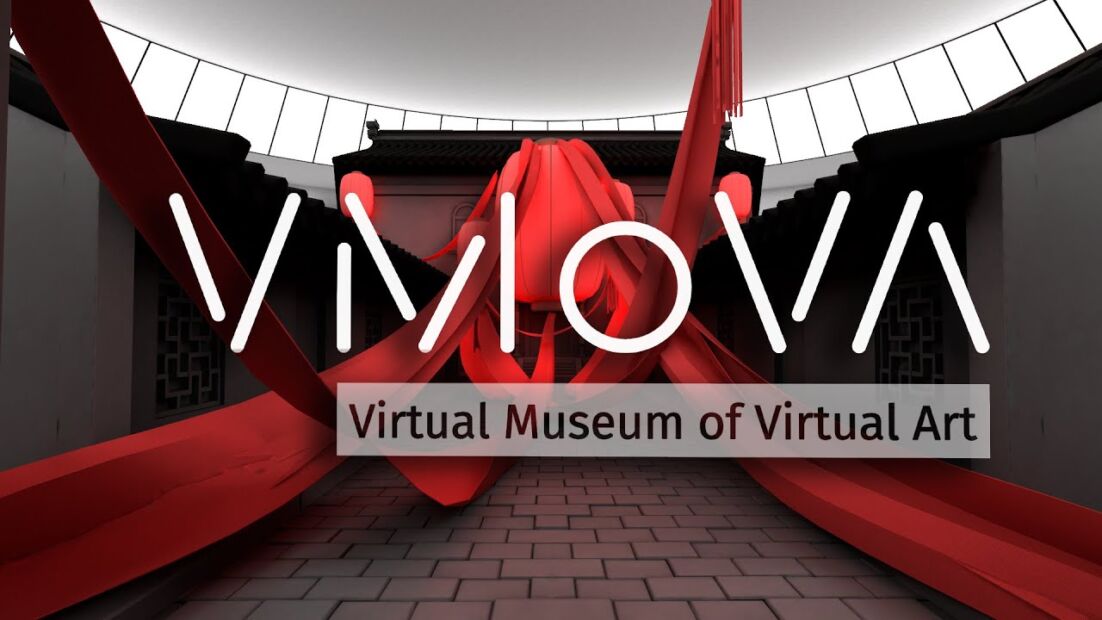
I spoke with Jessien about his Virtual Museum of Virtual Art as well as his latest What is Virtual Art? VRChat World exhibition as a part of my Raindance Immersive 2025 coverage. We also talk about his previous Raindance award-winning world Thickness Of Calligraphy. See more context in the rough transcript below.
This is a listener-supported podcast through the Voices of VR Patreon.
Music: Fatality
Podcast: Play in new window | Download
Rough Transcript
[00:00:05.458] Kent Bye: The Voices of VR Podcast. Hello, my name is Kent Bye, and welcome to the Voices of VR Podcast. It's a podcast that looks at the structures and forms of immersive storytelling and the future of spatial computing. You can support the podcast at patreon.com slash voicesofvr. So continuing my coverage of Raindance Immersive 2025, today's episode is with a piece called What is Virtual Art? Part 1. So this is by Jessian, who runs the Virtual Museum of Virtual Art, which has previously had a piece called The Thickness of Calligraphy, which was at Raindance a couple of years ago and was actually the winner of the Best Immersive Art Experience. So highly recommend that you go check that out because that's also an amazing experience. But today's episode, we're going to be talking around where this all began, which is actually the first project that Jessian started to work on before he did The Thickness of Calligraphy piece. And it's featuring four different artists and he's got this conceit where you're walking into this museum. And so his background is as an architect. And so he's creating these exhibition spaces to not only explore the topic of what is virtual art, but starting to really explore the concept of how to actually exhibit this virtual art. And so building these custom worlds within this VRChat world and then kind of stitching them all together, creating this whole pathway that gives you this immersive experience that is allowing you to get a direct experience for some of these different conceits of perspective, of shadows, of the fourth episode is looking at these huge sculptures and finding new ways of creating these pathways as you walk up and finding ways to kind of animate everything around. And it's just a really brilliant piece that is amazing. exploring all these different concepts of not only what is virtual art within itself but also new pragmatic ways of exhibiting that virtual art so we're covering all that and more on today's episode of the voices of vr podcast so this interview with jessian happened on wednesday july 2nd 2025 as part of my broader brain dance immersive 2025 coverage so with that let's go ahead and dive right in
[00:02:06.850] Jessien: Hi, my name is Jesse Yang Huang, and I'm the curator of MoVA. MoVA is Virtual Museum of Virtual Art, which is a virtual museum that usually holds virtual exhibitions on VRChat platform. And I suppose we have already held two formal exhibitions by now. Yeah.
[00:02:29.485] Kent Bye: Great. And maybe you could give a bit more context as to your background and your journey into VR. And, you know, one of the things that I'd like to do on the podcast is get a bit more context as to different backgrounds that people have, different design disciplines that they're bringing in, just to get a sense of, you know, what kind of influences you're bringing into the art that you're making within VR.
[00:02:52.799] Jessien: I actually started to use virtual reality from about 10 years ago in 2016. And at that time, I was a student in London to learn architecture. And at the very beginning, I just tried to use VR to do some simple spatial experience. to let the teachers and the students to try my architectural design, the building, the virtual building, before we can really build it. And after that, I actually was influenced by the tech because it's already beyond my imagination at that time. So after that, I think the simple spatial experience is not enough for me. So I tried to combine with games and movies. This is also two main hobbies in my life. So I tried to make some interactive in the experience and to add some storytelling stuff in the experience. But at that stage, it's totally student projects. at most and after we graduate i invented some sort of algorithm it's what we call redirected walking algorithm the purpose is to solve the people who feel dizzy or feel uncomfortable when they spend too much time in virtual reality many people can stay only like half an hour at most And we try to find a way, some software way, not hardware, to redirect the people's sense of direction, because actually we learned about space. So we know how inaccuracy people have to judge the direction. And the algorithm is our student project, but we finished it and we got some invest from HTC so we go back to China to found a company with two other students in my class and we three of us we both are Chinese and we started the company we do some company stuff at the very beginning we only tried exhibitions because at that time VR is not so well-known in people's daily life only hardcore tech and So the museum or the art center will be the very welcome place to showcase our stuff. So we try to have some exhibitions combined with art because we also try to express some ideas or some concepts of our own. And after that, we also do exhibitions in a shopping mall. Some shopping malls are welcome to have some art installations. So we also do some of these kinds of projects. And after that, we have a chance to collaborate with a movie director. So we actually do some formal projects with movies. And it's about 2018 now. We go back to London and we met Maria. And at that time, our project also won an award on Renaissance Immersive at the very early stages. But because that was a multiplayer experience, so it's not... So many people didn't try this kind of stuff. It's also local-based entertainment stuff. So people not only have the VR experience on the chair, they work in a room, use our algorithms so they can... only use a small room, but they can work in a very large virtual space. And they didn't realize it. They don't use the controller. They just use their foot. Yeah. And after that, we also do some project with game companies because VR games comes to be more popular like 2019. So we do more and more projects with different creators. And we also had our own, some sort of LB brand. We tried to collaborate with the theater, movie theaters. So we set our experience hall, we call that, but it's the room about 100 square meters. And we set up like six or seven VR headset and backpack computer to sell the tickets to the movie audience. They will have the hour VR experience, not the movie stuff. But we met COVID very soon. So actually, we tried to find some new ways. During the COVID time, I tried to use VRChat. Actually, this is the first time. And I visited the Rain Dance Immersive and other immersive festivals' wards on VRChat. And I was wondering, why couldn't we have... some art experience there. So actually this beginning idea of the Vimova stuff. And for now, I, sometimes I do some VR projects as a VR director, but at the same time, I also do the virtual exhibitions. Yeah. Okay.
[00:08:17.592] Kent Bye: Great. Yeah. That gives a lot of great context for your journey into the space. Was the thickness of calligraphy with the virtual museum of virtual art, was that your first VRChat world that you built or were there anything else that you built before that experience?
[00:08:32.136] Jessien: Well, I built a few test walls. So I called it some sort of lab to do the effect, to try the atmosphere of the virtual space. But yeah, the secret sauce of calligraphy is the first formal exhibition.
[00:08:48.468] Kent Bye: Okay. And so you feature an artist, Bo Yan, who does a lot of really amazing calligraphy work that, you know, usually calligraphy is in 2D, but what's it mean to have 3D calligraphy? And so there's a lot of really interesting experimentations and explorations of calligraphy. different ways of showing calligraphy, but also as you're going through this world, you're telling the story of Bojan in a way that you kind of weave this real personal story of Bojan's journey into art and creating these different experiments. And so maybe you could talk a bit about discovering Bojan's artwork and just the process that you went through in order to create this spatial experience of something that was already a spatial art, but also like more of a museum experience in a way that felt like it was a type of museum experience I would go to in physical reality. But a lot of these would be really highly impractical to actually create an exhibition of this scope and scale that you're able to do in VR. So just love to hear a little bit more about your journey and process of discovering Boyan and working with Boyan to feature their art within this piece.
[00:09:58.083] Jessien: Yeah, actually, it's not as I imagined before, because as I have the concept of Vamova, the first exhibition I tried to do is like, what is virtual art? But for now, it's the second one. But before I started, I tried to make it the first one. But at that time, I found Bo Yan is trying to give up his research. I followed Bo Yan for like... two or three years before we have the exhibition, but he didn't know me. I just follow her on the social media platform. He used TikToks and Bilibili, some video platforms in China. I followed him. I followed many creators, but I told like generally I didn't chat with them. I just like to watch their works and to hit the heart to like them. But I think at that time Bo Yan's trying to give up changed my plan because I feel it's very pity that because I love his works very much, but it seems he's suffering and he didn't have the imagine of the future. He tried to go back to his hometown and to do some more simple works. In his parents, they think his work is hard to understand because they are like normal farmers. They don't know what is digital art. They even don't know what is 3D calligraphy stuff. They only know calligraphy in very normal ways. So his work makes his life very lonely. And he lives in a big city alone because of COVID. So he lost his last job and he started to make his research full time. So I think this is the moment to change my plan. And because the city he lived and the city I lived very close, it's only about 100 kilometers away. So I drive to his city and invited him to have a coffee together and to chat, to talk about his story. And actually, this is the first time I know his story. I know what happened behind the works, the 3D calligraphies. And I was very touched by his story. And he's almost at the same age with me. But we share different life tracks. But we share the same love of the artworks. So I think there's some kind of connection, but also some... difference between us makes me more curious about his story and after i know his story i think to showcase his works is not enough because like i am the follower of his work at the very beginning i only be attracted by the works itself because they're beautiful i can feel creative in these works and sometimes i have to admit i don't know how to make these works so i was attracted by works very simply but after i know the story i think the story makes the works more meaningful and the works also makes me more curious about what happened before the results So it comes out that maybe I can do exhibition and some kind of documentary at the same time. I can tell the story of this real life person and also the artworks one by one. Sometimes they like crossed together. So as a result, it becomes the virtual exhibition.
[00:13:26.142] Kent Bye: Yeah. Yeah, it's a really beautiful piece and I really enjoyed it. And it ended up actually winning the best immersive art experience of that year. And I was actually on the jury and, you know, it just really blew us away in terms of the scope and scale and both the beauty of the art, but also the story that you told that you're able to weave those two together. And so how's Bo Yan doing? Is Bo Yan still making art?
[00:13:50.541] Jessien: Yeah, yeah, yeah. Actually, it's a very good news, actually, because I still keep in touch with Bo Yan in the last two years. So I knew he had more chance, more opportunities. He has some collaboration with some famous companies and even with some movie directors in the theater. They would do the title stuff. the 3D calligraphy title stuff before the movie. And for now, he even started his own company to do physical 3D calligraphies. And he does some tests on his products. But he gave me a gift, like Zhu Yi. It's two characters, but in English it's some kind of as you wish. So it's the first prototype of his real-life 3D calligraphies. And he gave me as a gift. So I think he's doing very well.
[00:14:43.004] Kent Bye: Oh, that's great. And was that in part because of the exposure that he got from the virtual reality experience that you'd created? You know, because it sounded like he was very isolated and lonely and people didn't really understand or have an ability to really see or appreciate his art. So maybe just talk about the impact of the virtual world that you were able to create featuring his art and what kind of impact that had in terms of raising awareness to what he was doing.
[00:15:07.734] Jessien: Well, I think it's hard to connect the opportunities and the virtual exhibition directly. But I think the virtual exhibition, what I can show is that the exhibition gives him confidence. Because, yeah, like you said, he thinks this is really the first time someone appreciates his work. And he also, he likes my works because I also introduced myself to him. So I think this is some sort of special experience rather than some people on the internet and hit Nikes on his work. Because before that I was that kind of person to him. Yeah. And after that we won the award on Rindance Immersive. he feel more confident to invite his parents to the city to tell them, yeah, some kind of small achievement we have went and to make his parents more believe him that he's doing something right. He's doing something to have the chance to express himself, to let the people see him, to like his works. So I think the connection maybe is more reasonable to affect his confidence, I think. But the opportunities, maybe. I'm not sure, because we don't know that the company will see the reports to see some news about the virtual world, because we don't know. We don't ask them. So yeah, I can't take the credit.
[00:16:41.271] Kent Bye: Okay, well, it seems like with your background in architecture that you're able to create these virtual spaces that really feel like a art museum experience where you're able to feature the art, but also take us on a spatial journey that It feels like we're walking through these really vast spaces and it's like a big white building that doesn't have a lot of colors in the way that a lot of museums are designed in a similar way so that they can really put the focus on the vividness of the art. And so it sounds like that you started with your second experience that you released, which is what is virtual art, which was featured this year. in Rain Dance Immersive, which has a lot of really amazing experimentations that you're doing in there in terms of pushing the edge for what kind of things you can do within a virtual space. But just love to hear, first of all, a bit of your process and your influence from architecture as you're developing these virtual museum experiences to be able to feature different types of virtual art. So yeah, just love to hear a little bit more around your background in architecture and the way that you're approaching how to design and build these spaces. Oh, yeah.
[00:17:50.188] Jessien: Yeah, the points you mentioned, they are what we're trying to achieve because actually the virtual architecture looks actually more simple than the real ones because we don't need to consider about the construction or the material too much. But in the virtual world or in the virtual exhibition, there are two key points to try to achieve. The first one is it doesn't draw too much attention from the audience. Because I try to keep the attention, the intent of the information very comfortable to the audience. If you can remember, almost at any time, the audience will only find one sentence or one small paragraph and one word. and one by one. So they don't like walking in a big hall and to see like 10 or too much artworks and too many different texts. And they don't know how to start. They don't know the order one by one. So the intent of the information is trying to be controlled by the building. by the corridors and by the direction of the doors. Yeah, and the second purpose is that because the scale is too large, even in the virtual world, in the Boyan's exhibition, there's more than hundreds of artworks. And I try to give each artwork the suitable space to each one. So I did a ton, but maybe more than 60 or 70 rooms in the exhibition. So I try to keep the building simple. the wall, the light, or the floor, the stairs. So I tried to keep it simple with still trying to save the time I spent too much on the building. Yeah. And what's more is that, oh yeah, I didn't use too much tech stuff in the building because you know, in the virtual world, many people use jump in one, in two, they can teleport or use too much portals. to make the space more impossible in the real world. But in the Vamova, I try to make the building simple, another way simple, like the real world. Like you think, sometimes the building could really be built if we have enough money. And even we jump between the different stage or different unit, the shortcut is also could be possible in the real ways. Because I considered some audience in VRChat, they are not so get used to the controllers. So as I know that some audience From the calligraphy exhibition, they are even older than 60 years old. So they not get to use to the new tech stuff. So they only need to know to move one by one. And they also didn't use too much hand control to the artworks. The triggers are all on feet. So they only need to work to some area and trigger the interactions or animations. So I think another kind of simple way about the building.
[00:21:06.134] Kent Bye: And when you're designing these spaces, do you typically start with like a blueprint of how you want to have the floor plan laid out? Or do you just get into virtual reality and start like moving shapes around while you're in VR? Just curious to hear a little bit more around your process of building out these spaces.
[00:21:23.542] Jessien: Oh, yeah. I don't have the blueprint, actually. I only start each room according to the artwork. So I think they are starting from different rooms, not connected together. And only to design a room, right size, the feeling I want to give to the audience before or after they have the glimpse of the artworks. And after we have the narrative stuff, so like the order of the artworks or order of the rooms, I will connect to the rooms later. And after we connect them, sometimes we will add a little more like liminal space between them to change or to switch the mood or switch the atmosphere between two rooms. And after stages, because the exhibitions are too long in Vermova, so some audience cannot finish it one time. So I need to give them the checkpoint or the save point so they can finish one stage or one unit at one time, maybe next time they go back. So I need to build some kind of center hall or center space to connect this unit. And also the start point and the end point of each unit need to connect back to the center hole. So at that time, maybe to change the direction of the room or sometimes the length of a corridor, because they can go back to the center point at the same style. Yeah. So maybe this is the style.
[00:23:01.431] Kent Bye: Yeah, that makes sense because, you know, a lot of these works are really quite vast in terms of how big of a space you need. And you also want to create a little bit of a spacing so that you can break it up, look at the overall journey that you're taking people on and kind of split it up into either equal parts or parts that are thematic. So with the exhibition of what is virtual art, you're really exploring this question of what is virtual art and you're having different experiments like spatial experiments in each of these different sections where you're pushing the edge of having experiences that you could only have within a virtual space you know especially in the fourth part where you're featuring the artwork of reverse butcher and and talking to reverse butcher she said that you were really pushing the edge of trying to find new ways of exploring scale and having a pathway so that you could look at these really tall and huge pieces of sculpture virtual sculpture with really fine detailed textures but find new ways of walking up and down but each of these different sections of what is virtual art you're doing some type of innovative gimmick or experimentation with things that you could only do within vr and so I'd love to hear a little bit more about your process of, as you were exploring this question of what is virtual art, where did you begin with finding the themes and the artwork and the stories? And yeah, just love to hear a bit about your process of where you began and your intention with exploring this question of what is virtual art.
[00:24:36.328] Jessien: Yeah, I think the theme is the key concept or the key point about what you asked about this part. As you can see, the Vamova's name also contains virtual art as the V and A in the name. Actually, I tried to read some books. I don't remember which year, but as I introduced myself, I tried to connect with different industry, different creators to try to explore what VR can do or what we can do in virtual reality as a new media. We got some results, but I don't think it's enough. And the more and more we tried, I realized that if we treat VR as a new medium, we need to do some creations based on this new medium. So not only borrowed movies, some skills, some approach or games, because this will make VR more like a plug-in stuff. to game or to movie, like a new screen to movie or new controller, new headset to PSVR. Because many people, they don't work in VR industry. They think VR is game stuff. So I don't think VR belongs to any industries we already knew now. Maybe it could be some sort new stuff. But if it's a new stuff, where can we find the inspirations? Where can we try to find some examples to build the language of this medium? So I tried to do some more reading stuff like we studied in the school. And one day I find out a book. The name is Virtual Art from Illusion to Emergence. As I remember, the book was pressed by MIT. And it's a new, actually it's a new concept to me. The book tells virtual art is not only new stuff, but we already have the tech. Virtual art could be recognized as very old stuff, like we did in the very ancient architecture design stuff, or the different stories like we shared in this exhibition. So I think it's a totally new viewpoint to see the whole picture or to see... Where can we find the bridge or the connection to the classic art forms or designers and the new stuff? We have the connection because even if we need to build something new, it doesn't come from nowhere. Sometimes it's just in the history stuff. Maybe the old art form is not so popular now, not like it was. But the ideas, the concept, or the inspirations, the creations still could be valuable enough to do the research or even to build some new experience in VR. So like we see in the What is Virtual Art exhibition now is... That kind of stuff. So I think the concept of virtual art is a key concept to make this could be imagined in my mind. Actually, at the very beginning, I tried to make some models of these old art forms by myself. I tried to make them more... accessible in VRChat and to encourage the creators in VRChat to build some new stuff. But after I collaborate with Bo Yan, I have to admit that my imagination is very limited. I can see many other creators, they could build stuff totally beyond my imagination. So I try to find some new ways. So in this time, I try to do some group exhibitions to find the right or suitable artist. Also, I can reach out because sometimes The artist maybe is too famous and I even cannot find their connections. So I try to find the young artists also like at my age versus also the most professional guys in these four artists. So the other guys, they all from China, so I can talk with them in Chinese. And they're also near to my age, maybe 20. three or four years older, but also the same age. So we can talk and they can understand my concept very easily. Yeah, I have to admit the results also beyond what I planned. Even the artists, they were also, sometimes they are surprised by their own works. So I think that's a very happy ending for now, yeah.
[00:29:30.987] Kent Bye: Okay. So yeah, it sounds like that part of the research process was finding this book called Virtual Art from Illusion to Immersion by MIT Press. It was published in 2002 by Oliver Grau. And so did that form a baseline for you to see the historical examples of the different inspirations of virtual art? And then as you were looking for young artists, both in China and reverse bircher is not from China, but... it's from vr chat yeah yeah vr chat and so yeah i'm just curious to hear around the story that you're putting together because there's different themes that seem to be you know looking at shadow puppets and then you know looking at you know perspective painting and versus you know what you can do and virtual paintings and virtual art and you know kind of layered nature of some of the art that people are doing but then within vr you're able to break it out and see the spatial nature of it in a new and different way. And so, yeah, just curious to hear a bit of the themes and the stories that you're piecing together. And if you took a lot of inspiration from the book virtual art from illusion to immersion, or if it was more coming from finding the artists and then forming the story based upon the different types of art that you felt like these artists were doing something unique in the space of virtual realms.
[00:30:49.324] Jessien: Oh, I think about the book, I think the most important one is about the view, about how we treat the concept of virtual art. But actually in this exhibition, only the history, the history part. like in the room we showcase the different stages that's like referenced some kind of from the book but actually when we really prepare the exhibition it's some kind of not included in the book because i didn't try to find artists just according to what art forms from the book And actually the four artists we have in this exhibition, they are totally in different situations when we reach out with them or they reach out to me. Because like Reverse is a very professional artist. I can read experience on her website. And I also knew some stories from our friends in VRChat. So I knew what she did and I knew the goal, the concept. And also we talked a lot. after we have this collaborate. And the Polaris, actually, he is still a student in Europe. And when he sent me the email, he didn't realize he's going to be the artist. He just thought maybe he can help a little bit about the new exhibition, maybe to help build the room or help to do some tests or to build some like, working stuff so he didn't know he's going to be artist but after we talked more and I realized he's very good at research and he's very good students to know how to reading stuffs how to combine and to integrate different concept and after he reading some concept he knows how to use them in his own creation so So that's very surprised. And after we have some concept to do some prototypes, I encouraged him not to be afraid artist or not, or other guys who don't think you are artist because what you do is already, already could be treated as art. And so it's a little bit different. And about Shadow Puppet, he's a friend of mine. We used to be artists in the same exhibition in the real life. So he showcased his digital art and I do some VR art stuff. So we knew each other for years. And this time I just find something he did last year and it's very suitable to the virtual art concept to the theme. So I invited him. And another guy, Tianzhu, is a totally new person. I didn't know him before, but I just sent some DM to him to introduce myself and what I'm trying to do. And he's also an architecture student, so maybe there's a connection, but we're not from the same school. We just have the same direction in the school. Yeah. So I think if we talk back, it's very random. I don't know what kind of artists I can find, but actually I find more artists more than these four. I talked with them, some guys I talked with them every week. But after we try to summarize this exhibition, they are in different stage, their creation. Someone already finished it, but someone is stuck in some stage. So these four could be combined together. Then I try to do the narrative stuff. to make them like one by one and also like like we talked about the building design i build rooms first and then to connect them like a path so the story stuff also happens this way and other artists when we finish it it maybe could be in the volume two stuff
[00:34:55.384] Kent Bye: Yeah, one of the things I appreciated from seeing the thickness of calligraphy going into what is virtual art, that some of the rooms you end up seeing the outside the facade, but then you end up having different ways that you're navigating us to kind of loop back around into different views, like you're going inside of a space or you're kind of walking around a space, but you're you're having it so that we're revisiting different rooms in a way that felt like it was using all of this space in a way that once you're building some of the rooms, then you kind of exit the room thinking you're done, but then you end up coming back around and seeing it from the inside or seeing it from a different perspective or different angle. And so just curious to hear a little bit more around, like as an architect, you're trying to figure out how to display some of this art or display the vastness, but how, Also, in terms of the flow, you seem to both kind of loop back and new in different ways, but also, you know, do some sort of thing that you could only do within virtual reality, like a little cut scene that you go and take us on a little journey or fly through or the fourth section with reverse butcher seem to be trying to imagine a completely new and different way of exploring the height and scale of virtual art by walking upwards and having things disappear and reappear, things that you could only really do within virtual reality. And so there seems to be a way that you're not only displaying the virtual art, but also trying to do something unique or different that you wouldn't be able to do in physical architecture. So just curious to hear a little bit about your process of pushing the edge of what's even possible with architecture within a virtual space.
[00:36:37.728] Jessien: Oh, yeah. I think that's also the part I like in the experience. And yeah, it's about the space. And actually also the experience that you described is also similar to some movies and games. Sometimes the movie will have two lines of the story. or more than two. And when they come across at one point, we just realized, oh, this is the same story. I just have it from another angle of another person. And we realized, oh, it may be a little bit different like we realized before, but it's a surprise. And I also like games very much. And there was a very famous game called Elden Ring. And I also played the games from the same companies and producers like Dark Souls. So they have very special skills about the spatial design. They sometimes guide the player to go back to the same place to find out a shortcut or sometimes to open a door in this way or another way. And sometimes we just find out, oh, this is the mountain I saw at the very beginning, but now I have already arrived here. So I think the experience you've described, I have had them in other experience before, but yeah, and I didn't have them in the real life. I only have them in virtual experience, like movies and games, also virtual, not in the real life. And when I try to tell stories or I try to bring some surprise to the audience, I will use very similar ways in the virtual world, in our exhibition. And as a result, sometimes it's when you find out, oh, maybe I have finished the first floor. I finished it. Oh, it's the end. It also could be a start. It also could be the start of the next stage and we will see the same works again, but in a totally different way. And yeah, the way, the different way could both be impossible in the real world because I didn't feel the limited possibility in the virtual worlds. So I didn't realize maybe it's very special to the VR. But if we try to design and we try to achieve the result or the imagination we have to bring to the audience, sometimes we just didn't realize that. But as a result, it's already something new we didn't see before. Like the Polaris, he did... The theoretical stage, the stage design stuff. Actually, he told me he was just recording him. It's about the preview of this exhibition. That the preview word I built an architecture stuff about a corridor. It's a virtual one to make it look much longer than it really is. And the partners, oh, find out that's what he tried to build before. He was inspired by the theoretical stage and he tried to use it in his creation. And that's the start point. But after what we did, after what we tried, as a result, he could do it dynamically. That's not what we imagined because... Even in the real architecture stuff, the architecture is static enough. We cannot move. We cannot see, oh, this is just like a painting. But if we go close enough, it becomes a tunnel. Like we walk into the painting. This is new stuff we didn't expect. But as a result, it's a surprise to both of us.
[00:40:22.694] Kent Bye: Yeah, I'm curious because you're working with Chinese artists and also based in China. When I went to China for the Sandbox Immersive Festival, I had a direct experience of like the Chinese firewall where I couldn't access any of my social media. I couldn't even check my email because it was on Google. And so I know that... there is this experience of not always able to access internet services. And so we hear a lot around the Japanese community within VRChat, but we don't hear as much around the Chinese community within VRChat. So just curious to hear a bit about if you face any challenges of getting access to VRChat within China or... Also, just like a little bit around what the Chinese community is like within VRChat. And yeah, just curious to hear a little bit more elaboration on and if you face any difficulties of gaining access or if other people in China have any difficulty of getting access to VRChat.
[00:41:19.607] Jessien: Yeah, yeah. It's totally different, actually. Even, for example, sometimes I will go to Hong Kong and sometimes I will go to Guangzhou, like I'm in Guangzhou right now, or Shenzhen. It's different cities in China. But there's different rules sometimes. So like the network rules. So if I visit VRChat from Hong Kong, it's very easy. And also the email stuff and Google and any stuff you can visit. But if I go back to the mainland of China, we need to use VPN, like I'm using right now. If I don't use VPN, I cannot use Discord. So we call it an invisible wall between the different networks. And some companies, they could. They could make their business and their software, their apps, across the world. I don't know how, I don't know why, but sometimes they could. And some companies, they couldn't. And as I know, VRChat didn't support the mainland of China officially. So the Chinese players, the players in China, they need to find their own way. to visit VRChat like we visit Google.
[00:42:38.908] Kent Bye: And so have you had a chance to show some of your work to other people in China then? I'm just curious to hear some of the reactions because, you know, some of the things like thickness of calligraphy is so specific. I mean, the art within itself is beautiful and I appreciated it not even able to speak any Mandarin or Chinese or, you know, I couldn't understand the deeper meaning of the language without the text to help interpret and tell what different things meant. But I could imagine if someone were either Mandarin speaking or Chinese speaking, they could, get a whole other level of appreciation of artwork, like the thickness of calligraphy, just because it is so specific to a language. But yeah, just curious to hear some of the reactions of other Chinese artists or other folks from China that have seen some of the works that you did, especially the thickness of calligraphy.
[00:43:27.215] Jessien: Ah, yeah, yeah, yeah, that's right. Because the calligraphy is a little bit special and Yeah, we had two kind of exhibitions in China. It's from Shanghai International Film Festival. It's also an international festival, but it's held in Shanghai. So the audience is mostly from Shanghai, from China. But it's a little bit different because the experience is very, very special to new audience. Like if we meet some audience in the film festival, maybe he's new to VR and what he's expected is about 20 or 30 minutes experience is some kind of short stuff. But the exhibition takes them more than one and even one and a half an hour. So it's a little bit too long to them and the length will be the challenge to them. But beyond the time or beyond what we call the experience of VR, yes, they like the experience and they were surprised by what we can achieve. And also the Japanese players, many Japanese players knew Chinese like Kenji they caught. They also do calligraphy stuff. So I think that's why that exhibition was very popular in Japanese community more than the US or Europe. Actually, in the later of this year, we are going to do the physical exhibit of cyclists of calligraphy in different VR spots, like 40 of them. So there will be dozens of cities in China, and maybe we will have the result then.
[00:45:11.468] Kent Bye: Nice. Yeah. And with the main profile that you have these worlds, the VMOVA, the virtual museum of virtual art, you've got these experiences that are available for people to go see. You also have a number of different other labs or I guess experiments, a lab of spatial style and also the lab of spatial relation. So just curious to hear a little bit about some of the other experiments you've been doing within VR and virtual art and what you hope to do here moving forward.
[00:45:39.989] Jessien: Oh, yeah, that's the words we talked about before the formal exhibition. So it's some test word. And we don't have too much. We even can say we don't have exhibits in these words. This building could be the exhibits itself or some test stuff. And yeah, so maybe I will not update too much in that world, just keep it in there because some people, they visit there time to time. And from now, the Vambova project will be focused on two directions. The first one is what is virtual art. There will be volume two and volume three. And besides, we will also have some solo exhibitions. And for now, there will be another one. It's about AI stuff. from some tech guys, but the result is very, very high quality and could be recognized as art. And another one is the second exhibition about sickness of calligraphy, because like we said, Boyan didn't stop his journey. And he also got some new stuff. And actually, I don't think I finished it as the last exhibition because we need to solve some problems. So we didn't show too much dynamic 3D calligraphy. So like in this time, we could have more interactive one or dynamic one in the second show.
[00:47:04.278] Kent Bye: Very cool. Very much looking forward to each of those. And, and yeah, it sounds like that you've been continuing to expand your knowledge and capabilities of even how to push the edge of virtual art. I did want to give you an opportunity to speak a little bit around the fourth section of your world with reverse butcher, because that also seemed to be a lot of innovation in terms of like pushing the edge of what's even possible with exhibiting the sculpture. So just curious to hear a little bit more around what you were thinking and what what you were trying to do and working and collaborating with reverse butcher. And when I asked her about it, she said, Oh, that was all just the end who was the mastermind of that ability to take that pathway to those, but just curious to hear a little bit more elaboration on that fourth section, teaching the art of reverse butcher within the, what is virtual art exhibition.
[00:47:51.829] Jessien: Yeah, it is special. And yeah, and actually it is special in different ways. And for me, she's the only foreign artist from another country. So I need to talk with her in English. And I didn't think we could do it good enough if we talk English. in real time. So I write to her after we meet in VRChat one or two times. So we do it in text. I write some questions and she send back the answer of the questions and also with images, maybe links to videos and some kind of this stuff. And as a result, she sent me two formal documents. The first one is about 70 pages PDF to the questions. And another one is her design about the animation of the sculpture. Yeah, and for the animation stuff is that she tried to do some animations before to showcase her sculptures in different angles because sometimes she will do it in AR or VR. So the angle of the audience will be very limited to one point and cannot see the whole picture from different angles. So she simply makes the sculptures rotating and rotating And this time I talked to her and I encouraged her very much to do some new kind of stuff because I was touched by another work we didn't show this time. But it's another work she told me is about her and her wife. So I can see two characters in one work and I can see the relationship. even some emotions between them and that's very good so this time i encouraged her very much to try some new stuff to make different characters together and to make them move like closer or further and to rotate like they are together but they are also separated and some kind of stuff and And she told me she don't know how to do complicated animations in Unity because she don't know coding and she didn't use the engine too much. And sometimes she rotates the camera in other software to make the videos, but she didn't use too much animations in Unity. So I told her, don't worry about that because actually the animation was not too complicated. So she sent me the design about what she wants the characters to do and the speed angle and some kind of virtual image, some kind of sense and the feeling she wants to express. And I do the coding stuff to make them move because it's also to connect it to the audience audience. step so we will find out one by one of the characters and i mix the circle or the portal to divide the experience to one two three next one two three characters and about the platform in the sky yeah and as a result the exhibition hall is also different to the other units because it has a like no edge space it doesn't like the other rooms it's an indoor room it sometimes looks like in a void and only the sculptures and totally empty as the background so the style is different and the angle is also different because i try to different ways to showcase like to change the scale of the sculpture or to other ways. But I think it affects the feeling. Because if I change the scale at a very glimpse of the sculpture to the audience, it will look too small. And the feelings are totally different. I also tried what she had experienced in the Ring Dance Mercy because I also joined the rehearsal. And before the Ring Dance, she introduced her work to me just like the way she showcased in the Ring Dance. Yeah, it's very free to the audience because we can go each floor and control the angle totally by ourselves. But if I really do that way, I cannot control the information. Like I said, I want to guide the audience and I want to tell the story. in the experience to see the exhibits. So if I try the way like she did, I totally cannot control the order, like the intents of the information. So I tried some kind of new way. And yeah, and I think the first step is that I try to find angles. Yeah, I try to find the suitable angles to see each character's neck is the platform, the stop point, the checkpoint. People can stop and to see some stuff. The angles find at the very beginning and they could be the connected dots. And for each dot, I set the angle, the light, because the light will affect the highlight part because the material have different reflections. So when we change the material, we change the light, we will change the focus of the audience. And also I changed the way to show the textures because reverse show the textures in one time to show all of them. But I want to control the, like we said, control the intents of information. So I start with totally pure white sculpture. So we can focus on the form, on the shape of the body. And when we're introduced by the face, by the story and from different stage, I like reveal everything. the whole sculpture one by one steps so for the first character we do it like one by one and we filled the different part in different color different textures and in the second character i tried to tell the story behind the sculpture like the totally story happened in the hotel And how she did the test of the color and do the test on the real papers. So I switched the texture. So only one at one time and switch to the second one, switch to the third one. So totally one at the time. and the third one because we have already told the result and also the process so the third one goes to the feelings to the expressions and also the music stuff so we show them at whole time but we make it two stages the first one is only show the colors so we can say the If we don't have the details of the texture, only have the colors, the feeling of the sculpture, and then shoot the whole picture with, oh, it's totally different. The strengths of the expression are more stronger than the only color stuff. Yeah.
[00:55:15.131] Kent Bye: Yeah, thanks for the elaboration, just because the continuous present was the piece that Rivers Butcher had in Radiant and Submersive. And there's a lot of poetry. And as you go and actually look at the sculptures, there's in that version that she has, the sculptures are more static. They're just standing there. And there's a series of like invisible images. floors that you can see through, but you can jump up on and walk on. And so the audience has the ability to walk around and see the sculptures from many different angles, but also from different heights. And so I can definitely see how you took that conceit of open world exploration through these different levels and make it into more of a linear path that you're going upwards. So you still get that experience of looking at it through different heights, but able to move it around, but also display information and and to tell the story in a way that was breaking down the process, but also giving a little bit different take of this virtual art. So it was interesting just to see the same style of work, but exhibited in completely different ways. And yeah, I just really appreciated all these kind of architectural innovations that you were doing to create this new way of experiencing her art. So yeah, it was just really great to hear a little bit more around your process around that. But Yeah, just also how you were trying to tell the story, but also give a little bit more of a dynamic experience of everything. So yeah, thanks for that.
[00:56:39.326] Jessien: Oh, thank you. Thank you.
[00:56:41.451] Kent Bye: Um, great. Well, I guess as we start to wrap up, I'd love to hear what you think the ultimate potential of virtual reality, virtual art and kind of virtual architecture might be and what it might be able to enable. So in other words, where do you think it's going and what is the kind of most exalted potential? And you know, once we get there, what do you think that's going to be able to enable?
[00:57:03.656] Jessien: Oh, yeah, let me see. As we talked before, I think virtuality maybe have totally more possibilities before we can imagine now. And in my perspective, I think it could be treat as a new medium and new stuff, not a sub topic. under the mediums we already know now. And as a new staff or new media, we need to find or to build or to try to do some tests or experimental stuff to have enough information to analyze, to build some kind of language, some kind of structure or system about the new medium. As we can see now, the history of VR is not long enough. So I think we are still in a very early stage to explore the totally unknown field. And I think for me, I want to share the concept is about affordance. It's also some concept I read from the paper, but it gives me some inspiration. The concept describes, I won't get, because I tried to explain it in English. Yeah, but it talks about, example is a key. So we all know keys to something to open a door, to unlock some stuff. So it's a very simple concept. But it also could be a symbol of power because you have the right power. to control the door or the room. And sometimes if we try to open a package, we don't have a knife in hand. Actually, the key can also help. It could be something like a knife to cut some paper or cut some package stuff. So the concept of ordnance is like something to tell if I don't realize the key could... be life kind of stuff i will be stuck when i have a package in hand but i don't have a life and i think this is some kind of possibility we don't realize now but the stuff or the medium or the fertility it already have the possibility just wait to be discovered So what we did in VR, like different projects, and what we did in Vamova is only tests. We try to find the answer. We try to find the possibilities. And I think we have many good projects. to inspire ourselves or to give our confidence to go on this way to chase the answer. But yeah, I totally believe there are more than that. So I think it's too difficult to finish it by any one person. So I think it could be a movement by different creators, different artists, if we believe or if we want to find the answer. Like what is virtual art is not, the exhibition is not to give the answer. It's just to share the question. We don't know the answer. the artist or the curator me or the people who visit the exhibition, I think they are attracted by the question. And even at the result of the exhibition, we don't define what is virtual art, like we don't define the virtual reality, because I don't think the information or the textures are enough. So I think it's a totally open question. And I think the attitude is what I try to keep and what I try to encourage other creators, because sometimes the creators from the classic art forms, they are very interested in the VR, in VR chat, but they don't think they're professional enough. And also some creators, they are not artists in the real life, but they have the ability. They have the ability to create, to imagine. And sometimes maybe they could do more than what we knew as an artist. So I think to keep it more open and to keep the question in mind, and maybe we will find something surprised. And maybe after five or 10 years, we will... have a more clear answer, but only in the cancer is we know that the cancer is just maybe for one or two years, maybe we'll change the answer, but I think it's good.
[01:01:47.258] Kent Bye: Hmm. Yeah. So if VR is a key that unlocks new things that we don't even know what's on the other side yet, it sounds like that there's an open question as to what even virtual art is, but also was on the other side of answering that question. We have no idea yet is some of what I'm hearing. Is that correct?
[01:02:05.373] Jessien: Yeah, yeah, I think so. Like I said, I'm not sure I don't have any accuracy in my expression, but yeah, I think that's what I want to say.
[01:02:16.647] Kent Bye: Awesome. And is there anything else that's left unsaid that you'd like to say to the broader immersive community?
[01:02:22.336] Jessien: Yeah, I think I want to thank you for inviting me, actually, because I do listen to some podcasts, but they are all in Chinese. So I didn't listen to much English podcasts. And sometimes I will read the script because I can translate them and to understand more easily. So I'm not sure too much about the culture or the habit people who listen to the podcast. I think maybe I could focus on what we talk at the end about the virtual reality, I think. Maybe keep an open mind. Or maybe sometimes, maybe anything you are doing right now, but if you are interested in something new, maybe you didn't have the experience before, but just give it a try. Maybe sometimes the surprise just comes from this kind of experimental lot, only from the professional guys.
[01:03:13.323] Kent Bye: Hmm. Awesome. Well, Justine, thanks so much for joining me here on the podcast. I'm a big fan of all the different architectural innovations that you're doing within VRChat to display virtual art in new and different ways and, you know, to tell the story and to help to provide new ways of experiencing it and do different experiments within the context of VR and really pushing the edge of what's even possible, but also to put a spotlight on these different artists. And I'm really looking forward to see how this continues to develop just because I do think that the artists are at the frontiers of pushing the edge. And I think you're with your own practice of an artist and a curator and an architect yourself, you're also creating new and different ways for us to experience this virtual art. So thanks again for joining me here on the podcast to help break down a little bit more of your journey and your process of creating the virtual museum of virtual art. So thanks again for joining me here on the podcast.
[01:04:05.971] Jessien: Yeah, thank you. Thank you, Kent. I'm very glad we could have a chat today because actually I really knew a lot about the project I introduced and what you talked before. Maybe I didn't enjoy the English very much, but I think I appreciate it a lot. Thank you.
[01:04:26.035] Kent Bye: Thanks again for listening to this episode of the Voices of VR podcast. And if you enjoy the podcast, then please do spread the word, tell your friends, and consider becoming a member of the Patreon. This is a supported podcast, and so I do rely upon donations from people like yourself in order to continue to bring you this coverage. So you can become a member and donate today at patreon.com slash voicesofvr. Thanks for listening.