I spoke with Nanotopia & Rixx about Hommage as a part of my Raindance Immersive 2025 coverage. See more context in the rough transcript below.
This is a listener-supported podcast through the Voices of VR Patreon.
Music: Fatality
Podcast: Play in new window | Download
Rough Transcript
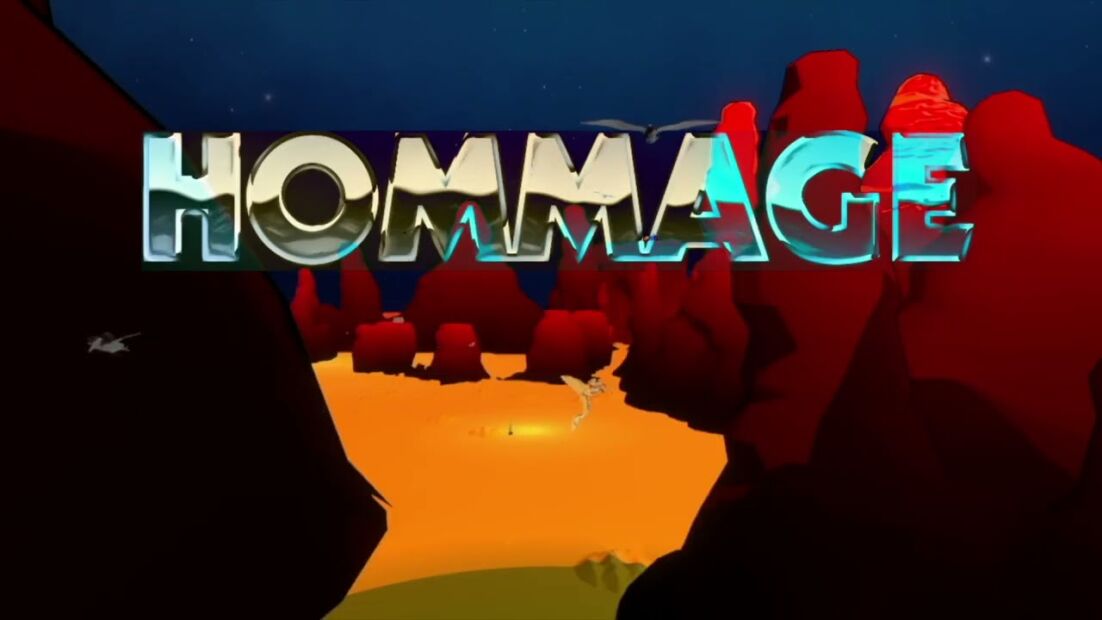
[00:00:05.458] Kent Bye: The Voices of VR podcast. Hello, my name is Kent Bye, and welcome to the Voices of VR podcast. It's a podcast that looks at the structures and forms of immersive storytelling and the future of spatial computing. You can support the podcast at patreon.com slash voicesofvr. So continuing my coverage of Raindance Immersive 2025, today's episode is with a piece called Homage. And so they're creating this kind of fan art homage to Jean Moebius Giraud's artwork. And so The artwork is kind of spread across lots of different contexts, and they're kind of creating a collage of different moments and scenes from the artwork that they created this immersive journey where you're going through these different portals and going through these different scenes. At the very end of the journey, you see the original inspiration of these stereoscopic rendered pieces that you kind of get a sense of the original inspiration. And so they're creating both the world and the characters, an entire journey that is kind of themed around that. And so they have like it as structured as a bit of like an immersive theater piece where they have like these guided tours, but that's less around the acting and more of a shepherding through these different waypoints. Because if it was just an open world linear experience, it would be difficult and might get lost. And so just to have someone there to take you to the next part of the story as it's unfolding. So it kind of feels like you're going through this waking dream, going from scene to scene and visiting these different places that are very much inspired by the art of Moebius. The other thing that's interesting about this piece is that it's created within Resonite. And so Nanotopia and Rix talk a lot around their collaborative process of how you can actually be embodied within the context of VR while you're actually building out the world. And so Resonite is made by developers for developers, but people who want to be immersed within the context of the world while they're creating and doing it in a very collaborative fashion, which is something that is very unique across all these other PC VR, social VR experiences. Even Meta has been kind of stripping out some of their more collaborative world building features and creating more of these streamlined pipelines to do it like on your computer. And within the context of Resonite, they're also going through this process of the splitting, which is part of a larger effort of decoupling from being reliant upon something like Unity. So we'll be covering all that and more on today's episode of the Voices of VR podcast. So this interview with Nanotopia and Rix happened on Friday, June 11th, 2025, as part of my broader coverage of Raindance Immersive. So with that, let's go ahead and dive right in.
[00:02:32.987] Rixx: So, hey, my name is Rix, usually. I work in Resonite. And I started working in Resonite, like, at the beginning of the pandemic. I was basically stuck at home, so I decided to... update my PC and everything, and also get into VR. And I played a little bit around, did something in VR chat and so. And then at some point, I stumbled around news back in the days. And then there was this big competition um the metaverse mega competition held by creator jam i wanted to participate in this and this was how i also got introduced to the creator jam itself with metra and then i stuck around for like most of the time and this is how i also came into contact with um nano because for one hour award shows we hosted a performance and i was the lucky one who helped getting it into news back in the time. Yeah, and this is how we came together. And by trade, I am an embedded software engineer. So I make the work on small electronics that usually don't really get recognized unless they break. So this is something completely different, but also ties in a lot of my approaches, how I Yeah, like to build stuff, for example, like getting a lot of data from the physical world into the digital realm. And this is something which also tied into our other project, like symbiosis, dysbiosis and so on. I hope it's enough.
[00:04:16.957] Nanotopia: Yeah, and I'm Tosca Terán, Nanotopia. And, well, for Resonite, I guess I'll say, I mean, I got into VR a long time ago, just really interested in it from talks I would hear or, I guess, read about with Jaron Lanier and his whole thing. So over, again, it's a pandemic situation during the restrictions, right? I got involved more with VR in like alt space and having to meet people there for meetings, which was a lot of fun and new and did some things with VR chat and then learned about Neos, checked out Neos, which was super interesting to me in that you could build with a group of people instead of like maybe just a separate type of situation in Unity. And then bringing that into VRChat, I really love collaborating with people. That's something that I've done for a long time. So to give some background, like I live in Toronto, Canada, and pre-pandemic, I had a physical studio in downtown Toronto where I ran a number of workshops. out of it was like a maker space people could drop in and work with metal or glass and that moved into sound and that moved into bio art and more electronics and i also will lead workshops out of different spaces in toronto working with electronics like soldering and circuit boards together and things to make different types of modules. And so just being able to bring sensors and things like this into a virtual environment has always interested me. And so connecting with Rix and the MMC for That show, it was actually bringing an element of mycelia, a work in VRChat to Neos. And then in another occasion, I heard about Resonite because of what was happening, unfortunately, with Neos at the time. And so finding out about Resonite, that, you know, this whole thing was going to happen and coming in here and connecting again with Rix and to work on projects. And yeah, I mean, I hope that makes some sense of where I'm at. I really enjoy working in VR and creating these worlds. A sister-in-law of mine who is considerably younger than myself But she's not familiar with VR. She saw a trailer, for instance, of Symbiosis /\ Dysbiosis, and she wrote me saying, I didn't know you knew how to animate or that you were working on a cartoon. And that was just really, well, it was funny to me, but it was also like, oh, wow, you know, that's interesting that people not familiar might see VR or things like this as maybe an animated comic, which kind of made me think about what we're going to talk about today. And yeah. Yeah.
[00:07:36.365] Kent Bye: Nice. Well, I know that one of the things that I always appreciate is the different design disciplines that people are bringing into the practice of VR. And this is a piece that has quite a lot of world building and interaction design and storytelling. And so love if you could each give a bit more context as to your background and your journey into the process of making and building worlds within VR.
[00:07:59.417] Nanotopia: Well, I can just maybe even quickly kind of say I, in my teenage years, was very much into comics and animating and drawing and looking at ways I could work with that and have my friends do voiceovers and things for all these characters. And so I feel like for the world building, like I have personally been over a very long time, been working with 3D programs and things like that, creating different elements and wanting like to find a way to bring people to that more than like a flat screen. And again, I think that ties in to just loving how we can all be within a platform and and creating and bringing in our different elements for building and just really expanding on that and how rix has a good story too i don't know if we want to go there with that though but um but we had this ability say at venice We needed to work on something. And had we used Unity or something, we would not have been able to fix this or create another aspect of a particular world. But due to using Resonite, it was like jumping in and building out this whole area or creating another element to a forest or something that we could do. And that's really shines about Resonite.
[00:09:27.415] Rixx: Oh, so yeah, the topic of like how I got into creating Cephasol is kind of a little heavy one for me at the moment because I'm currently facing like searching for a job at the end of the year. So I'm recapping on my life's decision and something, and I'm thinking a lot about stuff. Because as I mentioned in the introduction, I'm usually working on embedded systems, so very hardware-oriented stuff. And now also, there's this big aspect with all our shows and all the stuff I do in Resonite, which also is basically a second job in a certain way, except it's kind of more fun or so. So I don't know. I was always curious about game design also. Like back in high school or so, I did some stuff for, let's say, art classes or so, where I did like animations back in 3D Max 6, I guess. Like very, very, very early. Like we are talking about like early 2000s. And also I remember for computer science class, I, together with some other stuff in my class, we also used OpenGL with Java and created like basically a Zelda clone or something like this. So there was always this drive to build like your own worlds and your own experiences. When I got more into the studying and so, this kind of died down a little bit. But then it kind of came back because, like I mentioned, during the pandemic, I just started 3D modeling. And I learned everything in Blender and built my avatar here. You can see it in the Zoom call here. But yeah, this was something I did then and really liked it. And then at some point, I thought that, oh, yeah, this basically stuff you can do with virtual reality. And then this was how I kind of got into this.
[00:11:44.670] Nanotopia: I want to add to that. I worked with Bryce. I don't know if you know or if you remember, like, Kai's Power Tools or Bryce World. Like... Sorry, it's just so old, but it was in the mid, like maybe 96, 97, 98. This came out and you could create, actually it was super powerful at the time for what it did. These incredible landscapes and things like that. And you could animate them or capture them and then output them. My gosh, whatever happened to those software? It's like, where are they now?
[00:12:19.926] Kent Bye: But yeah, that's really cool. Well, we're going to be talking around the experience that you both collaborated on called Homage that was premiering at Raindance 2025. And at the end of the show, you were going through the Q&A and recounting how you encountered Rix in terms of discovering some of the stuff that you're working on. And so, Antopia, maybe you could go through some of the very origins and the beginning of this project and recap how Rix came on board and started to work on this. So where did this project begin?
[00:12:52.057] Nanotopia: The project began, really, I was thinking about one of my favorite animated movies is Fantastic Planet by René Laloux. I saw that probably when I was too little, but it embedded itself in my psyche for sure. And it would show up in a lot of movies. my work and like craft work, I guess I could say, you know, like metal and glass things and stuff like that. And I've always been into Heavy Metal magazine. My father used to bring home for the type of work he was doing. Usually Thursdays, he'd come home with all kinds of really cool magazines and music, electronic music and stuff. And Heavy Metal was amongst those magazines. And so Moebius, Jean Giraud, actually founded Heavy Metal magazine called Metal Hurlant in France. And his cartoons were just so amazing, just really bizarre and unusual. And so I, In 2022, I was just kind of messing around in Unity, and I started thinking, maybe it would be interesting if I could create an avatar based off of a character in Fantastic Planet, which I have, and it actually resides in VRChat, but I haven't brought it in to Resonite yet. It needs some work, but... I started creating kind of a desert world for that platform with pyramids and the cliffs. So what you're seeing here in the Zoom that is part of Homage, kind of the big entrance is based off Arzak, which it's an interesting comic in that there's no real dialogue. It's just silent with maybe if there's thought balloons or bubbles, there's like symbols in them. Anyways, I stopped working on the VRChat output, but I had made a lot of captures for just looking at it and adding music to them. When Rix and I met in the MMC, I just felt we had a really great rapport. Rix is really fantastic, an incredibly awesome human because we've actually been able to meet in person, which was fantastic. and kind of lived together for 16 days as roommates at Venice Immersive. But our rapport, it was just really nice. And with all of Rix's knowledge, Rix never, in my experience around anyone, comes across super lofty or above. It's always very equal and never assuming that maybe you don't know what you're talking about or what you want to do, which is nice to be around because Rix has an incredible amount of knowledge and computer languages and things like that. So anyway, sorry, I started building my home space in Resonite. Everybody gets kind of a cloud home and you can change that or you can create another space where you might always spawn into instead of that cloud home. I started to bring the idea from Unity into here and building out a desert area with cliffs and things like that. Cleaning out my hard drive, I came upon this old capture. I should really throw out a lot of things on the computer, but I found this old capture from VRChat and was like, oh, wow, this is actually cool. shared that with Maria of Raindance. We message outside of Raindance, whatever, we talk sometimes and we had been talking about all kinds of things and animation. I was actually asking her about Fantastic Planet, had she ever seen that and that she'd really like it. I shared this video with her and she really loved it. She thought it was really cool and, oh my God, are you working on that towards anything? And I said, yeah, actually, yes, as a matter of fact. So how Rix got involved is I didn't really, honestly, because symbiosis, dysbiosis, like working together, this does become like all the admin also and the tech and things we have to stay on top of. It does become kind of like a whole other job. But I was working with James Moffat, who in VR is known as Baxter. And we were working on thinking about like a flight system for the Arzak-like bird that is in here. We call it the Birb. During our tour, we were jokingly referring to it as Craig, just for whatever reason. And Rix came in with... What was it? Maybe it was for like a far clip or we were thinking about, there was something.
[00:17:47.857] Rixx: Yeah, there were two things. Like one was something with Protoflux, the internal programming language here in Resonite. And the far clip thing came also up, but I was basically joining the world and I joined you and Baxter. And I guess I must have seen The Bird, because The Bird looks fairly close to the original one. And this was also featured in Heavy Metal. And by coincidence, Heavy Metal is one of my favorite movies ever, because it's so over the top, artsy in a certain way. a corpus like all these old 80s movie tropes or so and yeah and i was like looking at it and asked nano by any chance have you ever heard of Heavy Metal and then both start laughing
[00:18:36.229] Nanotopia: Yes, we both, Baxter and I started laughing because Baxter had asked me several days prior, hey, Nano, are you familiar with Moebius? Because this space really reminds me of his work, which was super exciting because, yes, that's exactly what I'm hoping people feel in here or not. maybe they remember, you know, seeing these comics or things like that. So when Rix was like, do you know the Heavy Metal movie? It was like, yeah, we just started laughing. And I'm like, exactly. Yes. And so I said to Rix, you know, I'm looking at creating more at the time, I should say more of an open space. I was thinking it could be an open world where people could just come in and run all over the place, just finding things or discovering things, stuff like that. less of a more kind of linear experience you would come in, you know, for Resonite people or whatever. So it is really interesting to just the progression of it. And knowing that Heavy Metal, the movie was a favorite of Rixx’s just Rixx was like, I'm on board. Yeah, come in. What can we do? But we didn't want to copy it to you. I should say that like it wasn't there's no way I know. And just for anyone that does any kind of 3D modeling or any even sketches really to think that I could replicate that within a month or two or three. to make something viable enough to share with any film festival, there's no way. I don't even, you know, and I, but also we didn't aspire to do that. It was more like a memory or a, or kind of a nod to, or like I say, it's like a love letter to Moebius in a way of, Wouldn't he be interested? I would have to think that he and Jodorowsky perhaps had, you know, younger or even he's no longer alive, but they would have loved VR. They would love VR. Like, wow, what they could create, you know, in here, I would think would just be amazing with the right people, with the right team. Yeah.
[00:20:52.540] Kent Bye: Yeah, so I had a chance to go through the experience. I'm not familiar with the original source material. So I'm kind of getting introduced to this world through this experience. And at the end, there were some converted stereoscopic panels from a comic book and other sources that were the inspiration points. And so can you just briefly recap, like, cause it seems like that there was reference to either multiple series, multiple magazines, multiple moments. And sometimes there's explicit narrative. Sometimes you kind of have to fill in the gaps because, so maybe you could just kind of recap like where you're drawing from in terms of all the different sources.
[00:21:29.943] Nanotopia: Okay. So, all right. Well, there's definitely Heavy Metal, the 1981 movie, which was actually made and produced in Canada, which I mean, it's a cartoon, but it's all Canadian based. And it was like, there was John Candy and I'm trying to remember all the other names. So I can't, so I won't go into that right now, but and Heavy Metal magazine. So yeah, Moebius has uh like he worked with aleandro Jodorowsky who is famous for like el topo and holy mountain and psycho magic and things like that they worked together initially on dune which never happened which maybe is fortunate or unfortunate i feel but would have been nutso um
[00:22:16.570] Kent Bye: There's a great documentary about it. Yes. Which kind of fills in some of the gaps of not having the narrative. At least we have the documentary about the attempt of making it.
[00:22:25.757] Nanotopia: And so the thing about Moebius' work, a number of his works are, they tend to feel maybe, I don't want to say disjointed, but they're They are a bit psychedelic, spiritual, and same with his work with Jodorowsky is it's kind of like trying to reach this higher level or something or enlightenment maybe, but they wouldn't call it that. So they created the ink hall. And the Ink Hall has many different versions of itself. And that's an incredible story. So there are elements of the Ink Hall. There's elements of Arzak, which is the cliffs and like being in the desert and this bird, which also it's kind of like a pterodactyl, but it's in some of his comics, it's made of plaster or cement or it's an android. Like it's all these different things. There's Edena, the world of Edena, which is Moebius. and time – Masters of Time was a movie that he worked on with René Laloux and Gandahar which is and they're all so entirely bizarre and otherworldly and so a lot of those images you saw are different like kind of stills like taking a moment from these different comics and storylines and bringing them into here. So it is kind of remaining to Moebius in that it's maybe seemingly disjointed, but it all culminates in the end to have this particular meaning, if you will, like we're coming through here and trying to bring balance to the universe Or something has happened. But yeah, so there's a number of stills. I think that for Heavy Metal, the movie, right, we took kind of, we were thinking of the sum of all evil, which is the Loc-Nar, the green orb. There's a green orb. Then the INCAL tying into that. Then there's kind of a little Holy Mountain nod to Holy Mountain where there's a psycho magic party taking place in this house. But then there's different elements in the house. So like there is one image. that is from one of Moebius’ comics called The Airtight Garage, where there's a crystal and there's often crystals always somewhere floating around in his desert worlds and his cities. And so in this particular crystal, it looks like there's some sort of being or genie. I took it to be like a genie locked in a crystal. And I thought that could be fun to do, like kind of play off that. which made me think too more about like these elements, like the VW out and stuck in the desert. Like there's just a lot of interesting elements. So with Moebius, he influenced Blade Runner quite a bit with his, what's it called? The Long Tomorrow is the comic that a lot of people, Fifth Element drew off that as well. So, yeah, I think we just kind of took these different moments or from these stills and we started building out different parts. And I think I tried to connect them. The connecting line through it, I think, would be collecting. I don't think you can't see it.
[00:25:57.899] Rixx: Oh, yeah, you can see it.
[00:26:00.281] Nanotopia: Oh, you can?
[00:26:00.781] Rixx: Yeah, it's from your view.
[00:26:02.816] Nanotopia: Oh, okay. Okay. Yeah. So, okay. Right. You can see the little island on my hand in the zoom. And so we would collect these little triangles that are parts of this in call. And we thought of calling it something else because we're not, you know, wanting to be super derivative again, but I think it's okay because it's just, yeah, it's like fan art in a way, right?
[00:26:26.092] Rixx: Yeah. In a certain way, because there's a lot of interpretation and like own twists on it probably.
[00:26:33.456] Kent Bye: Yeah, it felt like I was being transported through a dream where there's sort of a magical realism dream logic where it was centered in the spatial contexts and we're going from one space to the next. Like I never knew where it was going. And so from a narrative perspective, it felt like I was in a dream where there was an internal logic that it makes sense in the moment, but... It was mostly like the center of gravity was moving from one spatial context to the next. And so to see at the end, all the different original inspirations, it makes sense that this was a bit of a collage of these different moments from all these other narratives that within themselves don't always have a consistent narrative through line. So it kind of mirrors the narrative structure in a way. And so I'm curious to hear from you, Rixx, in terms of what was the process like for you to come on and help decide which scenes or to start building things out? Or what was the process from your perspective of starting to take this concept and idea and start to build it out into somewhat of a linear experience that you're going to be taking people onto a journey?
[00:27:36.147] Rixx: Okay, so at first, like when I came here, I was just basically here to help like on some small things, but then it turned out to be like a bigger, bigger one. And I mean, the first things which I did was grabbing a lot of systems, which we already had designed for Symbiosis, Dysbiosis in here. So we could repurpose them. And then at some point... We still were on this mode where everything should be some kind of collage or something like this. But then at some point, I guess Maria came in and pitched to us the idea of having like a walkthrough or a guided tour. And then this was where, oh, we actually need to have something to tie things together. So I know Baxter and Miss Molly, who is also a person here in Resonite, they kind of had the whole transition with the bubbles to the Mystic Party. And But then we also had to tie the other things together. For example, you see a lot of portals for your audience. If you think about Rick and Morty, the portal that Rick's portal gun shoots, you have something which looks kind of similar, but in blue. We use this quite a lot and tied it into different things. For example, I kind of never was too serious about it. For example, not to spoil it too much, but if you are in the scene with the djinn, you have to do certain interactions. And then in the end, the djinn opens up the portal for you. But the portal is like opening his mouth, and then the portal appears. And this is, for example, like a transition we did. Yeah, and then since we had to do this whole basically storytelling also for the show, we kind of needed to add a few interactives and also a few animations to play. For example, then I also connected stuff where, for example, one scene introduces that the Loc-Nar is actually this evil thing. which gets triggered just by the single player going into the Collider. And there are also a lot of funny easter eggs. For example, since Marinda came up with the idea, there is something hard-coded in there. Oh, Maria. Oh, Maria, sorry. Sorry, yeah. There's something hard-coded in there where no matter who triggers it, usually if somebody triggers it, the Loc-Nar will focus on this person and threatens them and pushes them into the side. If they approach it, the Loc-Nar kind of positions onto the other end or so. But if she is in the world, the Loc-Nar automatically takes her as the target. Silly stuff like this. But for some animations, it gets triggered by the players, which in some cases, wasn't the best idea, I think, because we have a lot of conditions where people need to catch up. So this is always something where, at some point, we tell people to stay behind or so. But then, for example, if somebody really rushes through, they can trigger all the subtle mini animations we have, and then Only they maybe notice them. But it's probably OK. Then for other stuff, for example, for the ending scene or so, we have something where we actually go out of the space the normal users see and then have a whole playback interface to cue all this stuff and so on.
[00:31:19.855] Nanotopia: Yeah, maybe if I may. So when we were showing Maria and we did some tests, we brought through Jo-Leigh. So I bring that up because all of this Moebius world, Jodorowsky, Fantastic Planet was unfamiliar to Jo. And she shared that. So she wasn't really understanding that. not that you have to, because like, I think what you were saying about it just being like a dream or something that you're just going from one weird moment to another. And you're like, what does this mean? Or does it mean anything? And so that made us think to more of a, if you will, like kind of a linear progression of how people might move through here. And because really it could have, you know, not started here, maybe on the cliff and jumping on a Going for a flight and going somewhere it could have started in the house or, you know, there's different ways we could have maybe moved people through in sharing that. But it has been really fun, I will say, to... bring this work to people that aren't familiar, I think. And I know that Maria jumped down the rabbit hole, as she said, of watching a lot of different films or looking at the books or trying to find out. And Ken Rougeau, who is the voice of the sum of all evil has shared like you can get a lot of Heavy Metal magazines like the old copies from i think the 70s and 80s in pdfs so we have like a massive google collection if anybody ever wants to check them out like you can look at it yeah maybe maybe also um
[00:33:04.489] Rixx: There is a Humble Indie Bumble. I don't know if it's still up, but it features all the old Heavy Metal PDFs and you can just buy them for whatever you like to pay for them.
[00:33:14.972] Kent Bye: Oh yeah. Yeah. Nice. So I wanted to ask around, there's certain interactive components that are also in here and also just generally the process of building this experience. It was a lot different than if you were to build this in unity, because in unity you have like a single build and the collaboration tends to be more kind of non embodied in virtual spaces where you'd have to be more like committing to a get repo or, you know, it's Resonite allows people to collaborate in real time while being embodied within the virtual space, which I think creates a completely different type of dynamic for how you're going to start to piece together a project like this. And so just curious to hear a little bit about like what your collaborative process would look like if it starts with you, Nanotopia, like in Blender, importing like the base model and then from there arranging it. Or it sounds like you were going from one scene to the next and building out a linear project. seen. And so there's also like the through line of what that narrative linear. So I'm just curious to hear around, like what the workflow was within Resonite.
[00:34:22.009] Nanotopia: So, okay. Yeah. So for the, maybe for the Birb, for the bird, I had modeled this thing in, well, actually I work with like substance modeler. Like I, I actually really, I love, love Blender. Blender is awesome. And I've gotten better with it over the years and geometry nodes and nodes and all the nodes. Yeah. But I really love sculpting in VR, if at all possible, like the differences between ShapeLab. I started with ShapeLab actually in Mycelia and had made a lot of things for Mycelia in ShapeLab that then, say for instance, somebody working on that with me might add UVs because at the time I was clueless. to a lot of these things. But so in Blender or Substance Modeler, a little bit of both, I created this bird, brought the bird in here, then I had started adding a rig in Blender to the bird and someone else who worked with us in helping with the rigs, like, so being able to animate them was Ziddan, AKA Zid, who is in Sweden, who sometimes shows up in Resonite, but was like, hey, I'll help with any rigs or things like that. and A My kimbot had a really cool saddle because i was trying to make a saddle and so we brought the saddle into Resonite attached it to the bird add some colors and to animate it we wanted to work a little differently i think right we were thinking of a steering mechanism i'll say from the beginning so we'd have paths for instance this bird would move on that would be laid out in blender you know, we can export out this whole desert to Blender to be able to open it in Blender from Resonite. So we export that out as a package or FBX or something like this. And we could draw paths with curves in Blender, bring that back in here. And so Baxter, actually Miss Molly, who Rixx brought up, Miss Molly introduced me, or Baxter, I already met Baxter at something else and Baxter doesn't work right he's not in Resonite usually he's in desktop and he has a special I think grid overlay or something he's using he's very mathematically based and interested in figuring algorithms out and or creating them and stuff like that and so he had some really cool ideas for how we could work with the bird and then Gosh, I think there were so many people working on the bird. It's pretty interesting, but we were all in here. So I'll mention, so there's Miss Molly, Ziddan, Garfflesnark- Rowan Wood, Rixx and I, and maybe that's it, right? Am I forgetting anybody? I mean, we'd ask other people and we worked with other models or this or that.
[00:37:21.172] Rixx: We have also two other individuals who contributed a lot of assets here, which is Josh Tiger, for example, for a lot of his
[00:37:33.447] Nanotopia: The particle.
[00:37:34.127] Rixx: Particle stuff.
[00:37:34.988] Nanotopia: Yeah.
[00:37:35.348] Rixx: And then LuxKitty for the tricks with the material.
[00:37:39.410] Nanotopia: Oh, yeah. OK, so LuxKitty has been creating these incredible materials to replicate shaders. You might be able to get, that's kind of the bummer still that we're waiting for. So Poyomi shaders, which you can use in Unity, which are used in mass in VRChat because they're just so extensive and really cool. You can tweak them. So LuxKitty has some interesting ways of stacking materials to give different effects like cross-hatching for one and things like this, the gradients and stuff. But I'm trying to think of another thing that we really did where that really shines like how we were all working in here together. Maybe the bubbles, like the bubbles were initially Miss Molly. Like I had the bubble from, there's a bouncy weird bubble from Neos days that I migrated over that I believe someone named Gearbell, who's in Resonite, who was in Neos. I think Gearbell originally created this bubble and you would actually, if you clicked on the bubble, the original bubble, you'd get put upside down inside of it. And which can be really disorienting and weird, kind of like a zero gravity in VR. So we worked on that bubble and the bubble calls back to Fantastic Planet because in Fantastic Planet, there's the Oms and the Draags and the Oms meditate and go to this fantastic planet via these weird bubbles they're in. So that's about the bubble. So I thought, hey, it'd be really cool to have the bubbles in here somewhere. And so Miss Molly worked on the protoflux for that originally, but then we wanted to create a system that would recognize how many users were in the space at the same time. So if you clicked on that air freshener, spoilers, and the air freshener, I wanna say we put a box around it that looks similar to VRChat. And that was kind of just a little joke for us, the VR chat people, so they know it's something to click on.
[00:39:46.695] Rixx: It's an accessibility thing in a certain way.
[00:39:49.017] Nanotopia: And so it would read and then, yes, Baxter and Rix worked more on those bubbles and Baxter created this interesting kind of way the bubbles would all spawn out and appear in kind of a random way. And so that was, you worked on that too.
[00:40:07.092] Rixx: A little bit. Also Baxter and I, we worked on the pre-end scene, where we basically built individual systems and then tied them together. And we needed to coordinate which kind of impulses or so are sent between the individual systems in order to tie it all together to one single Maybe one thing which we should mention is in Resonite, you not only have worlds, you also have an inventory and you can basically save any slot in your world hierarchy as an individual object and then just have them in your inventory and spawn them out, do stuff with it, modify them. attach them to the avatar it doesn't really Resonite doesn't really prevent you from doing anything there you can just do whatever you want with it so that's also something which really ties into the um one thing where you just glue stuff together at some point you can You also have like a high, very, very big community that shares a lot of stuff because you have here like your inventory, you organize this in different folders and you can also share your folders. So a lot of people have like individual public folders and it's kind of a thing in Resonite, like if you are a creator here, you kind of have your own public folder. You put all your work in there, which you want to share and then You hand them out basically. And then there are other people who collect like folders, which have all the public folders in there. So that's a way of getting very quick to something here and utilizing already existing stuff. It's a little bit like presets in Unity or so.
[00:41:53.121] Kent Bye: Oh yeah.
[00:41:54.442] Nanotopia: Yeah. Yeah.
[00:41:56.826] Kent Bye: Yeah, I think every Resonite experience that I've been at so far that's showing your screening at Raindance, like without feel, there's always a moment at the very end where you kind of look behind the curtains to see how the thing was built. And I think that even happened in the Q&A where you brought up like the menu and started to like point out. But I feel like there's this kind of gifting culture that is in Resonite that's similar to the gifting culture with the prefabs community within the context of VRChat, where people are creating these kind of more open source like entities or objects or models or Mm-hmm. It's like by developers for developers to kind of push the extent of what's even possible in these shared metaverse spaces. Sometimes the usability of things are like a little overwhelming for new users. And I find myself always needing to get at least some refresher of how to do this or that because it's just different than what I'm used to. Right. Anytime people go into VRChat, there's a similar, like you learn the logic of a program and you just know it at a certain point. I feel like there's a similar thing that whenever I go into Resonite, there's things I need to be reminded of, of how to do this or that. But it seems to be overall this platform that is enabling this high degree of customization in a real-time fashion that... I think the end result of it in a piece like Hommage is that you tend to have a lot more dynamic interactions, like things moving in the world or things being triggered by things that are being driven by code, different bubbles and jumping onto things. different birds that are flying us around. And so I think that's one of the things I'm taking away just in terms of how the culture of Resonite is to really push the limits of interactivity and agency and have ways that you can really engage and interact with things. And I think the challenge with something like Hommage is that you could have it as an open world puzzle world, but it could take two or three hours to go through. And so you have to have like a narrative structure that is helping to move it along so that, people aren't spending too much time like getting lost on a puzzle because there is so much of that open world ethos with high agency and interactivity. And so, but yeah, I think overall it was like a type of journey that had a lot more dynamic things happening in the world than most of the other experiences I usually see in VR. Yeah.
[00:44:43.375] Nanotopia: Thank you. Yeah.
[00:44:44.436] Kent Bye: Thank you.
[00:44:45.297] Nanotopia: Yeah. And homage to like the word, like obviously homage, it's French, but it's also playing off of Fantastic Planet’s Oms, which, you know, I recommend everybody see that. It's so amazing just even how it was made. But just to kind of talk about the title, because... don't even know how that came about now except maybe that we wanted to make an homage but an HOMmage so it's like respect for the man which is Moebius in this case yeah but thank you that's nice to hear i do feel that way very much so about Resonite and i feel that's expanding you could probably speak better to this than i for sure about the Splittening But yeah, because right now it is moving away from the Unity engine base. The particle systems were one of the first things to get updated. And then the audio system, yeah.
[00:45:46.909] Rixx: Which is kind of funny because I remember, was it when the particle system got updated? We were in Venice and we had to like live integrate it in a certain way. And then back here when we started with Hommage, it's... The audio system was directly converted and then there were some legacy components, but then it immediately gets dropped and we had to migrate everything to there, which most of the time it worked seamlessly, except for like trickery stuff, which we did with the audio. For example, we have, in order to guide the players, we have certain elements here that which gets triggered by your voice. So if you speak, things light up. For example, we have glyphs here or crystals that flash once you talk. And basically, there's a new set of components which you need to use in order to do this now. But by accident, some of these components could now actually sample also other players' audio. So you could implement something which wasn't really viable back then, where you can see as soon as one person speaks, the glyphs flash and so. So this makes it like a little bit more shared because Back then it was like, okay, I'm talking, I'm seeing these scripts are talking, hey, does anybody else see this? And then it was like, no. And then at some point, like when we did our initial play tests, like people figured out, oh, if I'm talking, then this is local to me. It's a little bit tricky. It kind of does the job. But now it's like, as soon as anybody speaks, hey, can you see this? And then the others immediately see it and say, oh, wow. Oh, it's also happening for me. And then it has to be something important.
[00:47:29.528] Nanotopia: Thankfully, right? That just kind of worked. Like when the changes happened, the updates happened. Because some things we had to go back in and fix. But the Splittening... I know that Fruxious does his office hours and he's doing a lot of YouTube videos on what exactly, like he's also responding to a lot of concerns people are asking about, like what is going on? Like, is this going to break? Is, you know, or is this going to work? So he has been responding to a lot of those questions. But ultimately, my understanding is the reason this is happening is towards further optimizing Resonite for people to be able to come in I don't think it's ever going to work off a Mac, at least probably not in this century. But I think that he is looking at other potential for maybe headset ability, I think immediately of Quest. But that said...
[00:48:26.562] Kent Bye: I do have like, just to, just to jump in and just to have a clarifying question, because my understanding of the Splittening is that Resonite has kind of created their own user interface to be able to eventually render stuff out, but that kind of the low end, it was still using the unity game engine renderer to a certain point. My understanding of the splitting is that like decouple the way that objects are rendered within Resonite so that there's no longer any dependency upon unity. Is that correct?
[00:48:56.192] Rixx: Yeah, kind of. So originally everything runs on Frux engine, which is like Frux's game engine, basically. And there are a lot of things that you could do with Unity itself. For example, physics also, Unity has stuff there, but Resonite uses another physics system or so. And one thing which stuck was the rendering is done by Unity. And this was kind of a limiting factor at some point. And In order to overcome this, basically, that's the main idea behind this. But as far as I understand it, I haven't looked too much into it. But there are some tests going on at the moment. And people are posting in various chats their performance increases. They are posting their FPSs and so on. It looks really, really promising at the moment. Also, some other stuff seems to be reworked. For example, when we are loading into a world, you had these certain hitches and if like a new avatar is loading, then you also experience hitching and that makes the experience overall a little bit rough for some users. So this seems to be gone for display training. So I'm actually pretty optimistic here that yeah, we get something awesome there. Obviously there will be probably some bugs and so, but
[00:50:19.278] Kent Bye: Well, I guess the analog that I think of is whenever VRChat decides to upgrade the base level of Unity, then there's a bunch of non-backwards compatible stuff and stuff breaks. And so in the process of ripping out the Unity rendering engine during the splitting process, I'm imagining there's this, like, yes, you're getting performance increases, but that may have this non-backwards compatibility thing where it could be breaking things. And so it's... whenever you're taking a core thing out like that, then it could be a lot of friction because things that used to work no longer work. And then you have to go in and either find out what that is and fix it. Or at the end of the day, you want to try to, you know, have this complete independence from Unity as an entity that, you know, has, you know, they introduced all sorts of like, things where if you were like a runtime charge for some entities that if you had a certain amount of installs, then you'd have to pay for it. But, you know, there's ways that they're using certain aspects of that Unity game engine, but having complete independence from that would put Resonite in a fairly unique position in the sense that there would be no dependence on any external organization. And it's kind of, a homegrown system that is able to more clearly dictate the future of where they want to take the technology rather than some other high level decisions that Unity may be making that, you know, Unity certainly has a lot of ecosystem around tools and stuff like that. So you can benefit from a lot of the Unity store. But if something like Resonite is completely independent of that, you don't have that as robust of an ecosystem that's external in a store. But it sounds like that's all being developed internally from users and kind of shared in this more gifting economy ethos. So the splitting sounds like a little bit of a time period where there may be things that are getting better and something's getting worse temporarily until they're fixed.
[00:52:09.595] Rixx: Mm-hmm. I mean, the only thing which I can see here is that most of the stuff is in the back end. So it doesn't immediately affect how interactions are happening here, for example, like with the internal programming language or with components or so. We had another thing where we got a transition from NEOS to Resonite, where the color representation changed. And this obviously made some interesting things. Like for here, we see the conversion happened automatically for most stuff but then if you're for example visiting older worlds which got imported back from news you still get this warning that hey this is a converted world if you're not satisfied you can change it and then save it back or so and especially with old creator jam worlds we see that the color scheme changes for example lighting is quite off at some points or if there's some trickery done for example back in the news days people tend to overdrive color values. So they looked like they were glowing or had bloom on them, even though we had emissive channels back in the days. People decided to use this way. This obviously doesn't work so good here anymore, and things are really blown out here now. So some older creations need to be touched in order to make them work here again. So it's kind of this, we had these big changes already in the past and I mean, there's always these big commotion over it at the beginning, but then things die down. Yeah.
[00:53:48.568] Nanotopia: I mean, I think what we've experienced. At least, I mean, there's other reasons too, like culling and throwing a lot of assets out that we don't need. But I think for the past, I mean, it's related, not related, but for the past couple of performances for symbiosis, dysbiosis, no one's crashing. Like people are coming in.
[00:54:09.627] Rixx: We have maybe to tell this.
[00:54:12.209] Nanotopia: Knock on wood.
[00:54:13.410] Rixx: Knock on wood. So in the beginning, you built your whole experience for Venice. So we had our PCs there, everything was fine. But then we decided to do remote shows because other... Yeah.
[00:54:27.458] Nanotopia: Oh, industry people wanted to come through that couldn't be at Venice. So yeah, so we continued doing that.
[00:54:33.861] Rixx: Yeah, but then we had limitations, for example. It took quite a time to figure this out, but... We ran into certain hardware limits and this made people crash in certain non-deterministic ways. And in the end, we always wanted to optimize the world, rework stuff. And for Raindance, we actually decided to... change a lot of the environment make like tweak the pathing a little bit and edit more assets so we actually took the time to go over the old assets and see what was happening there and that's kind of the um danger of Resonite for example in unity you can run profilers you have better overview because you're in your editor or so. But when we decided to look into the forest area, we saw that even though most of the rocks were instanced, they were different game objects. So with all of them, we had over 5,000 game objects that were just rocks. And that was too much. We baked some. which you can do here in game. That was fine. Baked some. And also decided to get rid of a lot of them also for small pebbles or so we removed the colliders. This is the nature where, for example, most of them were placed with user-built tools and yeah.
[00:55:59.722] Nanotopia: Yeah, you can instance things. You can instance assets in here and bake assets. There's an optimizing wizard that's in Resonite as well. Which you have to be careful with. Yes, you have to be so careful with it. But yeah, so I'd say, I mean, there's still always going to be pros and cons, but I feel it's leaning more into the pro as far as... I just want to be able to bring more people in from other platforms. And I know when VRChat people do come in, the majority, especially if they are creatives or developers, their instant response is like, whoa, because they're looking at the textures. And they're like, how are you able to do that in here? And so that can also be, I think, part of the danger you're talking about is that you can go completely bananas in here and... But people will feel it. You'll see people moving like molasses, like they're wading through something thick. But this is all being worked on and it's, yeah, it's nice to see where it's going to go, you know?
[00:57:08.650] Kent Bye: In terms of the next steps for Homage, there's always an interesting dynamic with these different types of projects that are on the festival circuit because they're contrived in the sense where there's a deadline, you put in a lot of work, there's a lot of free labor that's put in, but as you continue to have a project like this, it would require two people to basically walk people through. If you've thought around, is this something that you'd want to try to automate in the way that Maybe there's things that are triggering and people could go at their own pace to kind of explore through the world or if it's going to be more of a theatrical performance where it's just something that you're doing or if you want to turn it into something where there's tickets that are paid. Just curious to hear like where you want to take a project like this.
[00:57:55.481] Nanotopia: Well, I have some. Well, some. OK, so something that started happening just as far as maybe another festival or sharing it with people is a French version. So we have. actors in montreal that have very generously offered and have already started doing like voiceovers and things for the different characters and there's someone in Resonite too who does a lot of french tutorials on youtube and things like that and he's offered to help work things out to of course there has to be a french version for Moebius and um i have talked to some people who think it would be wonderful if we could share this with some festivals that are French and Swiss and stuff, Geneva festivals, stuff like that. But then we've also had some of the English speaking people want to do this as a live performance, but there's interesting things we would have to consider for that because of the effects that we've placed to make voices sound a certain way and things like that. I think that we could probably work it out. But yeah, I'd like to either film it and get it out that way, or maybe we can automate certain things. Or I am not opposed to bringing people through, but we don't know. But what are your ideas?
[00:59:25.631] Rixx: So basically, we have a lot of stuff which already gets automated triggered compared to symbiosis-dysbiosis. But symbiosis-dysbiosis is something Like, back in Venice, we talked to some producer guys there, and they were like, oh, yeah, automate it, make everything AI, blah, blah.
[00:59:42.261] Nanotopia: Yeah, NPCs.
[00:59:43.582] Rixx: Yeah, that's something, like, some of these disparages live from the performance of the actors. So this is something you can't really translate. But here, originally, the reason my character exists is just to give tech support to see if everybody comes in here and their audio is working. And then the whole bit which we are doing with like, hey, we landed here, and oh, we need to meet up with you is just a little bit fluff on top of everything. And then to guide people here so we stay in the time frame. So technically, we could automate a bunch of stuff and make this, for example, a standalone version. Back for Symbiosis /\ Dysbiosis users, you kind of rely on having this group experience. And here, it can be either or. This was because, for example, in Symbiosis /\ Dysbiosis users, we only accepted four people for Venice because we just had four headsets. That was the limitation.
[01:00:40.964] Nanotopia: And computers, yeah.
[01:00:42.284] Rixx: Yeah. Then back for the remote shows, we kind of needed to have a way because Symbiosis /\ Dysbiosis users was working with the Muse headset also for the EEG data. So we actually built a system where you could share your EEG data with other participants. And then we said, OK, we can allow more people. We had eight people and up to 10. But this always brought some downsides here. And for Hommage, we immediately said, oh, yeah, we can have 10 to 15 people here, no problem.
[01:01:12.949] Nanotopia: and then we just said okay because there's no dependency on special hardware and so but in the end i must say um that was really exhausting taking care of yeah trying trying to bring 15 we had 20 people coming through to see how many people and it becomes a lot you know because you're everybody is really excited or, you know, but you're trying to bring people. So that also, though, informed our performance as far as like we're taking tourists through this planet and do these different things. So you're trying to make sure nobody falls off the boat or everybody is like staying on course. And that was it can be quite a lot.
[01:01:53.281] Rixx: I mean, we have some automatic safeguards. For example, if somebody decides to jump Like, you are getting transferred to many, many high places. And you can, in theory, just jump off the cliff. Actually, for the beginning, you have to jump off the cliff. This was intended. And then something triggers for you. But then if you're in the party, you could, in theory, just turn around and jump off the cliff. And back before the end scene, you get on a flying island and you could also just jump off this island. Nobody tried so far, which is kind of amazing. But in theory, you have like backup systems. For example, if you jump off, you just hit a collider and then get teleported back onto the island. Yeah.
[01:02:33.578] Nanotopia: But so for these other festivals, so as far as because the actors, for instance, in Montreal have offered to like, if there's tours, we're happy to be there. There are translating tools that exist in Resonite. But as I'm sure you are well aware, when you transcribe or also the kind of work my partner does at the Toronto International Film Festival is for translators. transcribing like in subtitling and that is still if you use an ai or anything i just shared a thing this morning for instance, it was transcribing a message i received from fedex where it called me costco and it referred to the place sending me something as thor and so you know but you can have these weird things happen so i'm trying to figure out like if we do festivals and have a translator it's not going to translate exactly. So having people in here that speak French, for instance, would be really fantastic or, but yeah, I'm looking at a festival. I'm looking at getting this maybe to a French festival. I think that would be awesome. Like it would be amazing to bring people through that know Moebius for sure. But yeah, I think there's a couple of different ways we might do it. And I think we just have to explore that. Like,
[01:03:55.638] Rixx: Filming it. We can also have either or in a certain way. Or NPCs. Yeah, this year has the potential of being standalone or individual groups. But then for festivals, it's also nice to have a chat in the end with all the guests. And then they can ask a question. That's always a highlight.
[01:04:22.546] Kent Bye: Yeah. Yeah. Well, there's a, another component, which I think is IP that comes from an existing entity. I think VR right now is in this kind of state where still a bit of the wild west where it's in the realm of like fan art or fan fiction where, you know, the ability to remix stuff. But if you were to start to sell tickets and then create it into a professional thing, then it, it starts to make me think of like, well, you know, if it was making a movie, you kind of have to get the rights to do this or that. And so I'm not sure if that also plays into like, because this is literally named homage and you're using inspirations from Moebius’ art and world and world building and you're putting your own story on there, but it's still like a remix that could potentially still be considered fair use in some contexts. But at the same time, you know, as you start to move into, like, if you were selling thousands and thousands of tickets, it would probably get on the radar. And if it was smaller, maybe not, but I'm not sure if that also plays into it or if there's another feeling of like, Hey, this is not for money at all. We're just doing this as a passion project and a hobby. And yeah.
[01:05:28.410] Nanotopia: I'll say it's not for money. I mean, we haven't been charging for people to come through. The differences for symbiosis, dysbiosis, we're wanting to get something, even though the performers are all so kind and like, oh, we never expect to get paid. So when they do get paid, they're always very surprised. And I mean, I would love that to be different for everybody to be paid for their time for sure. I did actually share our trailers and information with Heavy Metal magazine and they flipped out and in a good way, they loved it. And I did reach out to the Moebius people, but I, I've not heard back at all. And that's good. I think maybe, but yeah, I hear what you're saying. And I think that I would want to look into that more in I don't think we're going to sell this. Not at all. And definitely probably tickets. I mean, festivals charge for things. Some do, some don't. So that can be interesting, too. Like, how do you do that? But I think maybe if it's... If it's seen as, yes, fan art, I don't know. Maybe we change the wording of certain things as well, like if we have to, or we don't at all. It's just something that exists and it's here and maybe, you know, we can make it public and people can come through it.
[01:06:57.463] Rixx: I mean, one thing is that all of the assets are created by us. Also, they kind of refer to the original IP in a certain way. And then the only original stuff we import here are the movie posters and the scenes as some kind of quotation in a certain way.
[01:07:18.601] Nanotopia: Mm-hmm. Yeah, and the music's all original.
[01:07:22.593] Kent Bye: Oh, yeah. Yeah. The music was great, by the way. I really enjoyed the little musical bits. Thank you, yeah. Really driving. I don't know if you want to say any comments on that, on the music, the process of making the music.
[01:07:36.212] Nanotopia: Well, the process for that was working, well, Autumn Blessings, who I first heard and met during MMC 25, like this year, she had a performance for that, which I think is up on YouTube, right? Like just a really beautiful voice. Just really, absolutely.
[01:07:56.831] Rixx: And by coincidence, this was also something where I built the interactions part.
[01:08:01.135] Nanotopia: Yeah. Oh yeah. Yeah. So when the bubbles come, the music starts to play and, and also Moby. So Moby has released a lot of work, like thousands and thousands of studio sessions, home sessions, all kinds of things. And he is open to as long as you, and this is on his licensing terms, um, As long as you never share it with a right wing organization or politics or anything right leaning, you can do whatever you want. And so he... He has shared stems and just, so you can use, you can take all these different instruments and you can rebuild it, all these sounds and stuff to make your own thing. But my partner does happen to play the electric guitar and bass. Rixx plays the electric guitar, but didn't in this, but I think we need to explore that. And Brendan Lehman, Neurochems plays drums. So we have like, we have all these musicians around us, but really my partner does play a lot of different instruments and can do that and so does Autumn. AutumnBlessing sent me a number of not just her self-singing scales and things like that but she was playing the electric guitar and is doing a bunch of interesting things on a synthesizer she has and so that was integrated in as well so yeah I'm glad you like the music. We were, yeah, trying to go for this, again, very Heavy Metal movie kind of 80s vibe in a way.
[01:09:38.076] Rixx: A little cheesy.
[01:09:39.898] Nanotopia: Yeah, cheesy here and there. Yeah, for sure.
[01:09:43.496] Kent Bye: Yeah, certainly some catchy earworms in there as well, especially after I get off the bird, I was like humming the tune.
[01:09:50.299] Nanotopia: Oh, nice. Yeah. Yeah. I thought music would be important too, to make it like, in a way, like a movie, you know, like you're going through this soundtrack is playing.
[01:10:01.725] Kent Bye: Nice. Awesome. Well, I guess as we start to wrap up, I'd love to hear what each of you think the ultimate potential of virtual reality and this type of immersive art experiences might be and what they might be able to enable.
[01:10:18.627] Rixx: Cool. I mean, in a certain way, it feels the whole sector is kind of in this phase where everything comes together. There's still a lot of experimental stuff going on. This is super exciting. And there's much potential for growth. And let's see what the future brings. I have a feeling that at some point, we will really see this kicking off and then somebody can say oh my whole career is based in vr and for example then there are also specialized jobs for example i'm an artist especially for vr which kind of already happens with um like avatars or so but then you can also have actors and they are 100 acting in vr that would be super amazing to see
[01:11:08.991] Nanotopia: Yeah. Yeah. I see, especially over this last rain dance. And I mean, and I've been experiencing Raindance maybe since 2020. So it's interesting to hear every year, like what people are kind of speculating on where this is going to go. But this year in particular, I spoke with a lot of producers in theater, like physical theater producers, really seem to be, and maybe, I don't know, this isn't me putting any hope in there, but it really seems to be there's more theater people looking at VR and interested in storytelling potential in... More of a kind of hybrid situation where how can we present this to a live audience and have these performers here, you know, live. And so that seems to be more in people's minds that they're just interested in that. And even people too, that are already building out VR experiences, but using Unreal and using Unity are coming in to Resonite and going, wait a minute. you can have your whole team in here and you can rehearse in here and you can do all these things is really interesting to them that they're wanting to explore how that might take off. So, yeah, I think more VR. I know there's like operas starting to happen, which is really fascinating to me in a theatrical front. I think of Peter Greenaway and what Peter Greenaway might, you know, if you think of his movies like Prospero's Books, or the cook, the thief, the wife and her lover taking place in VR while simultaneously taking place on stage, being filmed like a movie. I don't know, like it could just become more and more of a hybrid space. Same with data visualization and what people are doing on scientific levels. And yeah, I just, I'm hopeful. I try to remain optimistic about it and where we're not going to hopefully all end up on rafts trying to get online and into VR off our headsets. But yeah, I think VR theater is maybe we'll see more taking place over the next year or so where there's more exploration there.
[01:13:30.512] Kent Bye: Just a quick follow-on question, because you said you had a lot of conversations with theater folks. We didn't necessarily explicitly mention this, but you also had Symbiosis, Dysbiosis, and Raindance in this year in the immersive theater section. And while the hommage was more in the immersive art world and immersive art experience sections. And so were these conversations that you had with the theater folks, were they mostly in after seeing Symbiosis, Dysbiosis, or maybe just elaborate on like where you were
[01:13:59.132] Nanotopia: Yeah, I was. Well, I was finding it after symbiosis, dysbiosis. And even here, a couple of people reached out afterwards that were really interested because I think of our voiceover, you know, knowing that actors are doing these things. And then even Rix and I trying to play these characters, taking people through. But yeah, symbiosis, dysbiosis, a number of people are, I mean, quite I had a number of people, not even people that have come through it, too, are just really curious. How are you using this technology? Like what's going on? And I believe this might even come in a way from My_Cana. Mandy Canales was in Toronto for VRTO and met with a number of producers or theater people that are really interested in how, you know, trying to understand remote. And once she was really able to show them this time by putting a headset on them and bringing them into symbiosis, dysbiosis. And then what do you mean? Oh, this is what you mean by remote. There's somebody in Cape Town that's actually in here performing. That is just really something people are amazed by, that they're really impressed with how are you making this happen? We didn't even know, for instance, you could do that. We thought everybody had to be on site or here, but this opens up maybe a whole different area. But even having people at a physical location is... in VR and on stage. So yeah, a lot of that is coming from sim discs, but we did have conversations after homage as well. Nice. Because I, yeah, I think people are seeing this as a performance, but it was just us taking you through. And these avatars, nobody can see right now, but they're directly from Heavy Metal movie. I mean, well, there are renditions and they're, they're pretty funky, but they're awesome. And so we could play off that.
[01:16:01.668] Rixx: Yeah.
[01:16:02.188] Kent Bye: got done last minute by me yeah yeah rick's so rick's made these guys but yeah awesome is there anything else that's left and said that you like to say to the broader immersive community um i think i have something in my mind okay
[01:16:17.102] Rixx: Okay. So actually, when I started with all this, I was kind of a little bit skeptical, like for the first part with all the acting stuff or so, but then I really enjoyed it. And I also see the importance because back when everything started in the pandemic, we had the whole like Web3 craze and everything and some weird discussions or so and things how they were going. But I feel I'm bringing, especially now, outsider from the tech community like theater people in here is really really healthy for the whole community because all the stuff which is going on in the world where everybody is looking for a techno solution kind of leads us in a really really bad trajectory in my opinion and bringing like the arts and the humanity into the space is really something we need because like for example if you see some tech communities where they kind of try to define a utopian world from like their own first principles and try to reinvent the wheel on philosophical questions we already have discussed over millennia then i don't know yeah i think that's really really important to have like the diverse bunch of people in here
[01:17:32.915] Nanotopia: The metaverse, sorry. Yes. Yeah. Yeah. That's a good thought there to bring arts and culture, to keep it alive and bring the theater people into VR. Yeah. And see what they can expand on too with augmented reality and virtual reality.
[01:17:55.697] Kent Bye: Yeah, certainly it was a refuge to come in and check out all the different immersive art experiences during Rain Dance.
[01:18:02.684] Nanotopia: There are so many and it's so incredible. Even just people all over the world, like making work, referencing cultural views, their own views as just a human being and what that's like. And translating that into a really interesting experience and bringing people through that. Just, yeah, there's so many incredible worlds and experiences being made and shared through Raindance. And through some other festivals too. But in particular, Raindance just feels very open to the experience without any pun intended there. Just really sharing artists' work and creative people's outlooks and views and experiences. Yeah.
[01:18:52.185] Kent Bye: Yeah, it's one of the few festivals that are on the festival circuit that's born out of the virtual culture as a center of gravity. And so people that are attending are more experienced and you can kind of do a little bit more sophisticated things than if you're just putting random people into headsets from the public. So it's... kind of a blessing and curse in the sense that it does require people to have a little bit like higher threshold of knowledge around the medium, but it also allows the artists like yourself to really push the edge of what's even possible in the medium. And so, yeah, I just really appreciated having a chance to go through this experience and it did feel like I was walking through a dream and, you know, having these moments of awe and wonder of like, not knowing quite what was going to happen next and to go from one scene to the next and have these different interactive components. And yeah, just, I really overall enjoyed the overall journey and the arc that I was able to go on and be introduced to this artist's work and all these worlds. And yeah, just really appreciated the whole journey that you're able to take me on. So Rix and Nanotopia, thanks again for joining me here on the podcast to help break it all down.
[01:19:59.060] Nanotopia: Thank you. Yeah, thank you.
[01:20:00.360] Rixx: It was a pleasure.
[01:20:01.400] Nanotopia: Yeah, absolutely. It's nice to talk.
[01:20:04.298] Kent Bye: Thanks again for listening to this episode of the Voices of VR podcast. And if you enjoy the podcast, then please do spread the word, tell your friends, and consider becoming a member of the Patreon. This is a supported podcast, and so I do rely upon donations from people like yourself in order to continue to bring this coverage. So you can become a member and donate today at patreon.com slash voicesofvr. Thanks for listening.