I interviewed Albert Johnson about A Ü T O / M Ö T O R on Sunday, November 16, 2025 at IDFA DocLab in Amsterdam, Netherlands.
This is a listener-supported podcast through the Voices of VR Patreon.
Music: Fatality
Podcast: Play in new window | Download
Rough Transcript
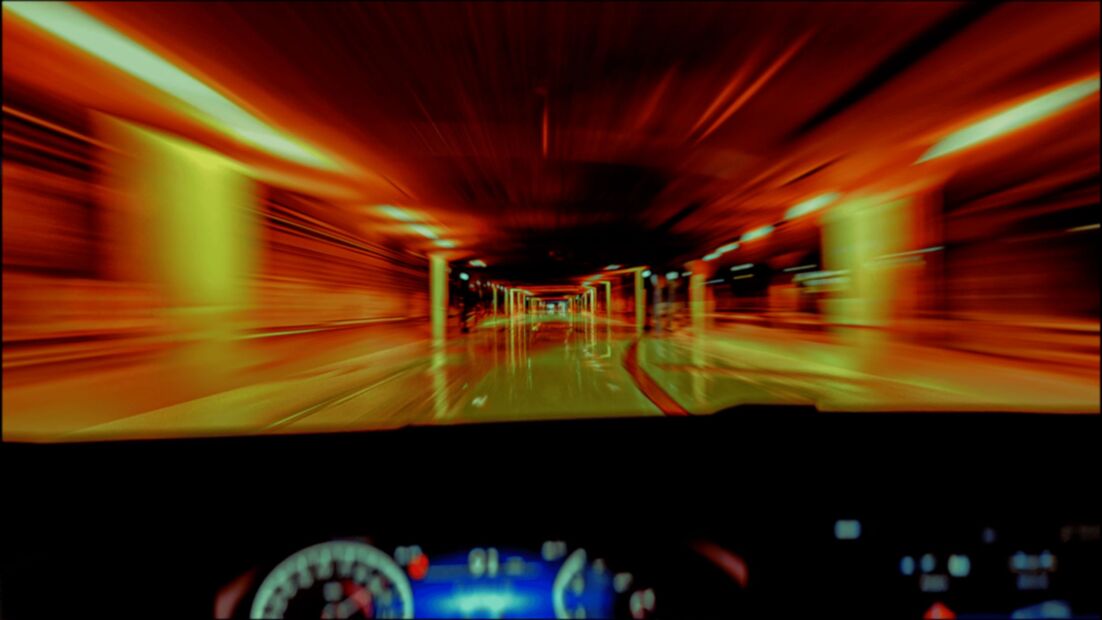
[00:00:05.458] Kent Bye: The Voices of VR Podcast. Hello, my name is Kent Bye, and welcome to the Voices of VR Podcast. It's a podcast that looks at the structures and forms of immersive storytelling and the future of special computing. You can support the podcast at patreon.com slash voicesofvr. So continuing my series from IFA Doc Lab 2025, today's episode is with Albert Johnson, who has a piece called Automotor. So this is a hip hop album and it's got like 35 tracks and it has a whole like HTML 1.0 version like webpage where it's basically a bunch of links. And when you click on the different links, then you get to go and see these three GS worlds. And there's a way that you can read the lyrics. You can also get a backstory for his story that he's telling as he's going from Chicago to New York. But yeah, This is kind of an example of a project where it's a musician who wanted to kind of create more of an immersive experience of listening to the entire album, but kind of create these kind of immersive interactive liner notes for people to have a whole kind of webpage adventure with the aesthetic going back to like literally like HTML 1.0 for what the internet originally looked like. But yeah, When you click on the links, he's using kind of more modern day, you know, 3GS and these immersive worlds and going back to these different places where he's grown up and using Google Maps, zooming in and out and juxtaposing everything with both photo archives and kind of a spatial contextualization for his story that he's telling within the context of his album called Automotor. So we're covering all that and more on today's episode of the Voices of Beyond podcast. So this interview with Albert happened on Sunday, November 16th, 2025 at IFA Doc Lab in Amsterdam, Netherlands. So with that, let's go ahead and dive right in.
[00:01:52.544] Albert Johnson: My name is Albert Johnson. I'm also known as Vile. I am a music artist that works in... in photorealistic interactive environments that can be placed in a WebVR format or it can be a WebGL or 3JS 3D experience.
[00:02:13.357] Kent Bye: Great. Maybe you could give a bit more context as to your background and your journey into the space.
[00:02:17.580] Albert Johnson: Sure. So how I got into what I do now was I had an idea for one of my albums and I wanted to create a visual album. Growing up as a kid, obviously, we've all watched Michael Jackson and how he was able to create new formats out of his music. And as I started working on it, actually, Beyonce released Lemonade. And I said, creating just a video-based album, I kind of wanted to do a little bit more. So I kind of... I looked at... I believe it was when live photos came out or like... maybe even before that. And I had a vision where I was like, I would love to maybe like be in the photos, interact with the photos. So I kind of looked into that workflow. And then as I was doing that, submitted the project to an incubator in New York and they accepted the project. And through there, once we got accepted, I had a great woman who worked on my team and who was my 3D person. But when I explained exactly what I wanted in my project, It was a lot just for her, so I said, I'm going to take this up myself and taught myself JavaScript and HTML and 3D maths and all that.
[00:03:36.673] Kent Bye: Nice. And so the live pictures, my experience with them is that I prefer the still pictures, and so sometimes I'll accidentally hit the button, and then I'll regret, oh, I've got all these photos that are now animated, and I want it to be just still. But maybe you could elaborate a little bit around your experience around the live photos and what that really catalyzed in your imagination.
[00:03:53.657] Albert Johnson: Sure. When I was looking at that, I was just thinking, because the technology felt so new for, you know, it was like the new iOS update, so I was like... What if these images, instead of them moving, you move through them or you're able to move them around? And that's like before Meta had the 3D photos and things of that nature. But it was a similar concept in my mind. And then from there, I said, I want to create, recreate my childhood room. I want to recreate spaces in Chicago that don't exist anymore due to However many different issues, infrastructure, gentrification, whatever is the case, but being able to access that. And I feel like it kind of grew into a way of like absorbing an album, of listening to an album. And we kind of delved into that a little more. And then I get the project Automotor.
[00:04:49.235] Kent Bye: Nice. And maybe you could give a bit more context as to your journey into music.
[00:04:52.760] Albert Johnson: Sure. So how I got into music, I'm a guy that was born on the south side of Chicago. So I grew up hearing a lot of local people, a lot of local music. I mean, grew up with house music, grew up with footwork music. Like I've been hearing these sort of things. And one day some people in the neighborhood were freestyling and I walked up to them and there were known guys to me and the music was playing and I just started freestyling. And I was like 14. And these guys were like 22. And they looked at me and said, you need to start making music because that was better than anything I could do. So I was like, OK. So I kind of got into it in the early 2000s. And from there, when I was like very young, I got to work with a ton of independent artists that were known and famous. From there, connected with the childhood friends of mine from Chicago that had a group called Flostradamus. And they were big into mixing dance music and rap music. Through that, I kind of connected with artists from France, artists from labels like Ed Banger, labels like InstaTubes. And yeah, just been kind of creating ever since. And it's just been a I say I'm privileged because it's been able to take me around the world. And I've been able to meet some people that have become my real family, real big brothers and big sisters.
[00:06:21.733] Kent Bye: Nice. And can you expand on that moment where you're doing this restyling for the first time? Like, had you been listening to the music? Have you been practicing privately or like just elaborate a little bit on this journey that you had into this?
[00:06:32.904] Albert Johnson: Sure. As a kid, I think, as all kids do, right, we make up lyrics to songs or change the lyrics to songs. So I think at that time, I was feeling the music. I remember it was Camp Lowe, Luchini Instrumental, and they were all just chilling on the street, you know, smoking and doing their thing. I was a little skater kid. And I come by, either on my rollerblades or on my skateboard, and just started freestyling. They said, Albert, like, sir, you need to start doing this. And from then on, since, like, up until I moved to New York, my neighborhood has always said, oh, that's Al. Like, he dresses how he dresses. He does what he does, but let him do that because he does that. And that's how it kind of happened, yeah.
[00:07:22.668] Kent Bye: OK, so it sounds like there's that turning point when you're 14. And then what happened after that in terms of your musical journey, your exploration and development as a musician and artist?
[00:07:31.550] Albert Johnson: Yeah, so most of my music and art really focuses on themes of dystopia, focuses on themes, at that time, cyberpunk-esque themes, you know, kind of this near future that we happen to put ourselves in that's a very, like, surveilled existence. But when I started around that time, I was able to connect with people all around the country, they were on a similar wavelength and through that I would say my music kind of evolved and I've just always wanted to approach music with an artful eye and always wanted to distinguish myself from people whenever I'm making music. I've always been that way.
[00:08:18.752] Kent Bye: Okay, and so when you started work on this latest album of Automotor, did you start with the music or did you, in the process of creating these kind of spatial contexts that you're able to situate yourself in as you're interacting with what feels like a stereoscopic photo that you're able to kind of pan around, but it's more of a 3GS, 3D scene. So you have these little vignettes that are giving you, like you're zooming in, From like, here's where you're at on the map and you're zooming into ground level, being able to visualize these different locations that seem to be like memories of places that you've been around Chicago, New York. And so talk about this iterative process between like, did you lay down all the tracks and then create the visuals? Or did you kind of have an iterative process back and forth of seeing how the creation of these spatial contexts were influencing the creation of the music?
[00:09:04.358] Albert Johnson: Sure. So the project itself, I would say, definitely went through a good amount of iterations. As my own technical abilities grew, the intricateness of the environments and complexness of the environments kind of built out. So I would say some environments were inspired by songs and some songs inspired certain environments. But in the project that you've seen, I would say that it's a little from column A and a little from column B. Mainly, the environments are definitely made to tell the overarching story of how I processed the grief I was going through while navigating the music industry, while... navigating all of these like socioeconomic things. So a great thing to do is when you're visiting the environments and listening to the songs, you will hear things in the lyrics that resonate with those environments. So, yes, it's a little of both there. And that's why also within the project, I have like a little bit of a narrative, some words here and there for you to kind of delve more into it. I would say that the initial... Actually, you kind of asked this question, but the initial thought of when I was coming up with this was... It was the picture thing, but it was also the feeling of liner notes. Like... Back in the day, you got the liner notes, you read the lyrics, you were like, that's what he's saying? Okay, cool. That's what she's saying? Okay, cool. And it was a way for you to get in closer with the artists and understand their process a little more. And this to me is like the next iteration of liner notes. I feel like as a society, we need more from artists, right? Who are the biggest people in the landscape of quote unquote celebrity, right? Right now could arguably be streamers, YouTubers, people on Twitch that they could walk down these streets. No one would know who they are until they're followed by a group of people. But I feel that this is the way of getting closer into the music with the art that accompanies it.
[00:11:19.161] Kent Bye: Nice. So structurally, I was sent like a HTML page that has like 35 tracks and that when you click on one of the HTML links, you go into what appears to be like this little cinematic that is like a 3GS scene that is able to either have like an animation of zooming into a spatial context or start to give a vignette or a still life or you're kind of looking at a sculpture that you're able to kind of rotate around. And you're not able to have a full 360 look around, but you're able to kind of pan around a little bit to get a little bit of a spatial experience of both left and right up and down and then there's also these little arrows that are on the bottom that within each of those tracks there seems to be chapters that then go through so can you give me a sense of like the length of like how long if you were to listen to it all together and like how you start to think around how you were structuring this piece
[00:12:11.408] Albert Johnson: Sure. So as a rule, I like to try to keep albums less than one hour if possible. So this project was made in a way where you could, for lack of a better term, like consume the album in one setting, but it's the arrows are on the sides of the page. So you're able to visit those chapters when you're ready. And the kind of what you were referring to in the beginning, the kind of intro words, where you're going from one location to the next, is kind of a way for the user to feel that traveling. For instance, you may hear about Chicago. You may go, oh, yeah, Chicago, it can't be that big. But then you go there. through these different sides of the city and you understand, like, there are cultures that move miles apart to see each other. And even though people feel different areas are incredibly distinct, we're all very similar in our nature and our actions.
[00:13:14.261] Kent Bye: Okay, and just to kind of understand the structure, because there's the 35 tracks on the first page, and then when you click on one, and when you click an arrow, is that the equivalent of going to the second track? So you can kind of navigate, either you can go back and navigate through the text, or you can navigate through each of those individual tracks.
[00:13:29.608] Albert Johnson: Yes, that's kind of my take on like the rewind or track forward previous track buttons. Yeah, it's just a way of kind of keeping that visual language that's kind of a retro language depending on who's visiting the page. and still kind of retaining that feeling. That's also one of the focuses of the project is because I have very vocabulary, heavy rap that kind of draws from sparse topics, but forming a picture at one time, So you may say, what is he saying? So you're able to basically feel like, when you get the feeling of, oh, I need to rewind and hear that lyric, you're visually there to be able to kind of feel the lyric.
[00:14:21.365] Kent Bye: Yeah. And you have a button up top that also is the lyrics so that you can sort of scroll around. And so it creates this kind of scrolling like experience where you could look at it. I originally looked at it on my PC and then I looked at it on my phone. Was this meant to be optimized for either one or the other PC or phone? You know, I'm just curious if you were designing it with a certain format in mind.
[00:14:42.681] Albert Johnson: It's Totally. I totally understand. So the funny thing about the project is the reason I created the environments as websites was because when I first started on my practice... I wanted my project to be app agnostic. I did not want to have somebody allocate real estate on their phone. You know, because if we're thinking even four years ago to tell somebody, hey, take 10 gigs off your phone real quick and let me put my album on there. People passing out CDs in the street. You can't just say, like, delete that app, you know? So that's one of the main reasons that they're presented as websites. And also because I want the project to be as scalable as possible, depending on... If you're a kid and you're looking on your iPad, check it out. If... You know, you are one of the grown Zoomers. This is just getting off work. Pull it up on the iMac and, you know, take a look. And if you want on your MacBook, you can. If you want to on the Android, little Snapdragon vibes, you can still do that. So that's really my approach to that because I feel that as VR artists and as 3D artists that create conceptual things like this, format is always a limitation or always there's a barrier to format. So this project was made with that in mind.
[00:16:08.479] Kent Bye: Yeah, it's kind of a funny story of how I came across the link, because as a journalist, I was sent the link to the album at home. And so when I looked at it, I was like, oh, this must be this person's website. And so then I went back a page to see, OK, what's the front page? And then I went back and then I was like. oh, Automotor, this is what the experience must be. So I went down to the track, which is like the 20th track or something. It's like the track of the music that's the title of the album. And so my first experience was, I thought that I was listening to like the tracks of that and thought, oh, these are some other projects. And then eventually I figured out, you know, when I had more time to look at it, that it's the entirety of the project. But here at DocLab in 2025, DocLab itself was founded in 2007. So that's sort of like when the iPhone came out, which is sort of like when we're, shifting from PC based to this kind of app ecosystem that has been a lot of these walled gardens that have been created, including these streaming services like Spotify and everything else. It's in a lot of ways created a very hostile environment for musicians. And so when I see this website, it sort of takes me back to the very early days of like HTML web pages and like Netscape in like 1992 or three or four years. era where you're like at the very beginnings of the internet so to me it's such a interesting piece in the sense that here at doc lab they're looking back and doing a retrospective of how's the internet been impacting our lives what kind of freedom do we have as artists and so yeah i'm just curious to hear some of your elaboration of like going back to this kind of old school way of creating your own experience with these websites that used to be a lot more prevalent in the very early days of the internet but since the days of these big tech platforms that we don't see that as much.
[00:17:48.631] Albert Johnson: Shout out GeoCities. I would say that the design of the landing page for the project is based off of Web 1.0 aesthetics. And it was based off of there was a hip hop mail order site back in the day called Sandbox Automatic where people would order underground records. And the format of the page is based on that design. Just so happens that most things in Web 1.0 were really just white, black, and blue. Like, that's all you saw, so that does give off that vibe. But the project in general is kind of about these feelings that we can't get back and kind of about... visiting places that aren't there. And in 3D is kind of the only way we as humans are kind of able to do that without, I mean, obviously you can put your thinking cap on and have a memory and think about it, but how would you bring other people into that? And how would you show them that in the way that you saw? Because we all perceive things in different ways. Hmm.
[00:18:51.331] Kent Bye: Nice. And yeah, there is this kind of nostalgia of that of both of another era, but also of these locations. And so there seems to be a consistent setting of the different contexts and your take us on this spatial journey from Chicago to New York. Can you do a little bit of a narrative recap of where you're taking us on this journey?
[00:19:10.021] Albert Johnson: Sure. So the way the project starts is I wake up in, it's in 2007, and you're waking up in my childhood room at the time where I had, like, my mother was very sick and there were things going on. And although, like... With that happening, I also had just got signed to a major label, and I also was just about to start releasing music, so it's kind of bringing you into how I was at that time, the scenes at that time, what was resonating in 2007 in underground music culture, both rap and dance music culture. Then from there, it goes into a fact-finding mission of seeing what's going on. You travel around the city, but then from there, you also go back to the times before I was kind of in this distress and understanding how I got there, the venues I went to. And then from there, it moves a little further. As you read through the narrative, it goes into the 2010s, And then it goes to a time in my life where I can be compelling with my words, but I am also a kid from the south side of Chicago that grew up with the people that the stories about Chicago are made from the debaucherousness and the kind of feral behavior life that was being led at that time. So it tells you about that. It brings you into that part of South Side of Chicago and then goes into the era when drill music started blowing up and Chief Keef started blowing up. Chicago is a very connected city. So as I said in my presentation, the building I grew up in was the building where the maintenance man was the father of the producer, No I.D., who worked with like Beyonce and Jay-Z and Growing up, my friend I grew up with, he put his cousin on through. I didn't believe Common was his cousin. He put Common on the phone, so now Common's talking on the phone. I say that to say that the city is very interconnected, so me being entrenched in that subculture, I was around for all of that. So that kind of brings you through that and then takes you to me getting to New York, bringing myself into more... art-based scenes. When I got to New York, I was lucky enough to be a resident at places like Soho Housing, these kind of members clubs. And through my own work in art, I was connecting with designers and doing a lot of things with designers, including like New Ink alumni, Telfar and Shane Oliver of Hood by Air and things of that nature. So I I kind of was enveloped in the black POC kind of queer scene at a party I was doing. So from there, my music even evolved as we all started connecting and working together. And the project brings you through that. And then it brings you all the way to present day. Me moving around Chicago in the title track. that is like a block that is relatively known in chicago there's a rapper from chicago named g herbo that's a block he lived on but i had family that was on that block and then when you go through the other tracks in the table under the main album tracks those are like bonus tracks and those tracks bring you into the current day in which you're brought into spaces in New York, brought into a mall in New York that's called 88 Palace. And this is a mall that is on the verge of being torn down, but it's one of Chinatown's most iconic malls. They have... fashion shows in there all the time if you went into the mall you would think it was run down in the basement there's only two stores still open one is a Chinese restaurant that's been open since the whole thing has been open that's very popular so one of the main themes of the project is as I said before accessing spaces that you can't anymore because I feel like The project can also be about regrets because people often, if you regret something, you go, oh, I should have said this or I should have did that. So it brings you into that mindset. But then by the end takes you to where you have your footing and where you kind of understand where the world is going.
[00:23:49.336] Kent Bye: Beautiful. Yeah. Thank you for that. It helps me a lot to kind of get the narrative overview because my experience of it was like sort of nonlinear in a way that I jumped in the middle and was jumping around and then I didn't have a chance to play through the entirety of the piece. And so I saw different tracks, but it was difficult to find the narrative hook at the beginning to like what you just described. I don't know if that's in the lyrics or if that's, did you say that there's an about page or that there's additional narrative context that's in there as well?
[00:24:16.178] Albert Johnson: Yeah, so in the About tab, that's where you get the narrative information about the project. Now, in terms of the music itself, when the album starts, there is kind of a dialogue between like a family friend that's saying, your mom is in the ICU, you gotta, you know, blah, blah, blah. So it goes along with the music. It might be a slight Pink Floyd moment or something like that, but... Yes, the environments accompany the songs and accompany the lyrics. So if it's not apparent upon first listen or first view, that's why I kind of had those tabs there. Because like I said, how many times have you rewound a song to get the lyric? You're like, oh, OK, that's what he means. So, yeah.
[00:24:59.999] Kent Bye: And so on the about page, I recall that there was like, here's how you navigate this experience technically, but in the about page, does that stay the same throughout the entirety or does it give additional information about the story as you go through each track?
[00:25:12.415] Albert Johnson: Sure. So each environment has three tabs, a lyrics tab, a info tab, and about tab. So the lyrics, the info tab gives you navigational information on how you move through the environment. And then about is where the narrative information about the project is and explains kind of the story in more plain English than rap English.
[00:25:39.096] Kent Bye: Gotcha. Okay. So that makes sense. So I think as I went through, I think part of the thing was I, when I was going in, there's the homepage and then you go into the each tracks. And then I think I must've read the about page once within the tracks, but I didn't realize that it was going from different tracks. So I'm going to have to go back through and do a proper play through the entirety of that. I think I've got enough context to sort of understand how to navigate it because there's with this early nineties navigation aesthetic, there's a bit of just having to figure things out. So.
[00:26:07.122] Albert Johnson: Yeah, but I feel like that is the internet in and of itself, and that is kind of one of the things we lost along the way with the internet. One of the talks here at DocLabs, someone was... Talking about how nowadays on the internet, I would say that the detective work and the kind of sleuthing is something that we don't do anymore. Along the way, we lost... Okay. A better way of saying it is now we are in the age of natural language search, right? We started with the most rudimentary search engines. I'm talking pre-ask Jeeves. I'm talking about it was just a web crawler or something like that. It's just a term. And then from Google, you would go like Google. This city restaurant hours. Now you're like, I just landed in the city. What should I eat? And then it's going to say, oh, you know, so I would say that through kind of the way that the ease of use has been brought up throughout the years, that's a part of creativity. quote unquote surfing the internet that we don't do anymore. So yes, that is a part of the project, but then it's also to drive home the fact that there was an uncertainty in that time in my life. So you're kind of clicking through and it's not, I wanted to make it a situation where it's not like a click through game, like a mist type game where you're just clicking all over the screen to move forward and moving your mouse. And that you have your own experience. Because just as you said, some of the environments, it feels like you can pan through all of them. Some of them feel like you can 360 through them. And then some of them have objects that interact with you in different ways. So everyone's experience is going to be different, I think.
[00:28:03.007] Kent Bye: Yeah, and you had alluded to some of your experiences with the music industry, maybe some of the traumas associated with that. Maybe you could elaborate on how you see the current state of the music industry and how this project of Automotor is creating either an antidote to that or at least a vehicle of your expression to be able to share and display your work in a way that you would want to have a lot more control over.
[00:28:24.975] Albert Johnson: Sure. I totally feel, as I said before, I was signed to major labels. I've been in the major label system for 15 years before being independent. And I understand what labels want. I feel that when I was coming up in the system, I remember one time I was doing something with a bunch of people that were big in Chicago at the time. And they were like, do you want to wear makeup? We're going to put makeup on you. And I thought as a kid, I was like, man, they put makeup on me? I felt like that was my first selling out moment or something. And all it was was an introduction to the fact that major label artists have so many responsibilities and so many things to uphold that sometimes the message of their music gets lost. And in the world that we live in, when if you make music now, you're just referred to as a creator, which is a class of people netizen or something that you know you're just expected to every day post things on the internet with diminishing returns and things of that nature and i feel that that is going to be on its way out as i said before like this project is like the evolving of liner notes the evolving of the feeling you used to get When you came from the store, you ripped the plastic off, you reading, you don't even, you can't listen to it in the car because your mom just drove you, right? Your dad just drove you. You can't listen to it in the car, but you were looking, you reading, looking at the pictures. And back in the day, that was like a vlog. If you saw a new picture of Michael Jackson, that was like a vlog. You were like, wow. What? At this angle? I didn't even know he stood like that. What's going on? And it doesn't have to be Mike. It could be whoever. But I'm just saying that we've left that world and are now in a world where people want more from artists. I don't see a real world where people of a Rihanna level, of a Beyonce level, are vlogging every day and giving you this much of their lives. I think that the future of music is... these livable experiences so you can understand the music and especially in the world that we live in right now where there's so much cognitive dissonance and there's so much of a disconnect of someone struggling. Struggle is so inundated that it's passe almost. depending on the struggle, that these things kind of get lost in the ether. So I think that this is the new way of consuming music. I've connected with a lot of artists and labels that are very interested in it. But as we all know, as people in this scene, that This is experimental technology and no one is sure how this works with corporate strategies and numbers and how can we get this to work. But in this case, it's different because this is 3JS. This is code that's on your phone. This is code that's on your watch. So yeah, I definitely think that's the future of music. I think that 3JS and similar frameworks and things like WebGPU are really going to be the future. If you can see the timeline where WebGPU came out and now Steam is announcing a console, it can kind of make you feel like I might know where things are going because... especially with AI where we're at the point where people can walk through videos. You can input the video and it's going to spit out an environment or things like marble where you take a picture and it creates an environment. So I feel that these tools are going to be democratized. I feel that this is going to be the way that people connect with artists and connect with the people that they're around. So as an alternative to the ad nauseum Ten posts a day, five different platforms, you know, it's a reason why people are looking at it in that way. And one thing I will say is as I moved through the music scene in the late 2000s and early 2010s, You know, me and my friends, we were on MySpace because it was a way to kick it with people from around the world. And, you know, you're like, oh, this is my homie from France. I'm going to put him in my top eight. And I feel like elder millennials and millennials made the Internet beautiful with that. But that was also co-opted in a way where the way we collect, I don't want to say collect friends, but the way that we add friends together. has now become those friends are data. And what are the data points on those friends? And how can we send you an ad for what you're about to say? How can we... Oh, you walked in that room. I know you saw that display. Let me see if you want that. So I feel like people are definitely going... We're inundated by that, and that's going to become passe. So I think the new way of consuming and getting closer is actually being able to feel that person's point of view and understand it a bit more.
[00:33:35.086] Kent Bye: Yeah, as you're reflecting on this evolution of the Internet and how just how much of the algorithmically driven mindset has created this situation where you do have to feed the beast. And if you don't, then you have to get delinked. And so it creates this kind of tension for creators to constantly be outputting. something, but like a piece like this is something that is trying to create like an artistic journey that isn't like taking each track and having it individually on Spotify, but it's really trying to create a holistic concept album or an experience from beginning and end. And that, you know, that's how I albums used to be listened to. You listen to the whole album straight through. And so it feels like an experience like this is trying to bring that back. And there's been a number of other projects that I've been covering over the last number of years where other musicians wanted to have a context that had some immersive qualities or some interactive qualities or some sort of hook that allowed them to sit down and actually listen closely to the entire album. And it sounds like this is sort of what you've created here.
[00:34:30.550] Albert Johnson: Yeah, I would say that it builds on concepts that we've seen from some great artists. I don't want to say any names, but I will say that those experiences do not delve into the humanity and the way that this project does a lot of. The early days of, I don't even want to say early days, but in the past 10 years, we, one, have not been able to produce photorealism in the same way. And VR in general is always abstract art form usually. So what I wanted to do was not be abstract. I just want to be as abstract. realistic as possible and kind of tell that story so it's definitely the first time that albums are presented in this way I'm not gonna say like I'm the first VR musician ever because because well I'm not gonna say I'm the first VR musician ever because when I was like seven years old in Chicago, they had a mall that had this game, Battle Tech, from, like, the board game, but it was VR, so you could move in VR. You know, what was it, virtuality? You know what I'm talking about, the big, big headsets. So to me, like, I kind of started in this, and there's always been a... something in the back of my mind. So I feel that, you know, it's an art form that's always going to have a bunch of false starts. If they were having false starts in like 90, 95, when I was like six or seven years old, like, yeah, you know, it's going to take time. And thankfully we're kind of getting to that time where people are able to be more direct with it. So yeah, I'm definitely a proponent in the mission of making sure that albums are become immersive for real not just as a word but just you literally immerse yourself like learning a new language immersion therapy and you're really kind of in there so just as we were saying if you don't listen to the whole album right in one setting you were in that one place and you got off your computer that one image may resonate with you for a little while And then you pick it back up and then you keep going because that's the best way to consume content in this way. And people's attention spans. I mean, come on, forget about it. I'm talking about Pink Floyd. No one would say, you got to start the movie here and cut the thing here. Tell a 19-year-old, pause the video, start at 3 and 27 seconds. They're going to be like, dude, no. They're going to be like, what are you talking about? I'm like, no, thanks, Dan, but no. So, yes, this is a way of kind of bridging all those at once, in my opinion.
[00:37:19.138] Kent Bye: Well, you talked about how some of these places are no longer there. And there are ways that you're kind of zooming in and out of this Google Maps type of aesthetic where you're going in to these different places. And so for the places that are no longer there, are you going back into like archival images? Or are we seeing like what the satellite imagery of that place is now? And then you're bringing us back to that place with other graphic depictions of it.
[00:37:41.784] Albert Johnson: Sure, so some of the images are from my personal archive. I would say, I don't want to use the terms that people use when they talk about their paths in life, but as a child, I thought of myself as a fake photographer. So I would always just take random pictures of places in my neighborhood. So it drew from that. I also connected with a local newspaper in my neighborhood. and went through their photo archive and used some of that. Also, the neighborhood I was born in and that it's about is where the University of Chicago is located. So I connected with people in their archives department and got some images. And then the rest are... So for instance, the first space is my childhood room. So that was just... Going online, finding the building schematics, finding the apartment schematics and plan, and creating walls out of that, and just building from memory. Most of it is building from memory. And in the project, there are a ton of different signifiers and callbacks. I grew up in the worlds of... As I was rapping, I grew up in the graffiti world. So I have friends I grew up with, friends that I lost. So their graffiti is in there. There's people that are gone and their art is in there. And then there's people that are here and their art is in there as well. But that's a way of... you know paying remembrance to people friends i grew up with and and lost so as i said it's it's that rewind lyric moment times a million because as a chicagoan you'll see a newspaper dispenser for a newspaper that's not there anymore you'll see a sticker for album that was notorious in the city or things of that nature or things that were notorious around the country and world but still it's about these little signifiers because those are the things that connectors it may also be like my old school subculture brain where you know back in the day if you and somebody else knew about the same thing y'all were cool like nowadays it's like i got google yeah i can learn about it too but back in the day it was like oh you know about that you know about that so i kind of wanted to bring that feeling back mm-hmm
[00:40:08.024] Kent Bye: Yeah. So it sounds like that you're really creating this like memory palace of like the images that we're seeing are directly from your memory, from your photos, from archives that you've researched. So to kind of recreate this spatial journey and your memories. And so anytime I talk to immersive artists, there's a process by which you have to gather up all the material, put it together. There's a lot of technical iteration where you're going back and forth and working at it one at a time. But then I'm curious to hear your experience of once you got it all done and were able to just watch through it straight through and what that was like for you.
[00:40:40.460] Albert Johnson: For me, it was kind of like the dog catching the car, I guess you could say. It was, I hate using platitudes like this, but it was a labor of love. And it was a sort of situation that, you know, I used to legitimately stare at code snippets. I had no idea what was going on. And I had no idea what VAR and all these different things in JavaScript meant and literally stared at it until it started to make sense. And it was kind of a moment of, yeah, you did that, you know, like because to be very for real and not toot my own horn, but to produce your own music at a certain level, to write your own lyrics at a certain level. to think about these different frameworks, the mechanics of the framework, the workflow of the framework. What are you supposed... Like baking, lighting, or things of that nature and all these different techniques. Like I would say I had to learn a ton of techniques. I had to teach myself 3JS. I had to teach myself Blender. I had to teach myself Unity. I had to teach myself Unreal. I had to teach myself HTML. I mean... We all were on MySpace and changed their profile, but you got to delve a little deeper. So it was great. I felt that it definitely got the way I saw it in my mind out to the world. And I feel like as an artist, what more do you want as an artist to get your vision out to the world as much of a one-to-one ratio or format as possible?
[00:42:20.458] Kent Bye: MARK MANDELMANN- Nice. And as you were putting it together, were you doing a lot of Google searches and figuring out what to search for, watching training videos, or using AI, ChatGPT, code, like vibe coding techniques? I'm just curious to hear a bit more about your process of how you kind of taught yourself all this.
[00:42:35.248] Albert Johnson: Sure. Big shout-outs, Blender Guru. Big shout-outs, the 3JS Slack channel. I think that, yes, YouTube was my best friend for a long time because this was before Claude. This was not made with Claude. This was not made with OpenAI. This was before that. So, yeah, it was a ton of trial and error. It was a ton of, like... Going up different levels, you know, you start to create certain things. So, for instance, when I first like I had no knowledge of how to do these things, I went so far back as I said, oh, I'm just going to take pictures and put them on doom levels. So it just feels like you're in this thing because I'm like. I used to make the Doom levels when I was a little kid. I know I could do that. Evolving to A-Frame, to evolving to different solutions like Shoutout Play Canvas and things like that. I forget. It was some engine. I forget what it was called.
[00:43:40.852] Kent Bye: Wonder Engine or there's a Wonderland Engine or there's also the Ethereal Engine.
[00:43:45.720] Albert Johnson: It was I really forget. I really forget. But it was it was an engine like a 3JS engine. And I was using that for a while. And I think that over time, you know, my understanding of the concepts, different 3D concepts played into why the environments look the way they look. I think as an artist, you're always going to iterate it. You could probably think of an artist right now that you know that when they paint, it looks like straight photograph. But that first picture never looked like that. You know, that first picture didn't look like that. So it's been a process. But I feel that for all artists, that's kind of what needs to be done. I do feel that... As things progress, it's always great to work with a team, but maybe I'm just a stubborn person. Because, like I said, when the project first got accepted, this lovely, lovely woman who was doing my 3D, she was doing a Babylon web player environment.
[00:44:45.062] Kent Bye: You said accepted here at DocLab? I'm so sorry.
[00:44:47.924] Albert Johnson: Accepted into New Ink, excuse me. When we got accepted into New Ink, she was, you know, we were all super hyped. And then she was just like, well, what do you really need? And when I started to explain it, I'm talking about, I was there also with another Chicago artist friend of mine, Sam Roflis. And that's somebody I knew through the graffiti and hip hop worlds and things. And he had already been into 3D for a while at that point. And as I'm explaining it to him, he's like, that's a lot of stuff you're going to have to learn. And I'm like, Yeah. So I just kind of, you know, there's no there's no other way to do it than to do it. So I've done that. But what I will say is, you know, as artists, your practice always evolves. So there's other emerging technologies I'm getting into and thinking about utilizing as tools, because I feel like as artists right now, Some artists can feel very threatened by AI, and you're not threatened by AI, you're threatened by the people that own the companies that have AI and what you mean to them. But what really AI is, especially for artists like us, is a tool if you're trying to use it in a specific way. I think that... If you do use AI, it should be on computer. I think you should not... You know, everybody... I don't want to delve into... You know, we all know what's right and what's wrong, but I feel that, to your point, that, yes, I feel that, you know, the practice always grows, and as time goes on, these 3DGS, right? That's about to be 4D in two seconds. That's going to be 4D in a minute, and we're going to have moving splats, right? So... So I look at those sorts of technologies as a tool and I feel that the field is going to always grow. Just as I said before, VR is always gonna have a bunch of stops and starts. Tech is gonna have a bunch of stops and starts because the goals of what that tech can be used for has changed over the years.
[00:46:59.878] Kent Bye: Yeah. And so it sounds like you got into this new ink incubator and then you made the album. You got here at the Doc Lab. And so has it premiered or showed anywhere else or is this a world premiere? And I'm just trying to get a sense of as you're a musician and producing this and it's something that's new and totally different than how you sort of navigate how it makes sense within a larger either commercial context for you or like artistic context. And yeah, just curious to hear a little bit more elaboration on that.
[00:47:24.440] Albert Johnson: Sure. So this is the international premiere of Automotor. The version that is being shown at IDFA is an updated version made for this event. And I feel that for this event especially, I wanted to be able to present the project in a way that no one's seen 100% yet. So that's kind of my approach to this. Yeah. Yeah.
[00:47:52.045] Kent Bye: And then what happens with it as you move forward and kind of navigate how it fits into like the context of your larger music career?
[00:47:58.436] Albert Johnson: Sure. So this project, as it is a very scalable project, I feel like will be something that lives with my work for a while. This also is kind of my approach to art. So like I said before, we may be going for D-splats. We may be going into another emerging technology. To me, it's really just about... Taking these tools and trying to, as I said in the beginning, like set myself apart. I feel like I don't do it in a holier than thou way. I just want to delineate myself from anything anyone else is doing because music in general is extremely saturated. The status like. 45,000 songs are uploaded to Spotify every day? Like, what are you going to do with 45,000 songs? What are you going to do after a week? You just released one song. There's hundreds of thousands of songs in this one week. So I feel that once again, the art will be accompaniment to the music because that's what I like to do in my practice, and also I feel that's the way the world is. All artists release a video, release a movie, release shirts, clothes, food, whatever. So this is just my accompaniment, but it is also my practice. And this is what I do. I've worked with brands like Gucci, brands like Loire, I've worked for a ton of different artists that are interested in this. And I think that once the adoption of this goes up more and more, it's something that people will get into. But as I said, these are experimental technologies. And the people in that C-suite don't want to experiment. They don't want their money experimented with. They want to know it's a for sure thing. So I think that's why our scene is viewed in a specific way. But I think it's okay. I think it's okay.
[00:50:06.800] Kent Bye: Beautiful. Yeah, it feels like it's very much on brand with a lot of the different reflections and intentions with a lot of the pieces that are being shown here this year at Deck Lab. So awesome. Well, and finally, as we start to wrap up, I'd love to hear what you think the ultimate potential for this type of intersection between immersive art, immersive storytelling and music might be and what it might be able to enable.
[00:50:27.601] Albert Johnson: I think that it is going to create two schools of thought. One school of thought that is for this and one school of thought that is against it. I think that over time, it's very possible that this idea morphs into what then becomes the final idea. As I said, these are emerging frameworks and emerging technologies. Rihanna might come out with a fridge. You don't even know. So I think of, I hate to say these sort of platitudes with skies, the limit. I think that it needs to be viewed in a more serious lens. And I think as the bugs and things get worked out, I think we're going to be living in a world where You have three tracks. One track is going to be the kind of bespoke programmer made 3D with gaming engines and that sort of framework. And then you're also going to have where people are going to expound on AI. and AI will be experiences that people will move through once the consistency is there and all that. And then the third track will be the people that just don't want to do any of that. And that's fine too. Hopefully all of this gets people back to the liner notes and we could just not, like, you know, people are already kind of talking about streaming in a way. So it's like, maybe I'm just a catalyst for that. But at the end of the day, what I would like is for people this to be a way to understand artists and concepts that people view as cryptic because is that not what DocLab is about? Trying to understand concepts that may be cryptic to the uninitiated and just people that happen upon these things. So that's where I see it going and I'm looking forward to it. In my mind, since I've been thinking about this since 2015, I feel like I'm always going to have my mind on what's next and And yeah, I'm just looking forward to it. I feel like this has been a great experience getting a bunch of great artists together that are all on the same wavelength. And it's been great.
[00:52:47.045] Kent Bye: Awesome. And is there anything else that's left unsaid that you'd like to say to the broader immersive community?
[00:52:52.034] Albert Johnson: I would say keep going. I would say do not let practices be trivialized, no matter how simple it gets for a person to say they do what you do, and just delve more.
[00:53:09.324] Kent Bye: Awesome. Well, Albert, thanks so much for joining me here on the podcast to give a little more context as to your piece that you created with Automotor and this album that takes you through this spatial journey and you're able to see the lyrics and the context of the story and that you're taking your journey from Chicago to New York. Yeah, just sharing a lot of your personal story within the context of the lyrics and the story. And yeah, just pushing the edge of going back to this Web 1.0 in the era of Vaporwave, not even Vaporwave because we don't even have any graphics. It's just sort of like you go straight to the HTML, blue links into these other portals that take you into these liner notes, spatial liner notes and kind of lyrics as you have this whole spatial journey that you allow people to kind of listen to and experience your music and the story behind it. Yeah. Yeah, just really enjoyed the chance to talk to you about it and unpack it a bit more and to experience it here at DocLab. So thanks again for joining me here on the podcast.
[00:53:59.018] Albert Johnson: Great speaking with you. Thank you so much for having me.
[00:54:02.782] Kent Bye: That's all that we have for today, and I just wanted to thank you for listening to the Voices of VR podcast. If you enjoyed the podcast, then please do spread the word, tell your friends, and consider becoming a member of the Patreon. This is a listen-supported podcast, so I do rely upon donations from people like yourself in order to continue to bring you this coverage. You can become a member and donate today at patreon.com slash voicesofvr. Thanks for listening.