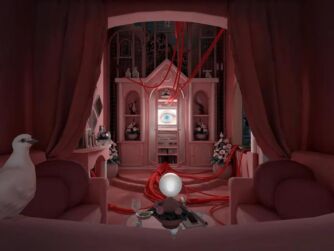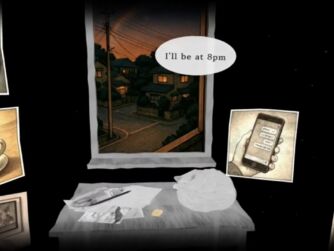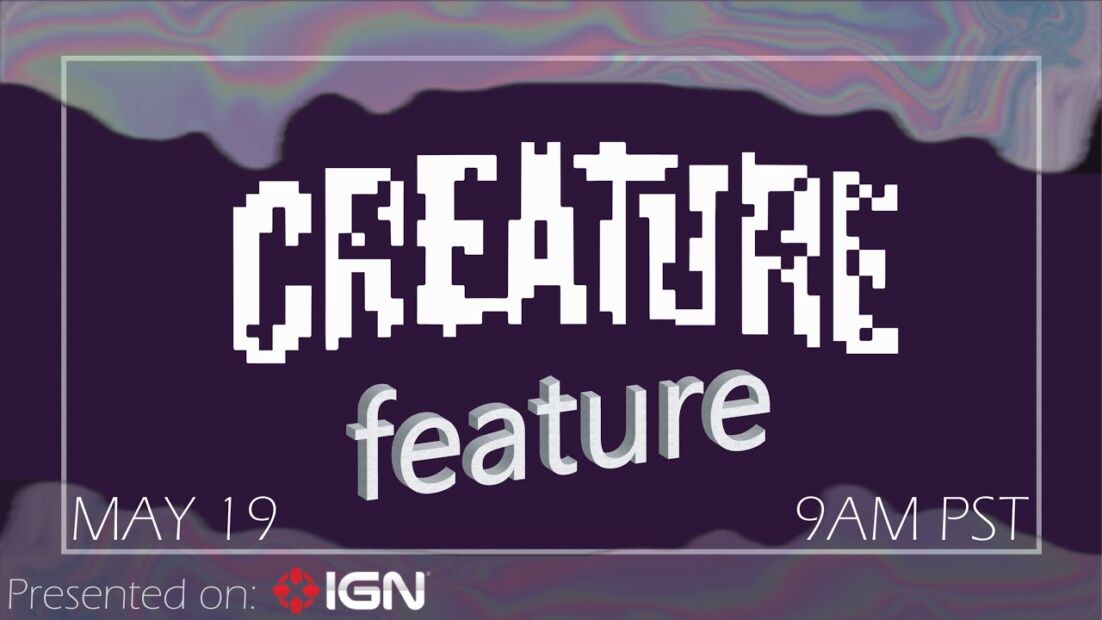
The Creature label features a lot of really innovative VR and MR games with rich and innovative gameplay mechanics, and they just featured three new games, a new DLC pack, and lots of updates about the games in a half-hour Creature Feature gaming showcase hosted on IGN. I had a chance to catch up with Creature CEO and Creative Director Doug North Cook to unpack all of the different announcements as well as do a bit of vibe check on the state of the VR industry (and responds a bit to Chris Pruett’s GDC talk on Meta and the shifting gaming ecosystem).
- Announcement of Adepts Arena game
- Laser Dance update of entering into Early Access in Fall
- Thrasher is coming to Steam Deck
- New The Light Brigade mixed reality trailer
- Neat Corp recap with Budget Cuts Ultimate
- Neat Corp recap Garden of the Sea on Switch and Steam Deck
- Announcement of Crossings with a Steam Next Fest demo on June 9th
- Wordbound Teaser
- Prison Boss Prohibition launches on July 10, 2025
- Compass shout out at the end of the Creature Feature of Trebuchet
- Announcement of Maestro DLC of Duel of the Fates from Star Wars Episode #1
- New Starship Home accolades trailer
- Equip soundtrack for Starship Home coming to 100% Electronica label
- Creature Feature Bundle launches today with a 30% discount featuring Maestro, The Light Brigade, Fujii, Budget Cuts Ultimate, Garden of the Sea and Prison Boss VR
- Horseshoes Hotdogs and Hand Grenades developer Anton Hand says, “It’s tough finishing stuff.” No additional context, but could the full release of H3VR 1.0 be coming soon? And/or a future Creature collaboration?
- Sidequest Indie Spotlight Summer 2025 launches on YouTube
- We Are One shout out.
- Announcement of Deadly Delivery entering a closed beta period
Here is the Creature Feature 2025 Summer Showcase that premiered on the IGN YouTube channel today at 9a:
This is a listener-supported podcast through the Voices of VR Patreon.
Music: Fatality
Podcast: Play in new window | Download
Rough Transcript
[00:00:05.458] Kent Bye: The Voices of VR podcast. Hello, my name is Kent Bye, and welcome to the Voices of VR podcast. It's a podcast that looks at the structures and forms of immersive storytelling in the future of spatial computing. You can support the podcast at patreon.com slash voicesofvr. So in today's episode, I'm featuring Doug North Cook, who's the CEO and creative director of Creature, which is an independent VR label that just had a half-hour summer showcase featuring all their different announcements for the VR titles that they've been working on. So there's three new titles, there's some DLC from Maestro, and there's also a lot of other updates from the other projects that they've been working on, either ports to other platforms or teasers coming soon, and then also some surprise announcements in terms of some future collaborations that they're going to be working on. And so as we start off this conversation, we do a little bit of a State of the Union of Independent VR Game Development, and There's been a lot of changes on the Metastore and a changing ecosystem in the broader community of game development, where the entire industry is kind of moving more towards these free-to-play type of games. There's also a changing landscape of the audiences that are using virtual reality, which is what Chris Pruitt was really diving into in his talk at GDC this year for Meta, the past, present, and future of VR, where they're looking at the VR elites, which are what we know, probably a lot of listeners to the Voices of VR are folks who have been really interested in like the mechanics and the premier bespoke handcrafted types of independent creations that we've seen in the vr industry for the last decade and then there's all these teenagers that as they come on they're not spending as much money they're going to the free to play games and they're discovering things on youtube or seeing a viral video on tick tock and then they're coming in and maybe having an experience that is more free to play or maybe they're purchasing stuff And then Chris Prute was also identifying that there's a brand new demographic, which is like the adults who are more watching TV on the mixed reality. So not necessarily a gamer. They may have more casual games, but not necessarily the primary reason for why they're buying a VR headset. And so they see this as an emerging market, but yet what they're funding isn't necessarily like the core VR elite type of games. And there's a lot of funding that they're doing for Horizon World. So there's just a broad shifting landscape. And, you know, Chris Pruitt in his talk was like, we don't really know what's going on, but there's certainly been a lot of changes that may be difficult to pin what the real cause is. But there's ecosystem changes in the game industry. There's also just a lot of other audience changes and just it's It's kind of a weird time for everybody in the VR industry. And so I wanted to just get a bit of a vibe check from Doug to hear some of his thoughts and reflections. And what Creature is doing is really creating these kind of bespoke, premiere, independent VR game experiences that are really pushing the edge of innovation, of interaction design, game design, narrative design, in general, pushing the edge for what's possible in the medium of both VR and mixed reality. So we're covering all that and more on today's episode of Voices of VR podcast. So this interview with Doug happened on Thursday, May 15th, 2025. So with that, let's go ahead and dive right in.
[00:03:12.983] Doug North Cook: I'm Doug North Cook. I'm the CEO and creative director at Creature. Creature is both an XR focused game studio and also a label. So we released our first game from our internal studio last year, Starship Home. And then our label is now made up of 11 different studios, all of which are working on XR games, a mix of VR, MR, and then some games now that are also going cross-platform and doing non-VR, non-XR versions of some of those titles as well.
[00:03:49.594] Kent Bye: Awesome. And maybe you could give a bit more context as to your background and your journey into the space.
[00:03:54.657] Doug North Cook: Yeah, for sure. So I had a couple of friends who got the Oculus DK1. And when I saw it for the first time, I was immediately struck with this idea in my head that that was this is what I do now. And at the time, I was doing more general digital design. I was doing interactive software development. I was doing all sorts of different things around the world of design and interactivity. And VR really presented this new idea to me that I could bridge a lot of my core interests around design, storytelling, architecture, and games as well. But I would say really until recently, I wouldn't have even really talked about or considered myself to be like a game developer. And pretty quickly after I started teaching myself how to build VR games and apps and experiences in Unreal Engine and started learning a lot of other software, collaborating with other people, and released a very early SteamVR kind of tech demo game called Forestry back in, when was that, like 2018 maybe? And through all of that, I was also teaching at a university where I was running design courses for kind of general digital design students. And we ended up in conversations with the administration of Chatham University, where I was teaching about XR and about these technologies and where they were going. And we I ended up spinning up an undergraduate degree program focused on immersive technology, which at the time was really the first of its kind standalone dedicated program focused on XR, which really was a design program that was using XR as it's medium. And I did that for about seven years. And then a friend of mine, Callum Underwood, called me. He was running a company called Robot Teddy at the time. And he was like, it's time to come down from the ivory tower of academia and get back to work. And I just couldn't say no. And so I resigned from my position at the university, gave my faculty time to prepare, but then I left and went and took over VR at Robot Teddy, where we worked on some really incredible projects while I was there. in and out of VR. We brought Among Us VR to Quest. We published The Last Clockwinder. And we were also funding several other games and then working on big non-VR games like Vampire Survivors and the non-VR Among Us, Gang Beasts. It was a really exciting time. And it really gave me this kind of what I call like drinking from the fire hose moment where I got to see the ins and outs of all of these different amazing indie teams who were building these games these incredible games. But I really just wanted to go deeper on the work that I had been doing previously. And I had this idea for a mixed reality game. And I went around to a bunch of the people that I admired the most. People like Mark Schramm, who was the lead engineer on Superhot, and Ashley Pinnock, who was the art director on Tilt Brush, and Chris Haney, the producer from Space Pirate Trainer. And I went around all these people who had worked on some of my favorite things that I'd ever played. And I was like, what if we all worked together to build something new, which is what we did. And I know you spoke to Mark and Ash last year. And then from there, like it's really spiraled. It was never really my intention to grow our game label to the scale that it's gotten to now. Originally, it was really just meant as a kind of structured way for us to collaborate and help a couple of developers who, I really liked and who I thought that I could help with some of the knowledge that I'd accumulated over my time at Robot Teddy and previously. And now that's grown from I always thought we would cap the label at like three or four studios. But now we're now we're 11. So I think that brings us basically like up to today.
[00:08:06.249] Kent Bye: Okay, well, this coming Monday, we're recording this on Thursday, May 15th. And next Monday on the 19th, you're going to be doing a showcase with IGN. And I'd love to get more into the details for how that came about and what you're announcing. But before we do that, I want to do a little bit of a update vibe check as to like how it's been going in the industry. I know that at GDC, Chris Pruitt from Meta gave a whole talk where it was basically like, hey, we're looking at more of free-to-play type of games. know there's obviously a huge focus for meta on horizon worlds and so you've had this kind of shifting landscape for independent vr developers where a lot of the focus of meta themselves are into this other model that isn't about buying games and it's about these big social platforms so you're in a unique position here where you seem to be curating some of the best of the immersive games that are out there and still like really making a go of it as an independent label So I just wanted to check in and see how it's been going and just some of your reflections on the shifting landscape and how you've been able to thrive within that context.
[00:09:11.924] Doug North Cook: Yeah, yeah, it's a great question. I had somebody ask me about this last night. They were like, Doug, how is it going? And I was thinking about it for a long time and I just kind of stood there dumbfounded. And then finally what I came around to was that if this was three years ago, we would be doing terribly, right? We would be doing very poorly in the context of the trends of where things were going and the per developer, per title revenue breakdown kind of across the platform. But we live in very different times right now. And I would say in the current times, we're doing very well. But at a different point, I don't think we would be saying that. And I think you highlighted a piece of that, which is that the market has really shifted. And so I've been really deeply involved with a lot of VR games over the last several years. I've gotten to see... You know, games that are up at the scale of, you know, Among Us and Guerrilla Tag and games that are down at, you know, the smaller kind of indie puzzle game scale games like The Last Clockwinder or a game like Cubism that's on our label. Right. And so and then some things that live in between and above and below all of that. And the trend towards free to play, I would categorize as concerning for a variety of reasons. I think the big one being that it doesn't scale very well. It doesn't scale very well to an ecosystem, right? And especially right now, it's not like the number of users on the Quest platform is growing massively month over month, right? And we're not in a period of massive expanding growth. But we are still in a sustained period of regular content releases. And so the amount of noise that lives on the platform now and the amount of free-to-play content means that users have more choices than they have ever had, that the dominant choice is free-to-play content and Horizon Worlds. When you go onto the platform, that's the majority of the content that you'll see. And there still are some premium titles that are able to stay highly competitive in that space. But really, that's pretty limited to games that can break through to the top 20 for premium sales. But I think the bigger picture here is that per developer, per title, per studio revenue is not growing year over year. right you have outliers you have exceptions but this has been inevitable and i think this is part of you know i think a lot of developers have been really angry about how this change in the demographic in the platform has affected their revenue but part of that is that everyone got really caught up in the idea that the boosted numbers that we saw in 2021 2022 in and out of the pandemic new hardware cheaper hardware huge influx of users that that happened at a time when there was still a very small amount of content especially great content on the platform and i think to your point like social free to play and just social content in general has become The main driver for all content on the platform at their notable exceptions right like own lab and blatant sorcery and I am cat. Right there are these standout premium experiences but, but I think the big thing there we've been talking about this a lot is that. There's basically two places, and this is like an oversimplification, but there are two places where you can invest your development time when you're working on a VR game. You can either invest in interaction richness, like making a game that feels incredible, and interaction could go into systemic depth, gameplay depth, narrative depth, You and your ability to act on the environment and interact with characters and interact with items right that. There are games that go really, really deep down in that direction right like something like the room. That is so much about like high interactivity like really, really rich environments right but. That's expensive to do from an art perspective. It's expensive to do from an engineering perspective. And where a game like Gorilla Tag or Penguin Paradise or games that are originally made by one or two people and then they scale once they get more successful, but those games benefit from high social richness. Gorilla Tag has amazing interaction richness, but it's very simple. It's very simple, but very refined. But the social richness is off the charts because other people are so interesting. And other people are really dynamic. They can make their own choices. But what is happening now is that because revenue is getting diluted, and because this is the most challenging funding cycle yet in the last decade, probably. It's the most challenging time to raise any sort of capital. And so what we're seeing is the majority of developers now pivoting from interaction richness to social richness. And the problem there is that what we've seen, and this is over and over again over the last year especially, is you see a lot of games that come out that are multiplayer, often free to play, and that they focus really, really hard on trying to maximize user purchase intent and the social dynamic, but oftentimes they sacrifice big, rich environments or interaction richness, right? The things that you always are going to have to flip the switch one way or the other and focus your development effort. And I think that's kind of where we are now, which is that there's just so much content and even the free-to-play space, I think, is already starting to feel that squeeze where now there are 10 to 20 free-to-play social games that are all quite large, where a couple of years ago, there were two or three, right? And so they're now all competing against each other, which means that competing in that space is more expensive and more difficult than it's ever been. Because now you're competing against sophisticated operators, serious actors with large teams, with people who can focus only on monetization, right? It's no longer necessarily the like one to two person free to play scrappy teams that are maintaining those top spots. But those games still come in to the top charts. But the top charts now tend to be kind of solidified around a few of these larger teams that are really able to build on that structure. So.
[00:15:58.601] Kent Bye: Amazing. Thank you for that really in-depth elaboration of a vibe check, as it were, as to the state of the industry. And also helping to contextualize what Creature is doing with this announcement that's going to be coming out on Monday, because there have been a number of different VR-specific features that I know Upload has done some. There's This may be the first time they've seen like an IGN specific. So looking at the broader video game industry rather than just the trade journals within the XR industry. So maybe just give a bit more context for how this partnership with IGN came about to be able to announce all these latest titles that Creature is going to be having in the next three months.
[00:16:40.336] Doug North Cook: Yeah. So I think this conversation started between me and Ed Lago, who's our senior producer for the Creature label. Ed and I were talking last year, and when it became pretty clear to us that we weren't going to see a summer game showcase from Meta last year, which was something they'd done for a few years, trying to build an event that maybe felt a little bit similar to PlayStation's State of Play or the Nintendo Direct platform level showcase event. And because, right, a lot of the titles that we've been working on at Creature are, right, we're partnering with the platform, we're using a lot of the new technology, right? So platform showcase kind of makes a lot of sense to announce new games, all of that. And right before that, we had gotten amazing support from Jeff Keighley to debut our initial trailer for Thrasher at the Game Awards. But once we realized, we're like, OK, there's not going to be a platform showcase. We just kind of started joking. We're like, I guess we have to do our own. And that joke never died. And then really just like a few months ago, we went to our PR and influencer agency that we work with, Future Friends. And we were like, I think we're going to do our own showcase. And so we reached out to IGN and we were just like, hey, We have a ton of new announcements. We have what we think will be maybe the most exciting standalone VR event of the year. And it's all from us. It's all games that live under our label. And we didn't think that they would say yes, in part because the general games press and general games industry has a very small appetite for VR content. especially in the last year, because I think they're just not seeing that it doesn't draw the same kind of numbers as if they just post 30 articles about GTA 6 getting delayed. That there's better clickbait than publishing content about a game that no one can play. One of my favorite, there's this great article, I think that GameSpot, maybe it was GameSpot, I don't remember who, last year published about Maestro, where they said, Maestro is the best rhythm game you will never play. And I feel like that encapsulated this idea so well, which is that sometimes the games industry, general press and general audience pays attention, but it's usually like they see a thing and they're like, wow, that's really cool. But they won't play it because they don't own the device or they've lapsed. But our real intention here was that we're really focused on still trying to maintain a really really high quality bar for design for art for games that feel fresh and novel and new and i think that those are exactly the kinds of games that the general audience and that ign is still interested in doesn't matter if it's vr or not it just matters like is it new is it interesting is it not something that we've seen before and so we went to them we're like i think we have like a half hour of content that you've never seen before and we went back and forth for a little while and then finally they were like you know what let's just do it this will be fun so so yeah it's been great just kind of working with them and pulling this together with all of our partners and by the time that anyone hears this the showcase will have already aired so i hope you enjoyed it
[00:20:04.895] Kent Bye: Yeah, well, we're recording this on the Thursday before the showcase is going to air. And so I haven't seen the full context of the showcase, but you did send me over three different press releases that are essentially covering like three major areas, which is like the new game announcements, DLC for existing games, and then other updates for the existing games that may already be released. So how do you unveil those three? And maybe we'll just tackle each of them, whichever way you think is the best way to tell the story of this Creature Summer Showcase.
[00:20:36.826] Doug North Cook: Yeah, great. So yeah, I think you hit it exactly right, which is that during the showcase, we announced multiple new games. And so maybe we start there, which is brand new games. And so the opening trailer in the showcase is for a brand new game that we had never shown anywhere previously, which is a game called Adepts Arena. which very much puts you into a character that is almost borrowed from Avatar The Last Airbender, where you as the character, you manipulate Earth and you're able to pull stones out of the ground. You're able to bring pillars out And it's all this physics-based world, physics-based combat. The art is really incredible. It's one of our favorite games that we found in the last couple of years. And that's also a game that we're launching on Steam, not as a VR game, but it will have a VR mode on Steam. And then we'll also be launching a standalone VR version on Quest as well. It's one of those kind of rare games where the The team had a really good core concept early on for a kind of input-output agnostic player controller that could live in this world as a flat screen game, but also feel really incredible when you're in VR. And when you're in VR, you're doing these gestures which actually push players boulders towards enemies, and you get this kind of impulse. And when you're playing with a controller, you're watching pre-baked animations of those movements play out. And so it feels great with a controller, but when you're in VR, you have those powers. You kind of feel that force, which is really exciting.
[00:22:18.945] Kent Bye: One quick follow-on question on that, because it looks like it's hand-tracked, but they're also locomoting around. And so is this an experience where you are using controllers, or is this a hand-tracked experience? And then if it is a hand-tracked, how are they moving around?
[00:22:31.926] Doug North Cook: So this will use controllers. I don't know if we'll ship with hand tracking, but I have played a version in VR that actually does use hand tracking as a primary locomotion method. But I would classify that still as experimental. And I don't know if we'll end up shipping that or not, because very, very difficult to get to a hand-tracked locomotion system that feels native and really kind of hits at the same level as the controller movement
[00:23:01.633] Kent Bye: Yeah, because as I was watching the clip, it looked like you really want to just have your hands free to do these kind of gestures to really get that level of immersion because they're not holding anything in the VR game. Exactly. The other thing just to note on this piece is, like you said, the art style is incredible. It reminds me a lot of Arkane in this kind of painterly style. Is this using like Quill or like, is this all like toon shaded or like a shader based?
[00:23:25.169] Doug North Cook: This is all in Unity. This is just Daniel, the lead developer, the creator of this game. The game almost looked like what you see in the trailer when we first met him. And this is just his style. And it really is beautiful. And this was actually one of the other games that we ended up funding through our partnership with SideQuest. which was a funding partnership we announced last year. And the first game through that partnership that we funded was Maestro, which came out last year. And then the other two are announced during the showcase today, Adept Serena being one of them.
[00:24:02.964] Kent Bye: Yeah, it might be the first time that I'm closing credits of a trailer. I see Quest, SideQuest, and Steam all listed side by side. So it sounds like it's going to be launched on SideQuest as well.
[00:24:13.619] Doug North Cook: Uh, well, SideQuest was partnered for the funding. And so they're listed as a partner for the project. Okay. But, but I do like to think that we are right. Like we, because right. We're, we're not a platform. We're the place where everything comes together, right. That we can partner with everyone. We can work with everyone in this way where, yeah, you can have a game that comes to all of the platforms and they can all partner to have it be great on their platform.
[00:24:40.086] Kent Bye: Hmm. The final thought I have just by watching this trailer is that it's presumably people that are well into the game doing all these combinations of gestures where there's going to have to be a tutorialization of this and people slowly building up to the point of getting what we're seeing. Because it seems like you're creating like a whole new like American Sign Language type of like gesture based mechanics where you're using your hands to be able to do all sorts of different earthbending within the context of this game.
[00:25:07.017] Doug North Cook: Absolutely. And I think that's where, you know, Adepts Arena does what I think every great VR game does, which is that it's not about getting more skill points. It's about becoming more skilled, right? And I think so many of the best action VR games are about exactly that, right? Like Pistol Whip is such a great example, right? You don't get more powerful upgrades, right? It's really about just getting better, right? Learning the movements, learning the choreography, becoming responsive and reactive. And there's definitely a lot of that in here where I think players will find that growth and kind of skill trajectory really satisfying.
[00:25:50.509] Kent Bye: Nice. Well, one of the other announcements that you're making is Deadly Delivery. And when I watched this, it looks like this social co-op horror game that when I was watching it, I was like, oh, this seems like this could be a game where people were playing like on VR chat, where they're playing with their friends. But it's an interesting hybrid because it is a social game, which means that it's probably better when you play with other people. But some of the challenges, I guess, some games have had without a social, but if they're a paid game, then you end up having to... only play with people that happen to own it, or it basically hurts the onboarding for being able to play with your friends unless everybody buys it. And so it's in this interesting place where it is a social game, but it does look like it's got a lot of near development. So I'd love to hear just a little bit more context of how you hope to achieve this balance of having this type of co-op game.
[00:26:38.622] Doug North Cook: Yeah, absolutely. So Deadly Delivery is the last game from our partnership with SideQuest. And this was a game where I had met the developers from Flathead Studios who made We Are One. I don't know if you ever played that, which is a VR shooter that uses a cloning mechanic, kind of similar to the cloning mechanic in the last Clockwinder, but in the context of a puzzle shooter. Incredible game, incredible game, but a very complicated game to sell. And they came to us with this idea for this game And once they started explaining it, I just started laughing, which is a good sign in any pitch. I was like, if you can make me laugh, then we're probably on a good track. But I think to your point, like what we're really hoping, and I think this was part of the magic with Among Us, right? Among Us is cheating because Among Us gets to leverage the IP from one of the biggest games. But I think there is a misnomer in all games, and I think this is true of mobile games and also VR games, that you have to be free. The game must be free in order to incentivize people to get in, especially for multiplayer. But I don't think that's true. I think there are a lot of games on Quest, I think, You can take even like something like Ghosts of Tabor as an example, right? Where it's a pretty high premium price. And I think there's very little conversation about Ghosts of Tabor of it being something that is like you're gatekeeping players because of the price. Because it's just like the experience is great. And I think when the experience is great and you're not trying to monetize player time, you're trying to incentivize players to invite their friends in because the game is fun and exciting. and they get so much of that experience just by getting it and so i think our hope is to release deadly delivery at a very very accessible price point with a really nice amount of content but it really is like this is one of the most fun vr games i've played in such a long time like we always get really excited internally to do play tests because every new play test there's some new like really novel inventive mechanic that we've never seen before. And the team is just, I think they've really found something special. And I think this is part of like the drive towards free to play is that not every game should be free, but also not every studio is built to operate a free to play game. this is one of the biggest kind of misconceptions around all of this is that like if you just go free to play then your game will work and you'll make money right but the reality there is that if you're going free to play the average amount of revenue that you're going to make per user just goes down so so so low right and i think the reality is that for the average developer free-to-play in-app transactions are not building them a sustainable business. And there's no going back. It's very hard to convert a free-to-play game into a premium game. It's hard to do the reverse as well. But I think for us, it's really, and this is true with all of our partners, is finding the right approach, finding the right price point, finding the right business model for your game That makes sense for you and your team, right? Because if you don't have someone who understands monetization, you don't have a serious user acquisition strategy, you don't have the budget for that, or you don't get lucky and your game goes massively viral on TikTok. YouTube Shorts and everywhere else, if all of those things aren't true, then you're going to have a really hard time going to war with the big free-to-play games who are super entrenched, who have big budgets, who are really aggressive about user acquisition. And our view is still very much that great games can be sold. Right? Unfortunately, I think that's become a counter narrative to what most of the advice that developers have been getting. And unfortunately, I do think that the platform level algorithms and results tend to favor free to play games because they tend to favor metrics that are aligned with the platform's incentives, which is mostly around user retention and like overall user activation. But there are so many other metrics that But I think at least for this game, we'll see how it goes. But we really are excited to see people get in there. And I think to your point, our hope is that over time, we'll get more mechanisms for players to be able to invite other people into these experiences. Steam has some great options for this, like being able to buy packs of a game right so you buy a multiplayer game it's like oh you can buy a pack of four licenses and then gift them out to your friends right there's a really great history and culture of this right where basically like one friend is the patron for the other friends it's usually an I have a friend who always says this when we're out to dinner. He's like, whoever makes the most money pays. And unfortunately, at least currently, there are no mechanisms like that on the Quest store. But those are the kinds of things we would love to see. We'd love to see more options for players to get in and out of games. But I also think doing things like letting users do Try Before You Buy, doing free weekends, doing other things where people can get in and try it, And I think it's like, oh, you get in and try it and the price is accessible enough, you might just buy it. Because it's going to be as expensive as a cool hat in Gorilla Tag. And it's like, do you want a cool hat or do you want a new game? And I think it's really about demonstrating to users why something is worth the cost in the first place. And that's on us to do. I hope that the trailer that we have in the showcase does that, that people watch it and they're just like, ooh, I need to go add this to my wishlist.
[00:32:40.133] Kent Bye: Yeah, there's a lot of social dynamics that are being featured, but also just like it looks very quirky and a fun adventure with your friends.
[00:32:46.697] Doug North Cook: And you see this in one of the clips in there, but I remember the first time playing when this mechanic had been introduced where there's this monster in the ceiling. And at one point I'm walking through a level and I just hear Ed saying, screaming behind me and I turn around and he's being lifted up into the ceiling by this tentacle and he's just screaming and shaking. And I'm just like, oh no. And I run over and I grab his legs and I try to pull him down, but they hadn't added the pull down mechanic yet. So then I start getting pulled up into the ceiling and then I just let him go. And then I run away screaming and then I hear him stop screaming and I'm like, oh no, he's dead. So I just keep running and then I'm alone in the dark. And I think it's one of those games that just, it lends itself to that kind of emergent storytelling, right? Where it's like, oh, me and my friend were in this cave and then this happened and then this happened, right? And I think that's, there's some magic there, right? And this is like, this is a game that I keep explaining to people as memories, right? I'm not, I don't explain the mechanics. I just explain what happened during a session. And that's what excites me about it is that I have fond memories of playing it. Even though like I'm not a horror gamer, I'm a big scaredy cat, but I love playing this one.
[00:34:06.550] Kent Bye: Nice. Well, for any fans of neat corporation and budget cuts should be excited because there's a brand new game called Crossings that's set within the mythical Norse afterlife. And maybe you could just describe a little bit about Crossings.
[00:34:18.615] Doug North Cook: Yeah, so Neat Corp was one of the earlier studios that we ended up signing to the label, which still feels like a huge honor to me. I remember playing the original Budget Cuts when it came out on the Vive. And I think for a lot of us that were working on VR in those very early days, Budget Cuts was a massive source of inspiration. They were one of the first, if not the first game to introduce teleportation as like a core mechanic, and they did it in such an incredible and unique way. And I've been a longtime fan. And so we started working with them originally to work on the release of Budget Cuts Ultimate, which takes Budget Cuts 1, Budget Cuts 2, repackages them into a single application. And then they came to us and they were like, hey, we actually have something totally different that we want to work on. and at the time they were working on on taking garden of the sea their cozy farming simulator adventure game that's also on quest and porting that down and squishing it onto the nintendo switch which we released at the end of last year but when they came to us with crossings we were just like oh this is not like any of the things that you've done it's a co-op multiplayer dark action roguelike game and There's something in here, and I think you catch a little bit of this in this kind of early teaser trailer that we're showing, where it brings together some of the high richness, high interactivity world of budget cuts, but in this very, very different, almost Dark Souls kind of setting. And one of the things that I love about this is that you... you don't like meet players in a lobby. You encounter other players in the world. And so there's this system basically that as you're playing through the game and very often you'll play it just as a single player game. And then you'll be in a forest and you'll see a lantern off in the distance. And you go towards it, and it's not an enemy. It's another player. And basically, your world can get stuck on top of another player's world. And then you can play together for a certain amount of time. Very similar to how it works in a game like Journey, where you just encounter a player. You play. Maybe you go fight a boss. But then that player dies. And then you're left alone. And then you're back on the path. And so you build these very ephemeral relationships with other players. And I just hadn't seen anybody try to do something like that, to make something that is a little bit slow, a little bit dark, a little bit brooding, but also has this social element. But at least for right now, the plan is primarily to still not have voice chat enabled by default. So the social richness becomes about the interaction richness. which is a concept that I love, which is taking, right? It's like, I meet another player and we have to kind of strategize and communicate with hand signals and gestures and be like, all right, like I've got a bow, I'm going this way, right? And you're pointing towards some enemies and you're trying to almost do like military style, like, stealth hand signals to coordinate a plan and then you go and do it and then you like clasp arms at the end, right? And it just, I think there's an opportunity there for players to build a different kind of rapport and relationship than you would if you're playing something like Gorilla Tag or Ghosts of Tabor, right? Where it's so much more about the voice chat and the game and this is so much more about kind of that intimate close quarters like acknowledgement of another being and i think it helps to keep it very in world as well right where you don't just like hear someone just being like hey i just had a sandwich oh, how's your day going, right? It's just, you just see someone off in the distance and they just gently nod to you. So, but yeah, we're really excited about that. Really excited for people to see that for the first time. And we'll have a lot more to show about that as we get through the year. That's still pretty early in development. And so what you're seeing here is, you know, still very early, like pre-alpha footage. So.
[00:38:24.571] Kent Bye: Okay. Yeah, that sounds amazing. And also reminds me of the Under Presents from Tender Claws, where they also made the design decision to not have voice chat. And so there ended up being like an entire gestural language that got developed amongst the hardcore fans to be able to communicate with each other. So it sounds like something very similar may come out of Crossings as well.
[00:38:45.290] Doug North Cook: I would love that. I mean, the Under Presents is still one of my all-time favorite. I think it's top five for me, top five all-time. Shout out to Tender Claws, to Samantha and Danny, because there's nothing like the Under Presents. And I don't know if there will be. I hope there will. There will be again. Someone will kind of re-approach that space, but there's a lot of deep magic in there. So if we can bring just a little bit of that into Crossings, then I think we've done it.
[00:39:11.809] Kent Bye: Nice. Well, let's move to the DLC announcements, which you have Maestro, which is this conducting hand-tracked based game. And there's some new DLC. Maybe you could tell us about what content deals you've been able to do with Maestro.
[00:39:24.557] Doug North Cook: Yeah, so Maestro, this is a game I've been working with these developers for a few years now. They're based in Paris. And yeah, if you haven't played Maestro, it is an orchestra conducting rhythm game. We jokingly and then no longer jokingly refer to Maestro as Maestro does for hand tracking what Beat Saber did for controllers. which gives you this deep connection to music by getting you to mime this simulated experience. What's very different about Maestro is that Maestro is, at its core, a role-playing game where you are the maestro, you are the conductor. In Beat Saber, you're just a nameless entity in a void full of cubes, which is great, right? And I love Beat Saber still. But Maestro, I think, gets to benefit from this role-playing component where you are at the center of the experience, you are conducting the orchestra. And Maestro was also named Meadows Game of the Year last year, which we were really excited thrilled about. But what's been great to us, and this was always the intention of Maestro, the intention for us was always to try to bring amazing movie, TV, video game scores into Maestro so that you could play songs that... felt as epic as we thought the game felt. And we weren't sure if that was ever going to happen because it had taken us so much time to try to negotiate some of these licensing agreements. But the team at Doublejack was so persistent and just would not let it go. And for the holidays last year, we launched a DLC pack that had the main theme from Harry Potter and the Sorcerer's Apprentice from Fantasia. And that was kind of our brute force test. We're like, if we can get these in here, then I think we can get almost anything. And so then after that, in just last month, we released a pack that has the main theme from Game of Thrones and the Bridge of Khazad-dûm from Lord of the Rings. And then what you see in the showcase is that we're bringing Duel of the Fates from Star Wars as a smaller DLC pack to coincide with us bringing the game to PSVR 2. But that content will be available on all platforms. But I'm really excited about that because I'm a huge John Williams fan. I'm a big Star Wars fan. And just like having the Duel of the Fates in the center of our showcase is just so fun for all of us. So, and yeah, we'll have a lot more coming like later this year into next year. We're not slowing down the Maestro content train anytime soon.
[00:42:07.782] Kent Bye: Nice, nice. Well, I look forward to diving into all the latest DLC and to actually check out Maestro. I saw Symphony at South by Southwest, but I still haven't had a chance to dive in. But I think I'll try to check it out and then maybe schedule an interview with the creators and do a whole deep dive into it. Just like I did a deep dive into all the DLC packs that were on Walkabout Mini Golf here recently. Well, let's get into some of the other odd ends and bits of announcements that are coming. You have a third email that is all other announcements and roundup email that includes everything from LaserDance, Thrasher, The Light Brigade, WordBound, Prison Boss, and Starship Home. So maybe you could just run through some of the big highlights there.
[00:42:50.560] Doug North Cook: Yeah, so yeah, lots of other things as well. One of the things that I'm the most excited about in this showcase is that we announced that we're going to be releasing Laser Dance with Thomas Van Baal in early access later this year. And Laser Dance is one of the best XR games that I've ever played. It's one of these things very similar to Cubism, which Thomas made as well, is that it requires no explanation. If you've... put the headset on, you see the lasers, you're like, I shouldn't touch those. And then you're like, yep. And then that's the game. You just start playing. And we've seen this in playtest. After playtest, players get in and then they come out half an hour later. And they're just like, they don't ask any questions. They just keep playing. They go over and over again. And what LaserDance does, the kind of core premise is that it takes the 3D mesh of your room that we get from the room scan from the MetaQuest And then it superimposes and procedurally generates these laser obstacle course levels over top of your room. And it's really simple, but incredibly elegant. And it's one of those things that it just works and it just feels great to play. But it's also, I mean, our team having worked on Starship Home and going really deep into the mixed reality tools, we know exactly what Thomas has been up against. trying to make a mixed reality game that really uses the room volume as a core component of the design, of the play structure. And that means that it needs to be able to adapt to any possible room, any size, any space, anywhere, which means that it can't, right? It won't. It won't be perfect. in every single possible environment. But the goal is to get it as close to that as possible, right? To have enough adaptability and resilience in the core underlying design. But yeah, really excited about that. So yeah, early access later this year, we'll announce the release date when we're ready, but we're definitely getting a lot closer.
[00:44:53.393] Kent Bye: So I had a chance to play laser dance last year at rain dance as a sneak peek and then did an interview with Thomas. So I'm really looking forward to based upon what I saw and it has dance in it, but I wouldn't say it's a rhythm game. That was one of the things that it's not really a rhythm game. It's just more of like, you have to dance around the lasers.
[00:45:09.562] Doug North Cook: Right. I was actually watching Ocean's 11 this past week with my wife, which has one of, I think it's actually Ocean's 12 that has this iconic laser scene. And I texted a screenshot of it to Thomas and he was like, I've actually never seen this movie, but I have seen this clip. And when you watch the clip, it's just the most ridiculous, convoluted, like the lasers that the guy's moving around are just emitting from the the interior of a marble column in a museum. And it's just like, there's no rhyme or reason to it, but yeah, it's a great one. And I think it's for us, it's really one of those games that explains like why mixed reality as a medium is so exciting and so interesting this idea that you can have a game that really embraces whatever room you're playing it in and makes that room fun right and in that way it's almost on the border of like it's a toy right like it's an incredible toy that comes alive in your space right so different from traditional thinking and structure of like what a game is I think if most people could buy an amazing laser obstacle course game for the price that we'll release Laser Dance at, they would be so thrilled to be able to do that. So if you have a MetaQuest, make sure you wishlist Laser Dance and keep your eyes out later this year.
[00:46:31.892] Kent Bye: It's MetaQuest 3, right? Or is it MetaQuest 2?
[00:46:33.813] Doug North Cook: No, it'll be just on Quest 3 and 3S for now. Okay.
[00:46:38.530] Kent Bye: All right, well, what are some of the other big highlights from either Thrasher, Light Brigade, Word Bound, Prison Boss, or Starship Home that you want to highlight here?
[00:46:46.934] Doug North Cook: Yeah, let's see. Other things that we had in the showcase today. Yeah, we're bringing Thrasher to Steam and Steam Deck, not as a VR game. We'll also probably be announcing some other places that it will be coming as well. But we're really excited about that. I think similar to Adept's Arena, Thrasher is a game that I think is as at home on Steam Deck as it is on Apple Vision Pro, which is really exciting for us. Like, I've been playing the current version of the game on my Steam Deck pretty regularly, and it just feels great. I think in part because the game is so... audio visual and the core input in the game on quest and on vision pro is hand tracking and so it's this kind of very elegant gestural maneuvers that you're doing which translates really nicely to joystick movement but also to touch as well and so playing it on steam deck you can use the touch, you can use the touch pads, you can use the joysticks, right? It's one of these games that has really, really wide input resilience. And so really excited about that coming to a bunch of new platforms over the next year. The Light Brigade, we're showing in the showcase this new mixed reality trailer for the Light Brigade that our friends at Live made. And we're not announcing anything new for the Light Brigade. We just thought this trailer that the guys at Live made was so sick that we just had to include it. Because they had just wrapped production on it and we hadn't shown it anywhere. And I think it really captures a lot of the spirit of The Light Brigade, which is that The Light Brigade at times can be a little bit of a slow moving kind of strategic game, but then it goes into these really high intensity combat moments. I think what we wanted to do with this trailer is just show how expansive the game has become. Because the developers, and I think this is part of why we love working with Funktronic Labs, is that they've just been releasing massive content updates for the Light Brigade since it launched. I think five or six huge content updates with tons of new items and weapons and new classes, new areas, whole new gameplay modes. And none of that is paid DLC. It's just free content updates to a premium game. And I think that's really a lane that we're still trying to make work, which is we want people to be able to buy a game and continue to enjoy it without spending more money all of the time. With something like Maestro, it's a little bit different because we have to cover licensing costs and the development cost of all of that content can be pretty large. But yeah, really excited about continuing to really reintroduce people to the Light Brigade. But one of the other kind of not really secret, but new announcements and really like this was kind of just meant as a teaser. And then it kind of ballooned into something a little bit larger, which is that we showed this new game, Word Bound, during the showcase, which... is a game that I've been hoping would get made for years. This is a new game from Andy Bacon, who's actually the developer of Davigo, which is a third person on a PC versus a giant person in VR PVP game that did pretty well a couple of years ago. But Andy, he had made this short video clip that he had posted on Twitter years ago of him pulling apart a pineapple And when he would pull the pineapple apart, it would show the word pineapple. And then he would pick the letters out of pineapple to make the word apple pie and then put the letters back together. And then he would have an apple pie in his hand. And it was this amazing short little clip that was just like, oh, pulling objects apart into the word and then rearranging them and making a new object. And it went massively viral on Twitter. And I see you nodding because I know you've seen this clip.
[00:50:38.574] Kent Bye: Yeah, I remember seeing that. OK, so it's a whole game now.
[00:50:41.416] Doug North Cook: Yeah. And so we started talking with Andy and he was like, I kind of want to make, he's like, I've always wanted to make that into a game. And we were like, at the time, and this is part, this goes back to our state of everything conversation from earlier, but I really am pretty convinced that the future of all of this is... going to be like mixed reality or MR or AR and hand tracking. That controllers are amazing for so many things, but they're not great for, they have to be charged. It turns your device into three disparate devices. controllers are pretty high friction and controllers are made for gamers, right? That using controllers with joysticks and multiple buttons is not a general consumer behavior, right? The general consumer population does not use a game controller. They are primarily used to playing games on their phone, right? And so to tap into a general audience in the long term, you have to go to hands as the primary input. And so what we've been doing pretty aggressively over the last couple of years is try to find everyone who's making something amazing with hands that we think would benefit from working with us and then try to get them to come in and work alongside us and the rest of the crew here. And so, right, like Maestro was a big one for that. Thomas's games, both Cubism and Laser Dance are amazing for that. Starship Home, also fully playable with hands. but word bound is one of those games where it's just this kind of perfect minimalist puzzle game, right? You play it on your couch and it feels kind of like this mix almost of cubism and wordle and right. Just this elegant, playful, nice, cozy, casual game. But yeah, really excited about that. We're not really announcing any details about it, but it's far enough along that I think it kind of speaks for itself in the clip that we're showing. Yeah. And then, yeah, and then we announced the release date for Prison Boss Prohibition from Trebuchet, which will be coming out on July 10th. And yeah, really excited for that to come out as well. That's another multiplayer game that we're really excited about, which we already announced. The game's already been announced. It was... We showed a trailer for it at Jamie Felton's VR game showcase a couple months ago. But what we hadn't announced even at that point was that Trebuchet had signed to the creature label. We've been working with them for quite a while now, but we've been keeping that under wraps as we prepped for... getting Prison Boss Prohibition out. And then also at the end of their segment during the showcase, we tease their next game as well, which is an adventure game called Compass. So you'll see a very short clip from that during the showcase as well.
[00:53:32.148] Kent Bye: Okay. Nice. And I saw that you picked up an award from the Dice Awards for the Immersive Reality Technology Achievement Award for Starship Home. So congratulations. Thank you. And I also saw that there is a new Starship Home trailer, which is a really nice like retro vibe. It feels like a cable access mashed up with like emerging technologies. It's a weird hybrid. It gives me a lot of like vaporwave vibes mixed with quirky humor. But yeah, just awesome. I don't know if you have any other words you want to say about this new trailer, but also just Starship Home as a game in terms of transforming your home into a spaceship.
[00:54:09.130] Doug North Cook: Yeah, so this video that we made for the showcase, I had this idea. I was like... originally I was like, I want the whole showcase to feel like a variety show and it should have guest appearances and commercials. And I almost wanted it to feel like something you would see in like the 70s or the like early 90s. And I found this guy that we have in this video who I just love. I just love his tone and his whole vibe. He just feels like the best version of like an infomercial guy from the 90s. And I just sent him this script and he read it verbatim. And then originally we weren't even planning on using video of him, but he sent us the video of him reading the script. And we were like, can we use the video too? And he was like, oh, absolutely. And we just wanted to have fun with it. I also think that like the pass through video from the quest is already a little bit grainy. And so it kind of lends itself to being manipulated in this way. But really, we wanted to use it as a time to just make something lighthearted and fun and also celebrate the different established bodies, the IGF and the DICE committee and several other places have all acknowledged. They're like, yes, Starship Home is it. It's the... the mixed reality game that kind of introduces the medium for the first time the dice award was really a thrill for our team especially because we were nominated alongside some really incredible games from last year alien batman behemoth underdogs all of which incredible games most of which have budgets that are you know 20 30 times ours, probably. But what was so great was that the team from Batman won the Immersive Game of the Year award right after us. And so they ended up backstage with us at the Dice Awards and they came in like encircled us. And at first I was like, what is going on? I was like, are they upset that we beat them for technical achievement? And then they were like, hey, we just wanted to tell you that everyone in our studio has been playing Starship Home with their families over the last few weeks. And it just like, I was like on the verge of tears. And I look next to me and the creative director from Helldivers is like, also like visibly shaken from winning his dice award and i was just felt like one of those moments where it was like oh right even back to like the general games industry doesn't always kind of pay attention to xr and dice is one of those few places where right there are two xr specific awards at the dice awards they're usually won by the big triple a game that year and so it was a big thrill for us to be there especially because like final fantasy lost an award like two awards before us and i was just like when we won the first thing that went through my mind was like we just won right after final fantasy lost and i was just like oh what a what a great thing so but the other thing i mean to your uh vaporwave vibe For the video, one of the things that we are announcing during the showcase too in this short clip is that our composer for Starship Home is this amazing vaporwave artist called Equip. We're releasing the soundtrack for Starship Home on vinyl with Equip's record label, which is my favorite Vaporwave record label, 100% Electronica. And so that's been another fun thing too, was that like Starship Home, again, was really this kind of dream team of people. Like when I was working on the original pitch for the game, I was listening to this album by Equip. and i was just like this is what the game sounds like in my head and then i saw him at a music festival a few months later and then i realized that i had like a fifth degree connection to him through like a friend of a friend and i got some people to help me reach out to him and so this is just another nice like full circle moment for us of just like being able to have the soundtrack for our game get released by like a record label and an artist that we love and And he was such an amazing part of our team and getting to collaborate with him. And you actually hear a significant amount of the Starship Home soundtrack kind of woven through the whole showcase. So a lot of our interlude music throughout the showcase is actually equipped music from the Starship Home soundtrack. So yeah, it's a fun one.
[00:58:36.334] Kent Bye: Nice. Well, this feels like we just recorded the director's commentary of the entire showcase. I think we did.
[00:58:42.220] Doug North Cook: I think we did.
[00:58:43.401] Kent Bye: Thanks so much for doing that. And just as we wrap up, I'd love to hear what you think the ultimate potential of all these emerging technologies might be and what they might be able to enable.
[00:58:52.450] Doug North Cook: Oh, this is a great question. One of the other things that I've been working on, which has been very slow, is that since I left the university, I continued working on a project with a friend of mine, Regine Gilbert, where we've been working on this immersive design theory book called Human Spatial Computing that we're working on for Oxford University Press. There's like part of me, I'm like always tempted to go back and revise the last chapter, which is very much like trying to answer this question. But the way that I often frame the question is, who do we want to become? Right. I think XR, VR, AR, all these technologies, they have such an incredible power to change the way that we view ourselves. Right. That they can give you memories. You can have these really intense, visceral experiences. And I would say I have like two views on where all of this is going and two types of people that we could become enabled by this technology, I think. And I think also with the convergence of this technology and AI, right? Like Google has been pretty upfront, I think, that like the way that they are imagining this technology moving forward is that this is part of it, right? And I think... Meta is very clearly heading in that direction as well, right? That the primary device for interacting with more and increasingly advanced AI systems isn't always on contextually aware, sensor-rich device with external facing cameras and microphones. Because with that, both because those companies want, they want that real-time data. They want that level of integration into everything, everywhere, right? And so they're incentivized to get that, and users are incentivized to give it to get better context and better information from these systems. And so I think there's these two parallel tracks that we are on. One is the thing that I'm really excited about with spatial computing generally, which is that it invites us back into our bodies. The mobile phone, the computer, the laptop, the desktop, all of these are sedentary devices. They're not really built for a real human form factor, but they are very high efficiency, high output devices. But spatial computing has this opportunity to be a very, it's a very slow input device, but it's a very high rich, highly rich output device, which I think invites us, it creates all these amazing opportunities for us to have brand new kinds of experiences, to create art in new ways, to... experience things that we could never experience, right? To be the maestro, to conduct an orchestra, right? To do these things that are impossible to access for the general person. But the other side of this that I'm not excited about is that I think there is this other potential here that these technologies both isolate us even more But also that they have this incredible potential to make us over reliant and build relationships with autonomous systems that become as rich or richer than our relationships with other humans. And I think we're already starting to see the bits and pieces of this with people and the way that they interact with text based. systems like ChatGPT and the relationships that get formed between people and those types of agents. But when you then let those agents embody a 3D character and live in your home with you and talk to you and react to you and give it real-time sensor data from the device, let it access it and interact with your home and you in that way that I think a lot of people are very excited about that. But it's such a Pandora's box of what happens when we basically and you're starting to hear some of this language from some of the people in the tech industry that basically AI is the cure to loneliness. And I'm just like, I really hope that's not true. I really hope that we don't cure loneliness by having people just have tons of AI companions. I think for entertainment, that's fine. But I think there is this line where if we go too deep down that road, we'll lose our deep connections with each other at a time when we need that more than ever, when the world is more divided and more divisive than it's been in a very long time. that we don't need less connection to each other and more connection with systems that we don't control. We need more direct connections with other people. And so I think that's a big part of what we've been trying to invite with the people that we work with and the people that we spend time with is trying to invite people to think about these technologies in a critical way and in a way that invites people into a more positive vision for the future and for themselves through play.
[01:04:08.393] Kent Bye: Yeah, thanks for saying all that because I do think that XR will be the platform for people interfacing with AI technologies. And we're in this really interesting hype cycle of AI where there's lots of hyperbolic statements being said. And also a bit of a factionalization that's happening in AI where you're either totally all bought into AI or you're totally against AI. And with the coverage I've done, back in 2016, I went and did... interviews at three AI conferences in 2016 and one in 2018. I have over 40 hours of interviews I've done with AI researchers from like 2016, 2018. I've been editing those because I'm hoping to relaunch the Voices of AI podcast that I recorded, but just never really had the capacity to really fully contextualize or release. And now with all the hype around AI, it's interesting to hear from those researchers from nine years ago and to see what is persistent in terms of the hype cycles being connected to the commercialization of AI. But also I've been reading this book called The AI Con. I'll be doing an interview with the authors later this week where, you know, a lot of the arguments they're making is that AI as a technology is a way of consolidating power through this automation. And so through that consolidation of power, then who's getting more power and whose agency is being taken away, especially as we look at surveillance capitalism and neurorights and all these ways that AI trying to psychographically profile us and then living in these algorithmic realities, then yeah, it creates this kind of dystopic potential that I'm excited for the potentials for AI and creativity, but In terms of the ethical boundaries of AI, I feel like it's even more pronounced in terms of how much AI has already been embedded into our worlds in terms of the power dynamics and who has the power be consolidated to them based upon these AI technologies and what's being automated and how is our own agency perhaps being taken away. So these are some of the questions that I'm really wrestling with myself, and I'll be hopefully diving into more, both on the Voices of VR podcast, but hopefully launching into the Voices of AI here to really give a format and a context to really dive deep into some of these different questions that I think everybody is going to be wrestling with here in the next 30 to 40 years.
[01:06:20.427] Doug North Cook: unavoidable at this point. So, but I think with that, you know, it really is a time for critical inspection of all of these technologies, right? And I think especially where these technologies meet, right? Because when you blend increasingly advanced AI systems with spatial computing devices. And this is part of what I'm convinced of is that that is the killer app. That is the killer app for spatial computing devices. Unfortunately, it's also the most dangerous app and it's the most unregulated. Everyone hopes that it's, not everyone, but the people that are most invested in it want it to be the everything, right? And in that way, right, it's again, something that is very much at odds with a lot of the work that we're doing, which is about people making things with technology. But the goal of a lot of these companies is to make that a thing that no longer happens, where there are still people that are asking a technology for something, but it is no longer a hands-on process. And I'm not convinced that that's fully where we'll end up, but that is very much the goal of the current actors.
[01:07:30.646] Kent Bye: Yeah, and just remember back to one of the Oculus Connect 6, I think maybe we had a discussion right after the keynote where we talked around all these different issues. So we're kind of cycling back into some of these conversations. But yeah, is there anything else that's left unsaid that you'd like to say to the broader immersive community?
[01:07:49.696] Doug North Cook: I think the main thing that I'll say, and this is something that Ed and I have been talking about a lot, which is that part of this is that we've named ourselves unofficially in charge of morale for the entire immersive industry. And part of like doing this showcase at all was basically to show everyone it's like, hey, you can do, you can still do big, wild, ambitious things now. And I think this has been a really difficult year this past year for a lot of studios, a lot of companies working in this space. And I expect the next year ahead to be even harder, even more challenging. But the reality is we haven't even started yet. I fully expect that we will see what will be the first real foundational devices a year or two from now, which will be really the first. And I think realistically, the Vision Pro is the first of those devices. But I think the Vision Pro is the Ferrari before we get the Toyota Corolla, right? It shows what's possible, right? Because it's a computer, right? It is a fully functional computing device that can do all of the things that your computer and your smartphone can do, right? It can run serious applications, it can multitask, it can do all these things. it's just still needs to get further along. It's an amazing piece of hardware. But once we see devices that have that level of capability that are smaller, lighter, cheaper, and have more robust applications, that's the real platform where we'll start to be able to build real applications and so part of this is I'm just like my greatest fear and this is a big part of what creature is kind of built to do is that we are trying to keep I'm trying we're trying to keep so many of our favorite developers in the game because we haven't even started yet. And if we go through it right, the whole world is going through a brain drain right now. And unfortunately, AI may accelerate this, right? Where you become less and less incentivized to become a subject matter expert in deep, difficult work. Or at least that's what people tell you. But it is certainly not true. But what we're trying to do is keep as many studios and as many developers working in the space as we can. And so I just want to encourage anyone who's interested and who's been working in this space is like, I just hope you don't go anywhere. Because what I don't want to happen is we end up five years from now and all that is there is free to play. race to the bottom, mobile-leaning kind of content, the way that a lot of mobile content has trended in that direction. But I think even that is a farce because there are still, on mobile, tons of developers who are building amazing, novel, premium applications who are building serious businesses. But that's because the mobile market has gotten to a scale where it can sustain that. And we're just in this valley right now. But the XR industry has been built on a series of peaks and valleys and we're in a valley right now but I think because we've been through so many valleys we're seeing so many developers bounce out of the ecosystem entirely go back to traditional gaming leave technology as a whole and I just don't want to be the last man standing I think that's how I feel so just like For anyone working in the space, I think now is the most critical time to be doing your best work, to try to pave a way towards the best possible version of this technology, because this technology will drive who we become as humans. And it must be driven by people who are thinking critically and who are fun and playful and interesting. and not by just, right? The companies historically that have built most of the greatest technologies are not the ones who build the best use cases for it, right? And I think right now what we're seeing is that the platforms are both trying to drive use case and the technology And I don't think that's quite working. And so what I think we really need is we need a much, much more vibrant developer ecosystem than we have currently, if we are going to drive towards larger scale adoption, because that larger scale adoption will only come if people pick up a device and they find something that makes sense to them. They find their killer app, whatever that is. That might be some sort of AI tool. It might be an amazing game. It might be some sort of productivity app or a movie watching experience that's next level, whatever it is. But it's not the time to slow down. Unfortunately, if you don't have the resources, it feels like that you must slow down. But this is the time to go bigger and bolder and grander than ever. which is what we're trying to do with our very limited resources, but we're just relentless. And so I hope that some other people will join us on the relentless push to try to make all of this something that's fun.
[01:12:53.186] Kent Bye: Awesome. Well, Doug, you've certainly made me a lot more optimistic in terms of the overall ecosystem and that there are folks like yourselves and your other developers that are on your label there at Creature that are really making a go of pushing the edge of innovation when it comes to interaction design, world building, storytelling. I'm really excited to see where this latest crop of different announcements that you're just making here on this showcase, where each of these projects end up. And I do feel this contrast between the harsh realities of the moment and the this dreamlike escape into these amazing worlds that these developers are creating and when i was editing my episode 1000 it was interesting to go back and to listen to the predictions of where this is all going and denny unger at silicon valley virtual reality conference on either may 19th or 20th said this industry is going to be trying to be owned by the big corporations but it's going to be the independent developers that are going to make a go of making interesting content And that has probably been one of the most prescient predictions that I've heard of all of the voices of VR is how consistent that has been over the years of how it's been the independent developers who have been really the ones that have pushed the edge for what's even possible with this medium. And I'm just really excited to see where all the independent developers that you've been working with, with these 11 different companies, take the medium here in the future. And I'm just really excited to see where it all goes here in the future. And thanks so much for your generous time for diving into some deep reflections around where the industry is at, but also what you're really excited about with all these different projects that you're working on. So thanks again for joining me here on the podcast to break it all down.
[01:14:25.583] Doug North Cook: Thanks, Ken. Always a pleasure.
[01:14:28.174] Kent Bye: So that was Doug North Cook. He's the CEO and creative director of Creature. And we were talking around the IGN Creature Feature 2025 livestream, which is a showcase of all the different announcements that the VR label of Creature was making today on May 19th, 2025. So I have a number of different takeaways about this interview is that first of all, well, one of the things that I didn't have a chance to see before I had a chance to do a preview of this creature feature was that Anton Hand of Rust LTD was actually featured three different times throughout the course of this. And he's eating a hot dog. The second time that he appears, he says, it's tough finishing stuff. And then at the end, he's eating the rest of his hot dog. So I take that to mean that he is perhaps moving towards a version 1.0 of horseshoes, hot dogs, and hand grenades. This project that he's been working on for like over nine years now in early access, continuing to push updates and updates and updates. I did watch his dev log just to see like what any other clues might have been. He did say that there is a secret project that they're going to start teasing next year. So it seems like they're certainly announcing that there's a collaboration that Anton Hand and Rust LTD is doing with Creature, but there's nothing that's being explicitly announced. And there's just kind of like teasing that there's a future collaboration and we'll be getting more information on that here at some point. But that was one of the things that I got really excited about just because I know that Anton's been working on that for a long time. But there is a lot more like things that are coming sooner. So there's the three new games. There's the Adepts Arena, which has a lot of like earthbending type of gestural hand control mechanics that looks like a really beautiful art style. There's the Deadly Delivery, which is a new game where it's a social co-op where you are delivering these boxes and these packages to these monsters. And it just seems like a really quirky, fun social co-op type of experience where you're doing these different adventures and experiences with your friends. And You kind of have to avoid getting killed with these bosses, and it just kind of creates these unique situations where you're going on an adventure with your friends and encountering all these different obstacles. So that looks like a lot of fun. And then the last game was Crossings, which is the latest piece from Neat Corporation. They did the budget cuts. They have Budget Cuts Ultimate, and then they also have the Garden of the Sea, which they're translating that cozy gardening game into 2D handheld platforms, both the Switch and the Steam Deck, which they've already announced and released recently. And then there's also Crossings, which is a brand new game, which this was really cool just to hear a little bit more context from Doug. And then as I watched the actual creature feature are being inspired by these Scandinavian poems and myths where there's these like cyclical nature where the first poem is kind of referencing the subsequent poems. And so as you are experiencing the game, you come back and revisit the cyclical narrative structure of these poems and you get a little bit more clues. And that's kind of how they structured the this experience where you're going into these different battles and then you will come across somebody and there'll be no voice chat but you'll just be doing some gestures and then through that you're able to collaborate with these other people that are coming along in your journey and you're able to do these co-op battles but then they may die and go off on their own and so doug was referencing the game journey where you have this kind of ephemeral coming in and out of these intersections with these other players So that also sounds really cool as a conceit, but also as a game. So that sounds really quite exciting. Thomas Van Baal was also giving a bit of an update on LaserDance. It is going to be coming out in early access later this fall. It sounds like that with these mixed reality games, there's so many of the unique ways that the game has to adapt to the environment that you're in. And so it sounds like that is difficult in the sense that unless you have lots of data, then you don't know what bugs you need to fix. And so it's this kind of never ending thing. with early access he's hoping to continue to get feedback and to correct these different types of bugs so that it can get closer to a full release so that's going to be releasing in early access and i did actually get a chance to play this last year when it was being featured at rain dance which by the way the rain dance immersive selection was just announced this morning at 9 a.m as well and so definitely go check that out but i got to see laser dance last year at rain dance and And it's just a lot of fun in terms of this is the type of game that you just want to show the affordances of mixed reality as a gaming platform. This is a perfect way to do that because it's you moving your body through space, using your body as a controller. And it's just very intuitive and fun as a conceit in a game. So definitely keep an eye out on LaserDance and you can go wishlist it for early access. Some other teasers of stuff that they're announcing, the word bound teaser, this is where you're pulling apart these objects and it turns into the world and then you rearrange the letters and squish it back together. Looks like a really fun puzzle game. It said in the trailer that there's some clues to a puzzle. And if you find the clues in the trailer, then you could win a free copy of the game. For the DLC, there's Maestro, which is the hand-tracked game where you're directing an orchestra. And there's some new DLC coming out with the Duel of Fates from the Star Wars Episode I. And so it's also really interesting to hear from Doug some of the other DLC that they've been doing. So that seems like that's moving along. So Jamie from the VR Games Showcase made a guest appearance and he passed it over to Trebuchet and they had all these chicken videos walking around in the snow and whatnot. And, you know, I just say as a comment, the overall experience of watching this feature showcase was actually quite entertaining just to see like there's a variety show aesthetic and the vapor wave and the music. All these things were just really tied together as a coherent experience is really quite fun to see all these announcements happening. that were being made and so trebuchet has the prison boss prohibition which is coming out on july 10th 2025 and then also there's a quick shout out to compass which was also by trebuchet uh let's see what else okay so there's a new mixed reality trailer from light brigade and then also the thrasher is coming to steam deck Starship Home has a new Accolades trailer that they were showing. So they actually won that DICE award and that was like a lot of fun as a trailer. Just this older gentleman who's reading the script and he sends in the video and they just created a really fun trailer that's worth taking a look at. And in the middle, they cut back to Equip, who's announcing that the soundtrack for Starship Home is coming to the 100% Electronica label. And there's also a creature feature bundle that is going to be launching at 10 a.m. today that's going to have a 30% discount for a bunch of these different games that you'll be able to buy. And then Tatiana from SideQuest said that there's actually going to be an indie spotlight that's going to be airing after this creature feature is showing. So on the SideQuest YouTube channel, there's going to be also an indie spotlight on some of these other indie VR games. So SideQuest collaborated with Creature on funding both Maestro Adepts Arena and Deadly Delivery, which two of those new games were being announced today. There's also a little shout out to We Are One, which is doing this cloning mechanic where you're solving these puzzles by going through time and doing different actions with copies of yourself. So that was a piece that was also by the same team that was bringing Deadly Delivery. Yeah, I think that's all the big announcements and news that were coming out today. And Yeah, like it's interesting just to hear from Doug how he's really taking this position of being like the moral support for the broader XR industry, specifically a lot of the gamers and the morale overall is pretty bleak right now in terms of this, the larger context of what's happening in the gaming industry. And then VR is a microcosm of that. But there's also like other shifts and changes that Meta has been making. you know, Chris Pruitt was at GDC trying to like argue that there was these holdouts that they did so that they will have some people that don't get the changes. And so they're able to do this kind of AB testing to see like, what is the impact of these different design changes? So some of the statistics that Chris Pruitt showed in order to support this argument that there wasn't significant changes was that there was a 1% loss from opening the store up. So adding more of the App Lab apps, there was a 3% loss from promoting MetaHorizon on the mobile app. No mention there of promoting Mirror Horizon on the storefront. It's hard to tell. Like, OK, so they did their own research and they found that these changes that they made were not making any significant changes relative to the broader changes. And so that's the argument that they're making. But he's also saying we don't really know. But the thing that has happened is they made a lot of these changes. They have been focusing a lot more on Horizon Worlds. He said that in his GDC talk that they launched 100 games in 2024, but then they also have like 200 that they've funded and are in the pipeline. He didn't say how much of those games were in Horizon Worlds and how much were on like standalone experiences. So that number wasn't specified. But also just generally the funding that they announced is like there's a $50 million fund that's going into Horizon Worlds. So anyway, it's kind of difficult to know like where their priority is in terms of supporting this independent third party developer ecosystem versus like building their own first party app with Horizon Worlds. They're announcing all sorts of like AI tools of like, hey, you can use this AI tool just to basically create all these different immersive interactive experiences. And so like their energy seems to be around investing in Horizon Worlds, but also creating a tool set that could potentially be in direct competition to some of the different types of broader ecosystem projects. efforts that is happening from the third-party developers so it's kind of a weird time and it was just interesting to hear from doug that there is still a space where you can find these little moments of thriving within this context despite all the broader deeper context of the games industry and in vr specifically so yeah just really great to hear from doug and to watch this whole showcase if you haven't watched it yet highly recommend go checking it out And yeah, just very exciting to see all the different projects that they have that are coming out here soon. And I'll be looking forward to diving into more detail as more and more of these projects get released. So that's all I have for today. And I just wanted to thank you for listening to the Voices of VR podcast. And if you enjoy the podcast, then please do spread the word, tell your friends, and consider becoming a member of the Patreon. This is a listener-supported podcast, and so I do rely upon donations from people like yourself in order to continue to bring you this coverage. So you can become a member and donate today at patreon.com slash voices of VR. Thanks for listening.