I interviewed Amy Rose about first year of the Undershed at the Watershed on Saturday, November 15, 2025 at IDFA DocLab in Amsterdam, Netherlands.
This is a listener-supported podcast through the Voices of VR Patreon.
Music: Fatality
Podcast: Play in new window | Download
Rough Transcript
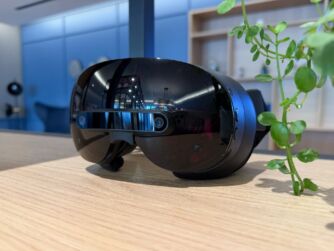
[00:00:05.458] Kent Bye: The Voices of VR Podcast. Hello, my name is Kent Bye, and welcome to the Voices of VR Podcast. It's a podcast that looks at the structures and forms of immersive storytelling and the future of spatial computing. You can support the podcast at patreon.com slash voicesofvr. So in today's episode, I have a chance to speak with Amy Rose, who has been heading up the Undershed, which is a part of the Watershed, which is like a film institution in Bristol, and UK. And so the Undershed has been this kind of immersive art gallery that is associated to this like film center. And so they're about a year on from when they've opened. And so Amy was in the process of kind of drafting up different one year retrospectives of kind of reflecting on all the different lessons learned for how to really engage with the public with these different types of immersive experiences. And so Amy is coming out of being a co-founder and key contributor for Enneagram, which has done a lot of really incredible work over the years, some of my favorite pieces that I've seen. And so she's kind of pivoted out away from Enneagram and using all these kind of experiential design insights and kind of applying it to exhibition and distribution and yeah there's some really interesting reflections and kind of like how do you really create an experience that is going to help people know what to expect by having lots of really detailed information on their website but also kind of more relational context for how this staff is really both receiving people in and kind of welcoming them but those relationships dictating the degree of success that someone's going to have by going through these different experiences and so Yeah, just a lot of care and consideration for how to create a broader context for how people can be introduced to these different pieces of work to experience them, but also to have a context that allows them to connect and relate to each other. And so creating these kind of third spaces that allow people to kind of just go and be a part of a community and see some cool art and be able to connect to each other afterwards. So that's what we're covering on today's episode of the Voices of VR podcast. So this interview with Amy happened on Saturday, November 15th, 2025 at IFA Doc Lab in Amsterdam, Netherlands. So with that, let's go ahead and dive right in.
[00:02:22.970] Amy Rose: Hi I'm Amy Rose and well I was an artist for a long time in this space and then a couple of years ago I left the studio that I used to co-run with my friend May which was called Anagram and I started working for Watershed which is a cultural organisation in Bristol. watershed's been a cinema and other things for a long time for 43 years and it also has something in it called the pervasive media studio which is a kind of incubation laboratory for people working with technology in many different ways and we opened a gallery a year ago october 2024 to show this kind of work to show immersive and interactive work of many forms and i am the curator of the gallery
[00:03:09.810] Kent Bye: So you're coming on the one-year anniversary and kind of doing a lot of retrospective looking back and reflecting on what you were able to accomplish. So maybe just give a bit of context of what you were able to do over the past year.
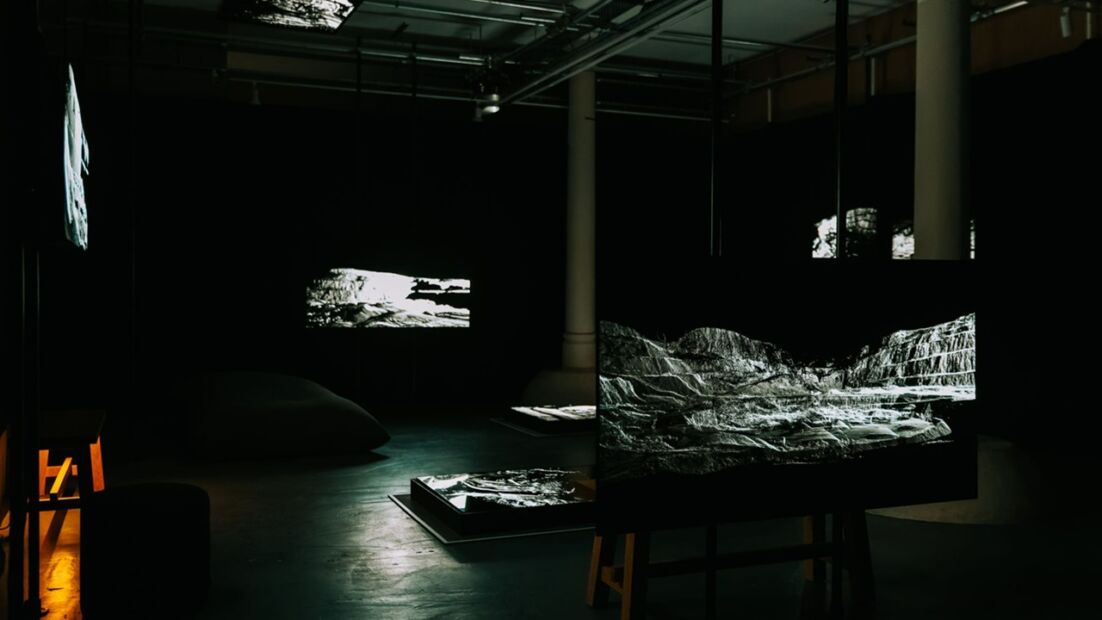
[00:03:22.338] Amy Rose: Yeah, so Undershed opened with an exhibition called Sing the Body Electric. And to give you a bit of a sense of what the place is like before I talk about the exhibitions and the artwork, the building is situated on the harbour side in Bristol, which is at the centre of town. And you come into the building and normally if you were going to the cinema, you would go straight up some stairs in front of you. But for the gallery, you face the box office as you walk in and then on your right hand side, there is a dorm. And that door leads you to the gallery. And the gallery is about 120 square meters. It's not massive, but it's big enough. And you walk in and there's a kind of welcome area, which some people might call an onboarding space. But we try to avoid using that word because it feels cramped. A bit too niche, I think, for audiences that are not used to this work. So you come in, you acclimatise in the welcome area, you put your stuff down in a box perhaps, you talk to one of the gallery assistants, you get a sense of what to expect, and then you pass through some curtains into the main exhibition space. And opening the gallery was built on a couple of years of research and development, thinking about what would it mean for Watershed to host a gallery of that kind? What kind of work would we show? How would we show it? What felt important about how we would build it? What would we use to build it? What would be the spirit of the place? How would we speak to people when they come in the door? Many questions, I think, around how to offer this work on a more ongoing basis to audiences. and rooted in all of my experience with Anagram, which was a decade of touring wild and strange pieces of work to many different places, which you've seen quite a lot of that work, actually. I felt like I'd sort of gleaned many memories and moments over that time of good practice, bad practice, things that felt caring for people, things that felt not caring for people. And we've tried to integrate a lot of that learning into what we're doing in the space, which is like really detailed and yeah, so many elements to it actually.
[00:05:34.147] Kent Bye: Nice. Yeah. And one of the ways of thinking about the overlap between what I've seen in the immersive exhibition is that you've had installations for the exhibit. So you basically have like a magic circle that allows people to kind of come into the piece before they see the piece. But also you had been writing up some reflections and you had mentioned around this concept of an invitation of how are people invited in. And it reminds me of the work of Priya Parker, The Art of the Gathering, where a lot of the work before you actually gather comes into this invitation. How do people hear about it? And then that becomes like the beginning of the experience for them is how they even hear about it. So you can think around from that point that the magic circle has been cast out, but then how do you continue to facilitate that type of invitation? So just curious to hear any reflections on what you've learned on that front.
[00:06:23.652] Amy Rose: Yeah, I love the idea of the magic circle. And I think what comes with that is the notion of the threshold that you pass through some kind of doorway that before you pass through it, you are your kind of normal self in your normal life. And then you go through something that enables you to cast off some of your daily preoccupations or things that are kind of plaguing you and you become ready and able to receive something. And at Anagram, during all those years of making work, May and I were always very concerned with the beginning of things and very aware that we couldn't expect people to really be ready unless we really helped them be ready. And it was always... difficult and really important to do that regardless of the piece that you had to kind of take seriously the idea that everyone has a lot going on in their lives and is busy or late or stressed or hungry and that if what you're doing is asking them to think and to be open and ultimately to give something of themselves to participate you have to be very careful and also very nice to people to some degree. You have to treat them with care and respect and curiosity. And so with those sorts of principles, I think we have tried to build that in physical space, both with the welcome area that remains regardless of the exhibition, but also with all of the practices that are sort of soft practices, or what's the word, like just the way we try and speak to people, like, The kind of language we use, the warmth and openness with which we try to greet people when they come in the door. All of those things, I think, play a huge role in whether a piece of work is really able to land with people or not. And I think, you know, if you remember back to experiences of going into white cube galleries in which you just wander in and nobody really cares if you're there or not. And you could enter and you could leave and the work would remain, you know, it would sit there on the wall. And interactive work is so different to that in what it asks of people. It asks people to participate. And so if that's what's going on in the room, like you just have to take that really seriously, I think. So, yeah, it's both the physical space itself, a sense of being able to sit down. And also it's the language. We've worked really hard on the website, actually, having this section called What to Expect. And we've really tried to distill down exactly what happens when you go in the door. And we've really tried to steer away from the kind of hyperbole that you might see in lots of other kinds of descriptive words. sections of websites or exhibition booklets and just said okay so you walk in the door and there is a screen or you put a headset on your head or you know we just try to be really simple and use plain English and we're not a place in which you know the audience is super experienced necessarily and we want people to come who haven't tried this kind of work before. So to enable that, I think you just have to tell people simply what to expect. And the form of this work often is unfamiliar and it often asks you to step through rituals or behaviours that are not familiar to you. And the cinema is such a familiar place and none of this is familiar. So to enable that to be possible, I think you just need to take it slow.
[00:09:54.983] Kent Bye: Yeah, there was a passage that you had in a draft of a one year retrospective that you're writing up that said something along the lines of like normally the model would be for the press to talk about something and then it would get people to come there. But now you're in the model where people are seeing it and it's almost like you have to build up enough word of mouth for the press to actually come and care about it. But it also sounds like that some of these exhibitions are maybe only there for a month. And so there's a bounded time that you have in order to get people through. Just curious to hear a little bit more around this dynamic of the building up the word of mouth and this flip of how it's actually the people that are experiencing it and then building up enough buzz that the press is going to come check it out.
[00:10:37.626] Amy Rose: So there's a few things in what you've asked me. The first thing, if we talk about how long should this work be in the space for, we've experimented with different lengths of exhibition in the last year. And it would be no surprise to anyone that works in a museum that having something for a month is kind of wild because you put so much energy and effort into building something and you want it to be beautiful and for it to work and a month is an extremely short amount of time to have put all that effort in and to build up some sense of excitement and buzz and also comfort on the part of the building and the people in the building and running it but I come from film festival world and films and you know Watershed is a cinema and ultimately like it's mostly the audience have been used to it being a cinema and so a cinema you know changes films like maybe every day and so trying to find some kind of middle ground between the practice of cinema which has a lot of change even though the form obviously stays the same and a gallery or a museum in which you might have an exhibition for six months or something. We have to try and find a middle ground between those two things. And so... There's also a kind of challenge around the technology. And I think nobody has done a huge amount of work on showing narrative VR for any length of time. But the numbers of people that you can get through narrative VR exhibitions is really low. For example, we just had Impulse, the piece by Anagram, which is about ADHD. And it could only get in three people every half an hour. So it's like a very small number of people in a day that could experience the work. And actually, it's just not financially viable to have that for a short amount of time, even though we had it for a month. If I was going to do it again, probably we'd have it for double or triple that amount of time because it feels like such a shame that you put all the effort in and then you take it down quite quickly. But also because the staffing costs versus the ticket sales is like a very difficult metric. But leaving that aside in terms of press, it's very interesting, I think, trying to cut through the huge amount of chatter in contemporary cultural criticism and the press. And it's also true that in the UK, a lot of newspapers have had their cultural critics cut. And rather than being staff writers, there's a very, very small number of staff writers in newspapers now that write about culture. And the ones that remain tend to be ones that cover traditional forms of art. So it's really hard to get anyone to come and see anything and to write about it. And often I think magazines these days expect you to pay for it, which feels kind of wild in a way. So what we are discovering is that word of mouth and local connections and an idea that what you're doing is relevant to people is more important than a kind of old school attitude to get a big review in a major newspaper and then expect the people to come. And that means that the way that we look after the audience in the first couple of weeks of the show is so crucial that we have to really attend to how people are responding. We have to find out for a start. We really have to listen and to ask questions. And then we have to try and find a way of sharing that enthusiasm for the work. Watershed has this culture in it of this big board and there's all these comments cards that people write their thoughts about what they've seen and they put them on the board. And it's really lo-fi, but it's so beautiful and funny because you get these snapshots of immediate responses to things that actually we found is one of the most useful ways of both understanding what is hitting like points of relevance for people inside them. And also, you know, we take photos of them and we send them around and people are like, oh, cool. That looks good. So, I mean, I think it's really difficult. We've got the most amount of interest from the press for Impulse, for the ADHD piece. We were on the TV. We were on the 6 o'clock news on ITN, which was a completely new experience for me and pretty hilarious, I have to say. But I think it was because it was about ADHD and that if we program work that feels very relevant to people in their lives, and NHS England has said that in May of this year, it's thought that 2.5 million people in the UK experience symptoms of ADHD. It's a huge phenomenon of our time. And for whatever reason, and I'm not going to talk about my thoughts about that, It's true for people that this feels like something that we need to talk about, something that we need to kind of meet and convene and listen to each other and think about how that enables connection points between different kinds of people and different communities who are experiencing similar internal phenomena.
[00:15:29.573] Kent Bye: Nice. And so what are some of the other big lessons learned, would you say, around the first year of The Undershed?
[00:15:38.007] Amy Rose: I think what I've been thinking a lot about recently is the context of the building being a cinema. And people are used to coming to Woodshed and seeing a feature film. And they're used to seeing a film that they really are inspired by and nourished by. You know, it's really high quality independent cinema. It's one of the most loved in the UK. And if that's true, then the gallery has to give an experience that in some way leaves people with a similar feeling that a feature film leaves them with. So it has to have depth, it has to feel like the scope of it is similar to what a feature film might be attempting. And whether that means that the piece itself is long enough and deep enough as an inquiry, or whether it means that the collection of work that's offered together combines to give that sensation, that's the ambition, I suppose. And that if we do things that are too short or too shallow or too throwaway... That sounds a bit harsh, but we have to be quite ambitious about the depth of what we're offering to people. And the notion of narrative, I think, is really interesting in this because interactive work really dances around what narrative might mean. And sometimes something will really, really be very clearly narrative or have narrative. And sometimes it will be much more kind of freeform than that, non-linear and... more complex in terms of its experiential shape and it's not that I think we shouldn't put that kind of work on but because some of that work is beautiful and interesting and like expansive and it's more that if we offer that kind of work we have to really make sure that the audience experience that we craft for people has a shape to it that when we welcome them in, it feels like the beginning of something. It feels like we acknowledge their arrival and that we sort of set them off on a journey of some kind and that through encountering these different pieces... that they have this kind of journey and that then it's drawn together at the end, whether through conversation or some way of them kind of reflecting on what they've seen or experienced. And that notion of something having a beginning, a middle and an end actually can come from the way in which we offer the work, not just the work itself. So now when people pitch me things, I try and talk to them about Like, how do you imagine the shape of this experience to really land with people? And if you don't mind when they come in, like if it doesn't matter, if it's a loop, for example, if it's like a video installation that is a loop, how do we begin it with people and how do we end it with people? Because that's the work that we have to do as the gallery. And having that conversation with artists, I think some really get that and really think about the audience in that way. And some actually don't. And it's very interesting to me which artists are really able to keep the audience in mind in that way. And I would just really encourage everyone to do that because at the end of the day, that's what you're dealing with. You're dealing with people that come in and that need to be looked after. And if it doesn't matter at what point they arrive and leave, how do you look after them?
[00:19:00.964] Kent Bye: yeah you were talking around in your retrospective writing this concept of the the memory of a cinema and what you're saying there is that there's a bit of like expectations that people have when they have different formats and so in the immersive field we're in this place where those genres and those expectations aren't even necessarily fleshed out from perhaps the creators themselves in terms of being able to articulate all those different dimensions of an experience so Just curious to hear how you think around the different genres of work in this field and how you can start to set a context for people to more fully understand what to expect, but also how that is going to facilitate the expectations that they have around the work.
[00:19:43.249] Amy Rose: I think it's interesting whether we use the word genre or whether we use the word form. And a lot of the work that I'm doing at the moment is really trying to think about how to define the different forms that we encounter in this field, whether that's narrative VR or a big immersive installation of many screens or projection map space. And I think... It's really tough for venues to establish practice where they can deal with form easily. And if what you're doing is always trying to adapt to presenting a new form or building something completely different. It's both difficult for you as a venue, because you have to be constantly reinventing the wheel, but it's also quite difficult for the audience, because each time they're doing something new, so each time there is a sense of discomfort with something new. And sometimes that's really exciting, don't get me wrong, I think experimentation is brilliant, but I do think that we have to try and lean into establishing a bit more of a shared language around what the different forms are. The way that we try and bring people into the work, though, it's both with an intention to be very clear about the form, but also we just really try and lead with the ideas that like come and think about ADHD or come and get lost in like a sort of sea of images of the UK and landscapes changing. I mean, that was in Frame Rate, Pulse of the Earth, the beautiful piece by Scan Lab. And then in the first exhibition, there was many different pieces of work, but they were all exploring embodiment and what it means to kind of be a body to some degree in different ways, whether that was through how you move in Vincent Morissette's Vast Body or in the beautiful VR piece Turbulence by Ben and Emma. So each time we try and have a conversation that feels like it's about ideas and we try and think about what people are going to think about in response to this work, rather than like, this is a new technology, it's VR. So we're trying to combine, I suppose, simplifying the way we talk about form and containing the form, containing the different forms into, to some degree, into like convenient buckets. with leaning into the big ideas and trying to have meaningful conversations with people. Does that answer your question?
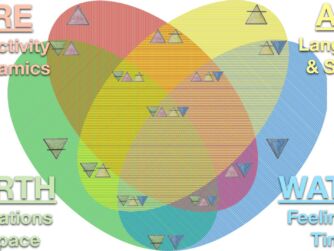
[00:22:12.101] Kent Bye: Yeah, I think that when I say genres, I guess it is like the content types. I guess forms is another way of thinking around that. Yeah, the reason why I ask is because for me, I see there's a very interdisciplinary nature of how immersive art and immersive storytelling is kind of pulling in from different design disciplines. So you have like agency interactivity and participation that comes from like a video game design tradition. And so I think of that as like... active presence or there's a kind of a spatial dimension that comes from either theater or architecture or world building that happens within the context of film where you have a spatial experience but also can be very embodied and so there's an embodied and sensory experience but also an environmental sense of being transported into another place another realm and then there's from the cinematic tradition of film there's a lot of emotional presence and ways that story and narrative has really been refined through the language of film and the grammar of film and then the emerging spaces of social media and the ways that you're kind of bringing people together and having emergent social dynamics but also how you use language and communication to share narrative and so there's narration or there's literature influences that are coming in for me i think of phenomenological qualities of presence of like active presence mental and social presence emotional presence and embodied environmental presence there's many different forms that those can get put into but When I say a video game versus a book versus a piece of architecture or theater or a film, those are also forms that people have experiences for what to expect and what kind of overall type of experiences are going to be. But that in this immersive space, you're all kind of blending it together. And so there's a moment of trying to figure out the language, but also to give people what to expect. So in your piece, as you're kind of reflecting on these different themes, you were talking around aliveness, which I think of as this interactive participation or togetherness, which I think of as this kind of social dimensions or materiality, which I think of as these kind of more environmental parts. And so, yeah, just curious to hear any reflections that you've had on aliveness, togetherness and materiality.
[00:24:12.304] Amy Rose: Yeah, thanks. So those three themes are areas that I've been thinking about as part of this fellowship I've done with the RSC. which was with a group of other venues as well in the UK and the US, including Watersheds, the RSC, Oxford University, BAM, Brooklyn Academy of Music, LA Music Center, MIT and Stanford. And each of those organizations has a fellow and each fellow has been asking questions about kind of all about like cultural organizations doing new things in some way and how we deal with the challenges of now. And so my fellowship has been about conceiving building and opening this gallery and all the things that have come up in both like organizational change and also in dealing with like this new form and bringing it to audiences and so I think the questions that I've been trying to ask are like not very theoretical and I've actually tried to even though I've been doing research apparently they're also kind of very rooted in practical questions so when I think about liveness What I'm really trying to grapple with is how do we make this space feel alive? Because I think that something feeling alive is a way for it to move people and a way for it to mean that what they take away feels that it has lived in their body while they've been in the room and it has brought stuff up for them, whether that's joy or delight or challenge or whatever it is. But it also means that you ask, well, what's dead in this room? And if something feels dead, how do I engage with it? And that's both a question of how we offer the work, but it also actually really is about particular pieces of work that speak to the audience in a direct way. There's a kind of directness that I'm interested in. And coming from being an artist for so long, I think we were always very interested in how you ask direct questions of people that feel possible to answer or possible to sit with even if you don't come up with a clear answer and I think often interactive work can ask direct questions of people and that is such a beautiful thing and it can be really rewarding and connecting and like you can learn a lot about yourself or the people that you're with And I really notice when pieces of work don't ask questions of me. They just kind of do something, but they're not clear enough in their thinking. They're not trying to distill down what the piece is really about. And so I guess when I think about liveness, I'm like, both does the work that we have really speak to people? And do they feel alive in it? Do they in themselves in that moment feel alive in it? Or do they feel a bit dead somehow? Do they feel a bit ignored? Is their self somehow not allowed to be present in the work? May and I began Anagram by doing a residency with the amazing artist Blast Theory. And Ju Ro Far, who's one of the lead artists, said this thing to us that we always kind of held in mind and like, revered is this brilliant question which was how do you leave space for the memories of the person in the work how do you welcome in that and it was always this opening for us around like how do you really let someone be present as themselves in the work rather than like ignoring them or thinking that it doesn't matter and so we're always trying to think about that how can you be with people I suppose how can you be with living people And then in terms of the other things like materiality and togetherness. So materiality, I feel like when we designed the space, we worked with this architect called George Lovesmith. And the materials that we used and the way that we tried to think about the experience of being in the space are all leaning towards regenerative practice in some way. So one of the walls is covered in clay render. It really doesn't look like a white cube gallery at all. And outside of work, actually, Ironman Potter makes ceramics. And so I have this particular love of the clay wall. But I also think that it gives the space this energy that is... really earthy and quite warm. It's not kind of shiny and reflective. We're trying to literally, in a very real way, use materials that speak to your body rather than feel uncomfortable or kind of harsh or... ask you to kind of behave in a way that's sort of industrial or like cool or trendy. We're sort of trying to lean away from that with the actual materials that we use. And then obviously that also has a really political dimension because when you think about materials, you have to think about supply chains, you have to think about carbon footprint. You know, all of this like has many... ripples that extend out and watershed is going through this huge process at the moment which is kind of thinking about how we can look after our building for many years to come and it's called wild and generous this big project and partly it's about needing a new roof so that we don't like drown in the rain that falls on bristol but it's also about how do we become like a climate aware organization that looks at every element of the building could we have like a forest around us or like those kinds of questions and as a building we have to think in that way like we can't like carry on like pouring concrete onto the floor and ignore the fact that concrete is extremely damaging as a material across the world And then finally, togetherness. I think it's very important at Watershed to think about our role as a kind of civic space. And many people come into the building who use the cafe bar, who sit there and nurse a pint or a cup of tea for the whole day. And long may that continue forever. I think it's really rare, I think, for spaces in cities these days to be really upfront about offering that to people and say, hey, come in, feel at home here, use it for what you need, come and play chess here, play chess for three hours and spend £2.50 a night. That's all right. Please come and be together. And so that spirit, I think, really permeates all of the way in which we try and design and look after people. And we're not really seeking a space that carts people through the door, gets them to spend money and then kicks them out. What we're seeking is a space that feels welcoming and where you might chat to someone you don't know or feel comfortable enough to come there if you don't have enough money to pay for the heating in your house or all those questions that are quite real to people. And there's lots of different ways of trying to do that. And some of it is programming work that is for more than one person at a time. But also it's about all of the way in which you are with people.
[00:31:12.867] Kent Bye: Yeah, it sounds like that from your experience of Anagram, you really learned a lot around the process of creating experiences and then exhibiting. And now in this phase of your career, you're thinking around exhibiting other artists' work, but still adding that same level of experiential design of how can the watershed start to create this as a holistic experience that is allowing people to feel alive, allowing them to feel together in the sense of communal experience, but also... the ways that the environment is kind of shaping all of that from the materials they use, but also the intention of that context. And so, yeah, just curious to hear some thoughts on like the previous lessons you took from Enneagram and experiential design and how you're at this other phase of looking at the challenges of distribution that you likely experienced to some degree at Enneagram, but now Taking that as a design challenge to see how you can continue to provide a space for this work to really be exhibited and experienced and really allow people to have that opportunity to create memories around it. So, yeah, experiential design from one era to next.
[00:32:16.812] Amy Rose: Yeah, I mean, definitely. I learned so much from making work with Maya Anagram. We did so many things. Yeah. But I'd also say that this is definitely not just me, that this is a spirit that many people at Watershed are with and are trying to work on. And to some degree, the reason I work there is because that's how people are. And I was also indoctrinated in that process because I was a resident of the Pervasive Media Studio for so long, for 12 years. But in terms of Anagram, one of my big lessons, actually from the Collider... was that we really needed to make sure that there was a space at the end of the piece for people to kind of integrate what had happened. And the first time that we built it, it didn't have that space. It was here in IDFA in 2018. And it had the beginning, it really prepped people, and then it had the meat of the piece. You were with another person and one of you was wearing the headset and the other person was holding the controllers and all sorts of bizarre things happened. But at IDFA, it didn't have the final resting space where the two people, without any technology, would sit together and try and work out what had just happened. And when it was here, we noticed that people needed that space. And so what they would do is they would go and sit in the bar or they would go for a walk, which also produced wonderful things. And I think somebody went on a date. That was always a win that we had got two people to go on a date. But the next time we built it, we integrated a final room that... gave people this opportunity to sit together and to talk and to think together and to integrate this journey. Other people call it off-boarding, which I still think is silly. Like, we're not talking about planes. But I think it's really, really crucial in experience design to think about that beginning and think about that end. And that if all you do is hang out in the middle... both you don't reach people because you don't prepare them to think and you don't allow them to muse and to be with what's happened and often that's where the gold really is and if you don't look after that and if you don't provide that space for people maybe they do it anyway maybe they go for a walk together and or maybe they do it at home and you know that's great But I think it's part of our responsibility to to to really look after the whole of the process. And so sometimes in understood that will mean really like being with people at the end and not kicking them out too quickly or allowing them to sit in the welcome area and sort of integrate or designing a bit of the space itself so that rest is encouraged and allowed. And, you know, there's something soft to sit on. It's not like turn on the lights and off you go. Or it might be like, oh, you know, sit in the cafe or because there are all these other spaces. So that notion of like beginning, middle and end experientially is something that I'm really slightly obsessed with, I suppose. But then on a much broader level and in terms of the kind of more strategic level, one of the things that May and I always really struggled with when we made installations was that it was kind of almost impossible to tour the work in the UK. we had a lot of work and it would tour elsewhere we would go to other countries and it was really very difficult to find good pathways for work to live and to meet uk audiences and so one of the big things that we're doing now at woodshed and also in collaboration with other venues in the uk and hopefully abroad is that we're building this network of venues that have good mutual understanding of each other's capacities and needs, where we can offer this web, this pathway for artists and artworks to tour in a way that's both possible, financially supported to some degree, and is clear and visible from the beginning. Because what I really see is that a lot of work is getting commissioned or... being developed very far away from venues and venues' concerns and questions. And that's partly our fault. It's partly the fault of venues in not being clear enough about those questions. But it's also just because it's quite a young medium, I think, and those relationships, they haven't been looked after very well. So our intention as this network is to both offer this pathway, but also to talk to artists more clearly and say, if you design it in this way, it will just be impossible to tour. But if you design it in this way, maybe it will have a chance. And that's both really practical, like things like throughput and footprint of the work and technology. But it's also like, what is this work really exploring? Why is it relevant to now? How can we have a conversation about this like in different places and that conversation feel relevant in all of those different places? So there's many elements to it, I think.
[00:37:14.787] Kent Bye: Yeah, I had a chance to see the original incarnation of Collider here at IFA DocLab when I was in a 24-hour layover that I happened to be having coming through Amsterdam. And I dropped by, and I was thrown into the Collider. And I was like, my mind was blown. And then I saw it again at Tribeca and then had an opportunity to do the offboarding there. I think the first time that I did it, I was given like, oh, here's a bunch of tickets for things to go see. And I think my recollection was that either I had another booking that was starting right at the end of that one, and I had to run off. It felt like here's an extra credit bonus to the experience where you go and talk about it. But I had another obligation that I wasn't able to do it. So I appreciated it at Tribeca that it was kind of baked into the experience where spatially it didn't feel like an extra thing that I had to go do, but that it was a real invitation to kind of do it in that moment, but also that it was like baked into the experience more. And the phrase I do use is like offboarding in my mind, but it's also like a opportunity for integration. Is there another phrase or term? Rather than offboarding, is there other ways that you start to think around this wrapping up the experience or debriefing or integration? There's a lot of phrases that come to mind, but just curious if there's another way that you describe it that would be more encompassing of the intention that you want to hold there.
[00:38:32.082] Amy Rose: I think it would be great to have a pithy answer to that. Sadly, I don't have one. But I think there is sort of something around how interested the venue is in people's experience at the end and also how that is expressed. Because I think we've all had experiences where someone tears a VR headset off your head and immediately is like, did you like it? which I personally really hate. I'm like, well, maybe, but like, go away. So I think there's like a necessary sensitivity in how that moment is held. And there is something about asking for feedback that you could see in a kind of cynical way as like, we must evaluate our practice so that we can tell our funders what happens. But I think it's actually, if it's held with warmth and curiosity, it's also just about trying to check in with people at the end and be like... How's it going? How are you doing? What emerged for you? And we really have worked very hard on this team of gallery assistants that look after the space. And it's a kind of constant learning process with that team who are really at the coalface of dealing with people. What happens? Each piece demands something slightly different. But all of the six or seven of them have said to me at different points... I had a really interesting conversation today with someone after they came out of the work and they wanted to talk about this or that and they wanted to ask questions about how it was made. And we've actually discovered that we have to provide a huge amount more written material that describes all those things to audiences, particularly when the technology is unfamiliar, that everyone really wants to know stuff when they come out. And I think that's been quite a surprise to a building that's used to cinema where people don't really ask, how was it made? Because they know that cameras exist. But often with interactive work, the process is quite mystifying to people. And lots of people, you know, if their senses have been tickled and they're interested, suddenly have all these questions. So I think it's about holding space for that conversation and gently inquiring and also having something to say in return so that the people in the room, the gallery assistants, are really present and they know what they're talking about.
[00:41:04.181] Kent Bye: Yeah, the thing that comes to mind is a saying that Michael Mead, a mythologist and storyteller, I've done a lot of work with him over the years. And he says that a ritual isn't done until you tell the story about it. And that in ritual, you have the opening of the circle and the closing of the circle. So the closing of the circle is that opportunity to share your insights, your experiences, or just how it landed and Yeah, I agree that when I come out of the experience, I often will get like, oh, what did you think? Or, you know, it's like I have there's so many different thoughts that I have. And sometimes if it's a docent, it's a different conversation than if I have it with the creator. And sometimes I also need time to digest and integrate. So I may not have something that I have to share. But it is interesting to think around how there are some pieces that land with me in a way that feels like I've been in a part of a ritual experience that I need to work through or tell the story of that, or just to be able to share my experiences. Like you said, like there's a part of immersive work that's around creating memories. And so that first cut of what memories or what things are really landed that you feel is going to be helpful to be able to share in that moment.
[00:42:09.909] Amy Rose: Yeah, I mean, I think it's really important not to demand it of people and not everybody wants to talk and that's really got to be fine. But if it's available and if people are up for it, I think it's a beautiful thing to provide a space where people can reflect after they're done. It also reminds me of traditional narrative theory around the hero or the heroine's journey and there's the quest but there's also the return and how do you look after the return? In an ideal world, we would have a welcome area and a kind of finishing area and we would separate them. Sadly, physically, that is completely impossible. But I do wonder about the restful nature of an ending and all that can be allowed if it's gentle enough. I like that idea of something's not done until you've told the story about it. And then the question is, who are you telling the story to? Is it like, is it your friend later on or is it like in the moment? And, you know, how do those versions change? And we'll never know, I suppose, but it's beautiful to think of.
[00:43:13.482] Kent Bye: Yeah. As I go through experiences now, I think around like, oh, who is the person that I need to share this story with? And that, you know, it might not be the person that I'm speaking to immediately outside of the experience. But, yeah, there is a part of the sharing of the experience of something that I guess I have the opportunity to talk to creators. And, you know, I'm talking to the people who created it and sharing different things that happen. But sometimes there are things that I'm sharing with friends or family or other folks that I want to share with. Yeah. Yeah, as we start to wrap up, I'd love to hear what you think the ultimate potential of all this immersive art and immersive storytelling might be and what it might be able to enable.
[00:43:47.928] Amy Rose: We're just following up from what you were saying before, before I answer that question. I'm having quite a wild experience at the moment because we're planning the next exhibition. And one of the pieces in it is an older piece that I saw in 2006. And it always really stayed with me. And I told the story of it to many people. And I kept the flyer. It was on my desk, stuck up on the wall with Blu-Tack for many years. I think I've still got it in a box somewhere. What we're doing in the next exhibition is a kind of retrospective of some of the work of the loved British filmmaker Andrew Cotting. He kind of got famous at first for this film he made called Gallivant, which was a journey around the perimeter of the British Isles with his daughter, who has this rare genetic syndrome, and his granny. And it's this kind of totally wild, freewheeling... kind of memoir picture journey using lots of different formats super 16 video meeting people but it's like totally unique style really like funny and slightly melancholic and beautiful and like quite british in a way of this like slightly off the wall surrealism At the same time as asking these very human questions about family and people's lives. So he's also made loads of other kinds of work. And the piece that I saw in 2007, 2006 is this piece called In the Wake of a Dead Dad. And it was a kind of inquiry into his relationship with his dead father and his dead grandfather. And he did it by making these two giant inflatable effigies of his dad and his granddad and taking them to lots of very important places to their lives together and then inflating them. They're like four, three and a half meters, four meters tall. They're like really absurd, these giant effigies. crazy inflatable figures and then making films about the inflation of each inflation in all these different places and so when I originally saw it it was in this church a deconsecrated church and it was all of these different video screens old TVs like spread out all around the floor maybe like 20 of them and then these huge inflatables inflating and deflating at the end of the room so it's much more kind of art but you could sort of I don't know this notion of what immersive is so slippery and what was important to me was that it was this incredibly meaningful journey into trying to reckon with these difficult relationships but it was also really funny and quite weird those huge inflatables and that I sat with it for a long time and you know you cycle through all these visions of these inflatables being inflated in all these places and it feels like this kind of strange poem pilgrimage ritual like all wrapped up into one and it was also very embodied because these inflatables are huge and you feel very aware of their presence when you're near them they you know you are dwarfed by them they're huge and to some degree that feels like it's representing or embodying the notion of like how our parents and our past are these giants in our internal lives and we have to live with them and sometimes they're really present, they're huge and inflated and sometimes they're much more flat and on the ground and not present and it just felt like a kind of brilliant embodied spatial representation of that and also really funny and absurd. and so what we're doing in the new year is this collection of both that piece and a vr piece that he made called the telltale rooms which he made in collaboration with his daughter who's now in her late 30s and for a long time they've made work together now and it's this very unusual unique viewpoint vantage point on the world seen through his and her eyes and it's really surreal funny poignant meaningful and they had this house in the Pyrenees that they spent a lot of time at and the Telltale Rooms is a kind of realization of that house but he's remaking the piece for us with some new rooms and but we're kind of building this exhibition that uses lots of old film work that he's reworking and we're going to kind of build a set and we're going to somehow realize the house the Pyrenean house in the gallery and hopefully there'll be some strange tricks in there so we're really trying to bring like a theatrical spirit to the design and explore this notion of family and the kind of myths that we weave to conjure family and home that we need and what supports us and how we deal with memory and what memory means. I'm really excited about it because I think his work is just amazing. But it's also like, it's this strange thing for me at the moment of like this memory of describing that piece so many times and now really becoming like very well acquainted with it and like being with these inflatables. Wow. So what I really hope is that because his work really is very accessible in its own way because it's about family, it's about relationships, it's about things that we all grapple with. And it's also very funny and strange in this sort of British surrealism style way. So it's really not like alienating as art can be. It's very welcoming. It's very porous. It's like leaky. You can come in. It's very irreverent, informal. It doesn't feel like you could do it wrong. It feels like maybe it's going to break, but that's kind of fine. And I love that. I think that's really important that the sense of, Andrew talks about like shoddiness, the sense of something being a bit shoddy, in the right way just brings everyone's nervous systems down a little bit where you're like I'm not gonna like break this expensive piece of technology and if I do like maybe it's all right like we have to think about work and audience experience I think that where we're like it's not too hard and it's not too shiny and it's not too posh I can be here and I'm allowed to ask questions and I think his work does that, like, so brilliantly. So I hope, yeah, if you're in the UK between the end of January 26th and the middle of April, then please, yeah, come and see it. And then I think more broadly, like, I guess for a long time from Anna Graham work and being in this space and meeting all these different artists and curators and I guess my feeling about interactive work has always been that... it has this great potential for inviting people in and giving everyone a chance to experiment and to kind of play with ideas and versions of themselves and memories and all sorts of things in a very live way in a way where like that's what you're doing when you're doing the work and For me, that's the kind of work that I hope we have in the gallery and that we enable to tour, that I want people to feel that they can, as Rilke says, live the questions, live through something in the doing of the work that enables them to explore aspects of themselves or the world in serious and unserious ways that feel relevant to now and that also feel expansive in some way. And don't get me wrong, I love cinema, I was a filmmaker for a long time. But there is something special about participation. And when it's good, it just brings things out of people that can be so beautiful and moving and connecting. And that's why I'm in it.
[00:51:34.007] Kent Bye: Great. Is there anything else that's left unsaid that you'd like to say to the broader immersive community?
[00:51:41.138] Amy Rose: Well, it's just really lovely to be at IDFA. Shout out to Kasper Sonnen. I first came here with May in, I think it was in 2014, 11 years ago. And I've always found IDFA like this incredibly inspiring place. where Casper really offers a lot of different kinds of things and welcomes a lot of people in and feels very friendly and porous and you don't have to be cool and you don't have to say the right thing and it's not very formal and that's always very important I think that you know if you come and you want to be part of the community you can be you just have to show up And I just really respect Casper for enabling that spirit to permeate everything and showing us a way of... combining something that feels really thoughtful and asking questions about now and about the internet and about digital culture but not in a way that feels overly intellectual or in a way that we might get lost in or feel that we have to say the right thing but it manages to kind of combine something that is a bit informal and irreverent with depth and I appreciate that
[00:52:57.734] Kent Bye: Yeah, and I discovered DocLab on a 24-hour layover that I happened to have and managed to come and be introduced to your work at Enneagram with the Collider. And so, yeah, it's always been a place that they've been very open and welcoming and bring me back each year to cover the space and the artists and all the different work that's coming out. So, yeah, it's one of my highlights of the year to see really the frontiers of experimentation of what's possible with the mediums. And so, yeah, I've always enjoyed coming here and Also just really enjoyed having the chance to catch up with you and hear a little bit more around what's been going on there at the watershed and the undershed gallery that's a part of what you've been really cultivating there. And yeah, all your deep thoughts and reflections on your lessons learned. I think it's something that a lot of folks are thinking about and that you're doing a lot of really great work and just appreciate the different insights that you're sharing and excited to hear more about this network that you're building out and all these writings and lessons that you'll be coming up as you do this one-year retrospective of your first year of the Undershed Gallery at the Watershed. So thanks again, Amy, for joining me here on the podcast to help break it all down.
[00:53:58.474] Amy Rose: Thank you. Thanks for having me.
[00:54:01.175] Kent Bye: That's all that we have for today. And I just wanted to thank you for listening to the Voices of VR podcast. If you enjoyed the podcast, then please do spread the word, tell your friends, and consider becoming a member of the Patreon. This is a listen-supported podcast, so I do rely upon donations from people like yourself in order to continue to bring you this coverage. You can become a member and donate today at patreon.com slash voicesofvr. Thanks for listening.