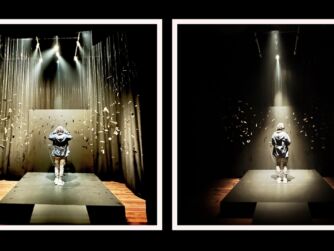
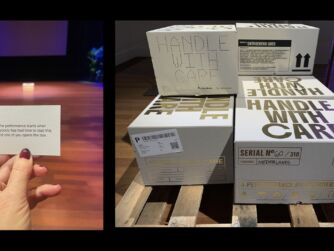
I interviewed Nathalie Lawhead about individualism in the dead-internet age: an anti-big tech asset flip shovelware r̶a̶n̶t̶ manifesto on Monday, November 17, 2025 at IDFA DocLab in Amsterdam, Netherlands.
This is a listener-supported podcast through the Voices of VR Patreon.
Music: Fatality
Podcast: Play in new window | Download
Rough Transcript
[00:00:05.458] Kent Bye: The Voices of VR Podcast. Hello, my name is Kent Bye, and welcome to the Voices of VR Podcast. It's a podcast that looks at the structures and forms of immersive storytelling and the future of spatial computing. You can support the podcast at patreon.com slash voicesofvr. So continuing my series from IFA Doc Lab 2025, today's episode is with a really interesting playable essay digital storytelling piece that was featured at IFA Doc Lab. It's by Natalie Lawhead, and it's called Individualism in the Dead Internet Age, an Anti-Big Tech Asset Flip Shovelware Rant Scratched Out Manifesto. So Natalie is somebody who has been developing indie software for a long, long time, starting with... A lot of net art and web pages and flash and then kind of moving into more downloadable software. You know, in this case, it's a playable essay. So she's having kind of like a commentary on reflecting on another era of the Internet from the very beginning. And the word that comes to mind is the Cory Doctorow and the slow and shitification of internet. the internet that's been happening. And so she's pointing out how this instantification has been happening at different stages. And just as an independent software developer, how difficult it is for her to release the software without it being named as virus and spyware, or she has to pay developer fees, and then she submits her app, and then they have these little squabbles. And she has just a hard time trying to release her software when it used to be very easy to get your software out there and distributed. But now these days, it's all kind of like gatekept. And so she's really reflecting on so many different dimensions of the internet, including the influx of artificial intelligence as well. So we're covering all that and more on today's episode of the Voices of VR podcast. So this interview with Natalie happened on Monday, November 17th, 2025 at IFA DocLab in Amsterdam, Netherlands. So with that, let's go ahead and dive right in.
[00:02:03.737] Nathalie Lawhead: My name is Natalie Lahid and I go by Alien Melon online in my work and I started as a net artist in the late 90s, early 2000s and eventually the label game kind of grew to encompass what I do and I ended up in more of the traditional game space but I'm known for very experimental games and experimental software and saying software is art and kind of using this type of computer online life as a way to express identity and topics and kind of question what it means to exist online. I have a lot of work. So yeah, you can see it on alienmelon.itch.io is most of my library.
[00:02:43.462] Kent Bye: Nice. And maybe you could give a bit more context as to your background and your journey into the space.
[00:02:49.426] Nathalie Lawhead: Oh yeah, it's an interesting story because for me, it was net art. So it was kind of like the early flash website movement, especially where people were talking about websites are the new emergent art form and websites are this whole space to explore and make this incredibly immersive experiences. And at that time, websites were really complicated. Everything had to move and transition and bleep and bloop and you had... composers making soundtracks or websites and all that, you know, so they were really serious experiences. And eventually that died off, I don't think so much with the death of Flash, but with the shift from the web to social media where everyone's interest got funneled into these very specific platforms. And I eventually changed to making games because a lot of reasons. Initially people started calling what I was doing games and that created a lot of friction because then people were like, what the hell is this? This is a weird game. What are you supposed to do? The label didn't really encompass my work that well and eventually as it became more tolerant, I kind of accepted game and started making desktop experiences because work there on the desktop seems to live longer than web projects.
[00:04:06.601] Kent Bye: Being here at DocLab, it's been really striking to see how many of the projects this year are consistent to this theme around the Internet, the theme of the Internet or off the Internet, talking about art that's coming in the context of being created on the Internet, but also disconnecting from the Internet or trying to go back to a nostalgic era of the Internet as it once was. And so with your piece, you're doing quite a lot of historical work. digging into like telling the story of like those more early nostalgic days of the internet where there's a lot of weird and silly software that was out there and being created and really empowering people to create rather than everything being driven by capitalism and algorithms you're having this opportunity for individuals to express themselves and so well maybe let's start with what was your first encounter to the internet and Because you're tracing this evolution in the story and I'm just trying to get a sense of where you are located in terms of your own introduction to the internet.
[00:05:01.314] Nathalie Lawhead: Yeah, at that time I think internet was this really empowering, beautiful thing because you got the sense it belonged to artists. It was a space where people could... be anonymous and share things on their own terms and maintain a sense of identity that was their own. You know, like for me, I started making this project, Blue Suburbia. It was bluesuburbia.com. It's still there. And it was this kind of interactive poetry piece where it was like, instead of just illustrating a poem, you put yourself into the poem and the poem is an animation and a world and you explore the words and You know, it was just a really complex thing. I think it still today holds up. It's really beautiful and complex. And it was anonymous, you know, like I put it up. I was in high school. I was just a teenager and ended up getting this kind of a cult following, you know, which I thought it was really interesting because like I'm a teenager. I don't know what a resume is. And people were sending me their resumes wanting to work with me, you know, and like none of my teachers knew about it. None of my friends knew about it. It was like it was mine, you know, like it was my secret identity, this art that I was making, you know. And eventually I came out as the creator of it, you know, like, you know, slowly, but, you know, the dynamics kind of changed to where it's turned into this casual game era, you know, where you'd have browser games very abundantly. And then that crowd took the work and called it a game. And, you know, people saying, well, I've never seen this before. This is remarkable and beautiful. And then when gamers found it, it was weird and strange. And what are you supposed to do? Like, it was really controversial. I got a lot of harassment for it just because it was, you're supposed to read in this? That's stupid. Like, it just didn't click. And I fought calling my work game really hard for a long time because it was... such a death sentence to being misunderstood especially because this commercial aspect it still exists like it has to be fun it has to center the player it has to center the person playing it is the king you know and you don't displease them and that's a good game and that's what is on steam and that's don't touch that you know so eventually i found my way into like the indie space where they were actually welcoming to this you know like walking simulators are derogatory term but that's okay we'll own it you know like kind of expanding this type of definition and i mean unfortunately through that transition the internet kind of just disappeared and i think it just throughout these years i saw a change to being something that was empowering where you could maintain your identity something that is actually to me often pretty terrible like it's very difficult to navigate today as an artist where you know you want to maintain a sense of boundaries but you are the product i have to expose every aspect of myself and share every aspect of myself on social media to maintain a following You're forced to share identity, you know, because you have to put queer and non-binary in your bio. Otherwise, you're, you know, like there's this really strong sense to capitalize on all that rather than it just being something that's yourself and you get to expose in your own terms. And like, you know, early internet, I maintain my own privacy and I shared my work on my own terms. And this social media grind kind of insists that it's a product that I have to constantly put out and otherwise I fall off the algorithms or I'm no longer relevant. So I think it just creates this different type of internet experience between what I'm used to to like the Gen Z experience, which is a pretty terrible experience, I think. You know, like you can see teenage suicide rates, especially with girls, spiked with the start of... iPhones and social media you know this is all I think something that kind of sidelined everyone and we're not mentally prepared for that constant exposure like just as humans like with our brain we're just not wired for that and you have this incredibly manipulative space that capitalizes on every aspect of you, especially identity wise. And you get caught in this gamified version of being social, you know, like friendship is gamified because it's hearts and likes and, you know, you're chasing this kind of dopamine hit and you become more extreme with what you share just so you can, you know, be part of that. And to me and my work, I think it's really important to throw back to this older era of Internet, where it was about personal empowerment and you were in charge of your content, the way you share who you are, your own personal information belonged to you. It wasn't something that got capitalized on because like Gen Z is going to find that and be like, wow, I had no idea. And like, there'll be nostalgia for an era that they never even were part of because I think it's more than nostalgia. Nostalgia is this really simplified way of boiling it down. It's a whole different what if thing. This could have been real. What if we were empowered? We shared on our own terms. We created software. It's this whole different thing, the space where the internet was meant to serve humanity, not like humans serving this whole corporate monster. And I think it's a really important time that we're in where we as artists have to take charge of that and remind people that this alternative is possible. You know, like the game industry to me is so funny because like Musk took over Twitter. Twitter was pretty much where everyone influential in the game industry was. That's how you stay connected, you know, like journalists especially. And then eventually everyone got into Blue Sky because that clicked the most. But it's just such a sad time. echo now where you know like you have palestinian gofundmes and blue skies constantly banning these accounts and like why no reason it's just it doesn't need to be this way but we're stuck in this kind of a hamster wheel of compromising our own ethics and humanity just to maintain a sense of connectedness and it doesn't need to be this way and i think it's a really important time we're in because like now we have ai in the mix And that's already incredibly manipulative with the way you can create fake information and harass people even more with, you know, just as a propaganda tool. It's already really worrying. And I think there's this core problem here with how tech grew. into tech tech industry always had this aversion to art and a social responsibility because of this whole neoliberal politics and neoliberal capitalism like that's a golden cow don't touch that and i remember when i was in you know dot-com boom era around nerd friends or programmer friends art was always a waste of time it's stupid it doesn't make money it doesn't entertain it needs to make money to be a value and that's not what art is art is humanity and you can't capitalize on humans as much as we are in this capitalist society that insists we extract wealth and whatever out of people you can't and art is a reminder of that so you have now ai that's like just absolutely sucking all of artists work to eat it and regurgitate it And yay, we don't even need artists anymore. Like I watch tech pros talk about how art is now irrelevant and artists like, okay, that's nice. But I think you missed the point because art is really dangerous to you. And that's why you want to get rid of it and control the output of art. And we as artists that work in tech, games, online, just any, literally any art, you take the humanity and put it back into tech. And that's really dangerous because it reminds people the tech industry that there's a level of responsibility to humans. And I think now is a really important time to do that because it's such a controversial thing to remind people that Microsoft is responsible for this genocide in Gaza by enabling it and the connection Disney has to this. You're challenging that, but you're also creating alternative art and content for people to actually experience that they're not powerless. And we're at a point now where people really do feel powerless. And that's what, you know, you're stuck in this whole grind of scrolling and, okay, yeah, that's too bad. I retweeted their GoFundMe for a Palestinian. I did my part in ending genocide. You know, like, that's not enough. By creating and creating alternatives, that's something you can do. You're creating an alternative culture and participating in something that puts humanity back into tech. And, yeah, so it's a big rant to one simple question. So, yeah.
[00:13:30.999] Kent Bye: We're getting a little bit of a sneak preview of your piece that you did where it's kind of an interactive, immersive walking simulator of a lot of these different topics that you're exploring. But just to help warrant me in a little bit of space and time in terms of what year did your website come out, your first website that you released?
[00:13:46.984] Nathalie Lawhead: 1997 it was at alienmail.com for its Blue Suburbia and then bluesuburbia.com was registered in 1999. So around that time frame was when the work was taking off and being accessible to people.
[00:14:02.796] Kent Bye: Okay. Yeah. I'm just trying to get a sense of like your own personal journey for the evolution that you're covering here. Cause you're going back into like a time with maybe the late eighties, early nineties with some of these kind of another era. So were you a part of, so I'm just trying to get a sense of like, if you experienced that firsthand or if that there was a part of this project where you were going back and sort of doing archival research. Yeah.
[00:14:27.769] Nathalie Lawhead: I spoke on it because I experienced it firsthand, which I felt was relevant because I know it was a fact that this stuff existed, you know, like making programs in DOS with, I think it was, I forgot, visual basics, Q basics. It was something basic, but whatever, like... following along with programming floppy disks sharing stuff and then later burning stuff on cds or pirating stuff and sharing stuff on cds and you know like you had whole download archives of software that hobbyists put out and that was a really influential time for me because there was so much cool weird shit out there you know like it was awesome you know
[00:15:06.077] Kent Bye: Yeah. I'm a few years older than you. I graduated in 1994. So I sort of also went through that era of like having a 286 computer. My first connection to the internet was like a dial-up modem. I sort of remember the upgrade to a 14-4K BOD modem. I forget what BOD it was before, but it was at the very early beginnings of just even being connected online and then I had my first website. I have to go back and see when I registered KentBuy.com, but I've had my own website since the 90s. I think from that era, there's a sense of, yeah, you buy your domain names, you have your own website, you have your own presence. I've similarly felt this sort of alienation of like, I had a big Twitter following and then Twitter sort of imploded and then got fractured. And now it's sort of like this weird mix of like, there's blue sky and then LinkedIn, but each one of these platforms, every time I try to put a link to my website gets deprioritized. And I feel like I've been erased algorithmically over the last couple of years where I used to have like a community and connection, but I found myself in this place of like, I need to go back to the roots of like how I'm connecting to I have a podcast and I'm sending out these dispatches, but there's been that where I have my own website and RSS feed to be able to do that. I'm not reliant upon any specific platform. But yeah, I guess when I was watching through your piece, there was a sort of nostalgia of another era that I just really appreciated this kind of reflection on what we've lost and how you kind of go through where it began in this kind of wild experimentation and empowerment. And now over time, this, you know, Cory Doctorow and shitification is a term that your piece is kind of documenting that slow process of insidification, but in a way that is a video essay in a sense where, well, not a video, a film essay format in a way that when I saw you perform your pizza, I felt like, Oh, I'm watching like this film essay, but in a video game, but I guess to kind of form it into a question, where did you begin to start to kind of put together this essay and this format and how you wanted to best communicate this documentation of this other era, but also in a way that kind of weaves it through this narrative of really being outraged with what's been taken from us and what we've lost by going back and looking at this other era?
[00:17:18.325] Nathalie Lawhead: I mean, it's interesting, you know, because I was talking about this stuff for a very long time in talks or keynotes and all that. Like I gave a talk at IEEE, the AI Summit, pretty much the same stuff as this, but longer with more sightings, you know, very critical of AI, which was cool because I got to be critical of AI at the AI Summit. Yeah. But like it just it wasn't clicking, you know, I guess talks are boring and blog posts are boring. So I got invited into this event at Ljubljana to do something. So I thought, OK, I'll make a performance about the Internet and what we lost and what we can do to keep that power. You know, and it didn't really work out because it's too negative for Internet events.
[00:18:01.650] Kent Bye: So and then I thought sort of a bias towards the techno optimism that.
[00:18:05.832] Nathalie Lawhead: Yeah. So then I thought, okay, I've invested so much work into this, you know, making this perfect manifesto, like where I just talk about just the very specific problems here. So, okay, I'll wrap it up as a game where people can actually experience a talk. you know without it being a performance and make it straightforward so it can you know reach anyone even if you don't have a lot of game literacy you don't need to know how to play a game to enjoy it and i put it on itch and it actually really resonated with people which is funny because like i've been saying this stuff for years and okay now good it resonated you know a game is a perfect way to reach people And, you know, Itch featured it. It got into AMaze and some other places. And I tried submitting it to Steam, and ironically enough, Steam rejected it for the very nature of what it is. You know, like, no links to Itch.io because someone might spend money off of Steam and buy games on Itch.io. God forbid anyone does that. And...
[00:19:05.600] Kent Bye: Just a quick clarification, because in the piece, there's a screenshot of you getting rejected from Steam. Is it official Steam policy that you can't link to Itch, or did they sort of say some other reason? They're trying to take existing policy and kind of twist it to be like...
[00:19:21.690] Nathalie Lawhead: Yeah, so from my experience with digital storefronts, I believe that they take something existing and twist it because I've had such a nightmare on Apple App Store. Even stuff that wasn't controversial, I submitted to App Store. It was stuff that was okay at festivals. It got rejected for the dumbest reasons. And like you do this ping pong rejection for where you resubmit and change it, resubmit, change it. So one of them was simulated error because of the glitch art. Simulated error means that, you know, like, and so that's a no. So I changed it. And another one was in a corner, literally corner, tiny text was the word I cojotes. And it wasn't even an I, it was an upside down exclamation marks. And it looked like I peanuts, you know. And that was infringing on their branding because you can't say I something, but it's little, you know? And it was a decoration in the background of ridiculous internet stuff. So I changed that. And then something was wrong with the music. I can't remember. So I changed that. And by the time I'm done changing it, it's a completely different game. And what really upset me was then there's other games from bigger people like AAA companies that did the exact same stuff that I was slapped on the hand for, but they're fine. So Steam has also a kind of an unspoken history among developers for doing that, but people don't like criticizing Steam because Steam is a kingmaker and you don't want to touch that. But I think they do the same stuff because the stuff that it was rejected for, there are no Donkey Kong, Pikachu, Mario sprites in there, but they listed that as a reason for rejection. There's no Portal sprites in there, but they listed that as a reason for rejection. So that stuff isn't even in the thing. But if I wanted to have it on Steam now, I need to have an attorney overlook it. And at that point, you know, no, forget it. It's on itch. My stuff is done wonderfully on itch. I never really needed Steam. So I think it just goes to show further, you know, give credibility to the work. Because this is what storefronts do. They've always done it to people like me. It's this nitpicking on the little things. And then you have a AAA studio doing all the things, including some nudity. And no problem. We'll take it, you know.
[00:21:28.016] Kent Bye: Yeah, in your essay, you talk... Actually, how do you describe it? Is it a game or a video? What genre? How do you describe it?
[00:21:35.259] Nathalie Lawhead: Playable essay, I think, yeah.
[00:21:36.960] Kent Bye: Okay, so in your playable essay, you mention how a lot of these platforms are not really open to accepting experimental work. In fact, they try to dismiss it. So it sounds like in your process of trying to get some of your work onto these platforms, you've gone back and forth, and your own brand identity is... more important than you as an artist expressing yourself and all these things that you're bumping up against. And so maybe you just elaborate on your experience of being an experimental artist and why you say a lot of these platforms are kind of antagonistic to experimental art.
[00:22:06.671] Nathalie Lawhead: Yeah, it's incredibly restrictive, especially like it's maybe easy for some people to put their stuff on. It's harder to persist and keep doing it then, you know. So it has this illusion of being welcoming to everyone when it's not, you know. And like you have Apple's App Store policies where It's so clear that it's hostile to video games as an art form. The most recent one was another studio that has a game, Wheels of Aurelia, was taken off the App Store because it wasn't being worked on or updated. To have stuff on the App Store, you have to keep adding updates and keep adding features. A video game is a finished piece. You don't keep building on a book or building on a movie. So policies like that have hit developers that do this stuff constantly. and then with my stuff too like I was constantly getting rejected for the dumbest reasons like it's so nitpicky like really that you know fine I'll change it and to a point where then you have this discoverability issue where you're chucking out a hundred dollars a year and no one's downloading it and so it becomes obvious that to make money off your work there has to be a specific type of game that you make like something with in app purchases and advertisements so now it's it's not even the type of game it's it's a service and aside from that then i have more experimental stuff that's like i have cyber pet graveyard which is a downloadable zip file of lots of little exes in there of abandoned forgotten cyber pets and the folder structure plays out on your desktop as actual folders kind of like an adventure game where you you know you explore folders and each folder describes the setting you're in a graveyard he's an animated gif of a graveyard and there's this ghoul and you open the ghoul and it's so it's cute cyber pets right but it's not a contained exe it's its own thing that exists on your desktop and kind of spreads out That is not going to work on a traditional storefront because it's so wildly different. Like a game on a traditional storefront is a packaged thing in its own window and that's where it exists. You know, I have other projects like that. And then ironically enough too, then you have my electric file monitor, which is a parody desktop virus scanner. It kind of just reads all the files on your desktop. It doesn't do anything to them. It just... It keeps track of what you have, so it can accuse random files of being a virus, and it actually creates personalities for them. Like, this file was trying to start a revolution. It's your TXT document with passwords. Do you want to put it in the virus prison or put it in the lineup or put it in the questioning? So you can put them in a lineup, and then you have your files, and you can ask them to come forward and point out the most suspicious file and have them in interrogation where you can play good cop or bad cop. So it's like... It's a play on the prison industrial complex because just because an authority figure said that's suspicious, you believe it, right? Because virus scanners do that all the time. Like, my game is suspicious because it's not signed properly by a certificate that's really expensive, so it must be a virus. And ironically enough, even the electric file monitor gets flagged by Avast and thrown into the Avast vault, so... It's difficult because to do this properly, I need to have money and I need to sign it properly and it's expensive, it's reoccurring fees often. And so it's like I feel this space that I'm in shrinking, kind of like you're standing on what used to be a big slab of ice where everyone's on the ice. the ice is melting and the space around is getting smaller and smaller and you're just struggling to be able to keep doing what you've always done and the excuses are always it's for the sake of security so people can just distribute viruses but like if apple wanted to they could support me people like me you know use cases like this if steam wanted to they could they don't because i think this type of work is just too radical it's just too much of a It's too intimidating, you know, so there's no interest in supporting something that's about self-empowerment and education because, like, why would there be? The only reason places like Apple or Steam ever support stuff like this is if it's for showmanship of showing that they're inclusive and then they're not, you know? So it's a difficult space to navigate because you have to be so technical to begin with and so smart with how you play these systems to begin with. And I feel like we're at a point where we can still save this freedom, but we have to be aware that these companies don't represent our interests and they don't care about security. They don't care about privacy. They care about protecting their bottom line and their bottom line is not us humans. Their bottom line is just statistics and numbers.
[00:26:42.219] Kent Bye: Yeah, this is really striking to hear you in your playable essay talk around how a lot of those early software programs would probably now these days be marked as like viruses or spam and how just as a software creator, you're trying to just make these experiences and games and executable files available for people, but There's so much on the operating system level that is reinforcing this kind of neoliberal capitalistic. It can only be coming through the store and then those stores require recurring fees. And if you do that, then you're bound to their terms of service and code of conduct and everything that they are curating and either distribute things or not. And so you're really trapped into this capitalistic hamster wheel of like having to follow the rules. And if you don't, then you're going to get punished.
[00:27:24.924] Nathalie Lawhead: It's so funny, too, because tech isn't supposed to be this capitalist. The World Wide Web, Tim Berners-Lee vision of it was something that serves humanity. And it's interesting because there's this older Vanity Fair article where I wouldn't say he regrets it, but he has serious conscience problems with the directions it's taken because it no longer serves humanity. And we went wrong by taking this whole utopian thing Internet, freedom of information, all that. These are very utopian concepts. Tech, I think, is like an utopian concept. And it becomes dystopian as soon as you add money into it. That's where it all changes because then there's all this wheeling and dealing and playing dirty involved in maintaining this power and superiority. And I think that's where it went wrong. And I think the biggest threat to people like Musk is art because that reminds people of humanity and empathy. And like, I think he's, he, I can't quote him because I would paraphrase too much, but like he hates empathy. He's pointed that as a flaw and a weakness. Yeah. But that's what artists do. They are empaths. They remind you of empathy and humanity. And to me, Musk represents empathy. The peak tech bro. Like for the longest time, you couldn't even criticize him because he'd be anti-tech, you know, until he actually started showing his colors. It's not so cool anymore, you know. But I know people like him because tech bros are very much like this. They hate empathy and they hate this type of humanity art represents. So that's always going to be a grind, you know, a source of friction. And I think it's really important to... insist on the space tech being a source of artists and being true to its core of supporting and empowering people.
[00:29:11.713] Kent Bye: Did you see the author that was criticizing Musk around art? Did you see that quote? I might have to pull it up. Yeah, it reminds me of a tweet from Joyce Carol Oates that we just paused the interview that I had to pull up because it's so on point. Joyce Carol Oates on November 8th, 2025 said, So curious that such a wealthy man never posts anything that indicates that he enjoys or is even aware of what virtually everyone appreciates. Scenes from nature, pet dog or cat, praise for a movie, music, a book, but doubt that he reads. Pride in a friend's or relative's accomplishment, condolences for someone who has died, pleasure in sports, acclaim for a favorite team, references to history. In fact, he seems totally uneducated, uncultured. The poorest persons on Twitter may have access to more beauty and meaning in life than the, quote, most wealthy person in the world. Curious to hear some of your thoughts on that.
[00:30:04.275] Nathalie Lawhead: It's a good roast. It's really good. And I like it because it obviously struck a chord. Like, of course that would strike a chord because she's saying you need art and no, you don't want art. You don't want to go near actual art because it'll remind you of being human and make you think of being human. If you think of being human, you can't be the richest man in the world because that's inhuman. It's inhuman to be that rich.
[00:30:24.684] Kent Bye: To be a trillionaire, actually.
[00:30:26.126] Nathalie Lawhead: It's fucking wrong. And the level of disconnect it takes to be Peter Thiel, Elon Musk, Bill Gates, it requires you not to feel anymore. Because we're in a society where you walk down the street past homeless people sleeping on the street. These are humans. But I can't help. We've created a system that needs to use people like this and hurt people like this. And it exists to support men like that. And like, yeah, God forbid someone say you don't art because you don't, you know, like it reminds me, there's this really good article from 1994 called Cyber Selfish. It's a really good, it's prophetic because it's pretty much similar to that quote. It's from Mother Jones and it's, It was by Polina Borsuk, and it's basically ripping into this whole Silicon Valley tech pro culture. And one big criticism was that they view art as a frivolous waste of time. they'll exploit society but they don't give back to society because of their neoliberal politics and from what I remember this person lost their job because of this and it really caused outrage and she wrote a book but it was pretty controversial because of how it was so critical of them and like what reading that older article it's so interesting because like all this ended up being true you know you have a this whole tech pro tech fascism actually destroying democracies now and it's absolutely true and we've made a mistake by putting that entire aspect of tech on a pedestal and not wanting to criticize it because that would be tech progressive you know and like here a quote from the article the convergence between libertarianism and high-tech has created the true revenge of the nerds those whose greatest strengths have not been the comprehension of social systems appreciation of the humanities or acquaintance with history politics and economics have started shaping public policy aren't with new money and new celebrity juice, they can wreak vengeance on those by whom they have felt diminished. And it's so true because humanities is not taught as part of computer or digital stuff. You know, it's separate. You know, tech is just cold and indifferent. There's no humanity in it. And artists, again, they add humanity in that. And I think... It's interesting to see all this become true because people have talked about this and warned about this but they were viewed as not being progressive and now we have this and we're at a really important point where we have to push back as artists and actually take charge of these technologies and platforms and insist on existing too.
[00:33:09.998] Kent Bye: There's sort of a billionaire logic or a logic that comes around these huge platform companies like even Apple, Google, Steam, the gatekeepers that are benefiting from this 30% tax on all these different pieces of art. If you imagine going back to the early days of the internet and what if Amazon had to pay 30% of all their money to Tim Berners-Lee, maybe he would have redistributed in a way that wasn't just Bezos kind of accumulating it. So you have this preferential attachment or like essentially the rich get richer and the poor get poorer of this power law dynamics of this accumulation of wealth and power. And so I think these types of critiques around someone like Elon Musk is important because these people have like a disproportionate amount of power and wealth that they're wielding AI at. And I did an interview with Alexana and Emily and Bender around the AI con. It's a really amazing book that is deconstructing a lot of the dynamics of this AI bubble and the hype around AI and just really trying to deconstruct it. And Alexana, she had this really great statement that she saw on blue sky saying, what is the problem that AI is trying to solve? And someone in blue sky, I said, labor. that there's a way that AI, in a way, that the billionaires are so attracted to it because they're able to get that last human element in the loop of trying to eliminate all humans from this pathway towards profitability, and that we can just sort of seize the data and create this whole system that is able to further consolidate that wealth and power. And so near the end of your playable essay, you start to get into a lot of these different dynamics of AI, and I really appreciated the The different memes that you had in there, this disgust that people have where it feels like this AI is being shoved down our throats. We don't really want it. And whose interest is this really serving in terms of as it's consolidating knowledge and wealth and power, who's the real beneficiary of that?
[00:34:58.635] Nathalie Lawhead: Yeah, it's such an interesting thing because nobody wants it, you know, and all the systems that we have right now with AI, especially new Windows features surrounding AI. You know, we used to be upset at something like Bonzi Buddy, old desktop pet, because it was spyware. And, you know, it barely did even a fraction of the things that we are used to now when we just use Instagram. It's basically spyware. You know, so we've kind of become the frogs in the hot boiling water here where... We keep compromising, give them a little bit more, just give them another, okay, give them, you know, like, and it's completely eroded our ability to even withstand such trends as even artists, because now that these tools are even in the art tools that we use, like you can't even say no, really. And I think it's such a con to me because we have the power and we matter. And we are the reason why a lot of these platforms are wealthy. Because if we didn't participate on them, they would have nothing. But we have this strange dependency on them where we can't even say no anymore and reject features like this and reject this erosion of privacy. And I think it's just AI is such a peak technology. crowning jewel of this mass consumerism because it's not even about content anymore it's just about maintaining your attention and regurgitating shit at you that you watch and it doesn't even matter if it's real or not because it's just giving you just slop you know and like I think there's a point where people will catch on because people want better you know and art matters and creating it with intention matters and I think the real issue here is that somehow certain people making these decisions are so rich and so disconnected from society, they really believe they can push it to a point where they get rid of all humans and they'll be fine, you know? And I think we're at a point where I think a lot of this stuff is going to be collapsing. Like, I think... You see a lot of discussions about the collapse of social media because it's just not sustainable, just mentally. It's not sustainable for people to keep participating on these platforms and keep putting stuff out and just to keep being taken advantage of, you know.
[00:37:10.264] Kent Bye: Yeah, I definitely have been feeling for since Elon took over X or Twitter, I still call it Twitter, like the loss of Twitter. After that, it was like the dissolving of my own network of communication. Yeah, I feel it personally. And also, it's a big theme that we're exploring in a lot of different pieces this year at DocLab. And it feels like a beginning of a new cycle.
[00:37:30.333] Nathalie Lawhead: Yeah, I think so. So, like, it's interesting to me, too, because, like, if we never jumped on social media and trusted it, like, oh, yeah, sure, that seems fine. It's so much more convenient, right? Let's go. Like, if we never created this dependency on it, we could have had the same type of networks without it, with our own websites and our blogs and exploring how would you build on the whole concept of web rings. We could have had these infrastructures organically ourselves in ways that empowered us. But because of convenience, we've just totally given all our power to these places. And like, we can still do that. We can still have our own websites, our own blogs and create networks and create... ways of staying in touch with each other and have this type of engagement without it but we have to start actually investing our energy in that in the alternatives so we can actually have use cases and reasons and solve problems in that space because like i think we just give away so much because of convenience
[00:38:26.943] Kent Bye: Yeah, and I think in your playable essay, there's so many of these themes that just struck into my core being around just like feeling like, yes, yes, yes, I'm feeling the same things. And yeah, to really look back in this nostalgia and you had made this little quip, which I thought was interesting that as you were going through and talking during your live performance, you were at the Steam page and you were talking around how in your title, you have both shovelware and asset flip as a kind of re-ownership of something that is usually used as a derogatory term, but you're really... embracing it, but yet the paradox of if you're having that in your title, there's all these flags that Steam has of like, you suspect that maybe you've got flagged because this is seen as a big blight on video game industry. So maybe you could just give them more context of like what shovelware, what is asset flip, and then how you were like embodying that in a way that was using those modes and techniques, but a way to recontextualize it into this vapor wave-esque, nostalgic, walking simulator, playable essay that allows us to kind of really reflect on where we've been in the past and what we've lost.
[00:39:32.606] Nathalie Lawhead: So like, asset flip is often used by gamers derogatorily to say that something is just lazily taking assets from wherever, you know, and shoving them into something and it's just a bad game because it has no custom or unique art in it. And, you know, the whole essay uses assets from Epic Store and all that, like even credit assets I didn't use because it's just this whole mishmash of various assets that were given away for free. So it is an asset flip by definition. I wanted to use other people's assets so I can say it's an asset flip. And then it's also shovelware because that means that it's something done without any kind of quality or effort put into it. It's just a game made really fast just to take advantage of people's attention and crowd the Steam library with junk. So, you know, both of these words are things gamers use to describe things they don't like, you know. It's just basically saying it's trash. So it's kind of like owning it and going, yeah, this is trash. And like it's in a title. There is rant that's crossed out because it's not a rant. It's a manifesto.
[00:40:39.568] Kent Bye: Can you can you give the full title?
[00:40:41.230] Nathalie Lawhead: Yeah. Individualism in the dead Internet age. An anti big tech asset for shovel where rant crossed out manifesto.
[00:40:50.652] Kent Bye: Yeah, I love that. I usually try to say the full name because it's such a nice, pleasant description of what it is. And it is all those things. But maybe just elaborate a little bit here of this owning of these terms that are usually used to be dismissive. And because you are in this process of being in this in-between liminal experimental space where you are... perhaps beyond the buckets of expectation, which means you're exiled from having like a true home or not really having a way that you're able to set the expectations for what people are going to experience. You know, I think it takes places like DocLab or places like Amaze where it gets in and it gets more fully contextualized to reach audiences, but also you're kind of self-distributing it and able to find their audiences that way. But yeah, just curious to hear a little bit of this reflection on these terms that you're trying to both embody, but also reclaim.
[00:41:42.096] Nathalie Lawhead: Yeah, I think it's funny because, like, with the title, I did that because I knew, well, if you criticize yourself or kind of make fun of yourself, it takes away the power from them to say, obviously, trying to be clever and hurtful. You know, like, yeah, I know what I am, okay? So, you know, like, it's so funny. One of the itch, you know, like, you can leave reviews that only the person that made the game will see, and one of them is in all caps really angrily talking about how this is basically just a Twitter rant, you know, like, You're like, yes, there's a rant crossed out in the title. Like, yeah, what do you think? Because I've been in this space long enough and attacked often enough by angry mobs to know the reasons that they come at you for. And I noticed if I start doing that in my own work, being self-critical in the way that they would be critical of me, they don't know what to do with that. Like one of my older works, Everything Is Going To Be Okay, it's a very strange game, very loud and stuff. And streamers often like playing these type of games to yell at them going, what the fuck is this? This is drugs. Oh my God. Like it's a performance to ridicule it, which is hard for creators because it's personal and expression. And you have people making a public show of making fun of it, basically. So in the game, I hid a streamer where you can play the sound files where it's saying the same things. Oh, what the fuck? This is a stupid game. What the hell? You know, so then I watch videos of streamers playing it. They find that and then you see that they stop. Like they literally, there's like pale, like dead, like, and then they continue trying to take it back. But like, like I've never seen people like that just stop. Like it's self reflect, like, oh, that's a shot of cold water right in the face. So I learned through a lot of trial and error that if you do that, it causes this weird, like it breaks them out of this behavioral loop that they're stuck in, you know? Hmm.
[00:43:31.929] Kent Bye: Yeah, yeah, it's really amazing to hear. Do you have any videos or clips that you've saved of people doing that?
[00:43:38.710] Nathalie Lawhead: No, I haven't, but I could probably find them. It was a very popular streamed game, and I think I would have to dig it up, but there was one where it's one of those with a lot, you know, a big brand guy, and you could tell there's moments where there were pauses, you know, and yeah, that was nice. Yeah.
[00:43:58.231] Kent Bye: Nice. Well, I really enjoyed this experience. How did you come across DocLab? Was it curated from the curators, or did they see it at a maze, or did you submit it?
[00:44:07.119] Nathalie Lawhead: They saw it at a maze, and I thought it was cool because I wouldn't have usually taken a festival like this series because it seems so big. You need to list director and producer. I don't know. I'm just one person. I don't know if I belong here. And then seeing what they've curated, I think it's very beautiful and thoughtful and thought-provoking. Like a lot of this stuff, I have a lot to think about because I didn't know this work was really so abundant. And there were so many artists taking on this type of topics in such diverse ways, you know, like in VR too, you know, and it's very encouraging.
[00:44:44.122] Kent Bye: What's it been like for you to either see some of the other experiences or in your case, you're in the interactive cinema, which is kind of a unique new experiment this year where there's five different pieces where audiences can come up to the podium and start to play through these different games. And you have anywhere from like a half hour to an hour or sometimes two hours. And they can just kind of play through the game and that you kind of have a recreation of a Twitch stream where people can sit in the audience and watch other people play the game. And so they don't have the same ability to make the choices, but they can still get a narrative experience and see a performance of these different works. So I'm just curious to hear what that was like for you.
[00:45:21.260] Nathalie Lawhead: I thought it was really meaningful because it kind of turned play into a communal thing. Because even if there's only one person controlling it, then other people were chatting going, hey, what about that? What about that? It turned into this communal thing rather than one person running it, which is normal for games. And it ended up being pretty thoughtful, I think, because with the more difficult topics and the selection, you could tell people were really thinking and taking it in and reading along and Asking questions and asking the person, hey, what about going there? It was so much more personal than if you would just experience this alone or just watch someone play it.
[00:45:59.999] Kent Bye: Yeah, I think some of the pieces maybe work with some of that format better than others, because there was I think the Trace in Columbia, I played through it, and it's about an hour and a half. And so I kind of felt like some of the people were in the audience, they were waiting for me to leave. And so I felt like, oh, I'm like, they're waiting for me to play something because there was only like, one opportunity to play something. And So I think if there were sessions or times where like, oh, we're going to play through this experience, and then you can take turns, or everyone's sort of committed to seeing it, because there's five different experiences. And if you want to see one of them, and someone else is playing something you don't want to see, then it may be that you can't see it at all, because you didn't have an opportunity. So yeah, I feel like there's some format ways that could be structured as an invitation to have everybody there that's showing up that wants to have a shared experience over one of the pieces. But they did also have an opportunity for each of the different creators to kind of give a little bit of a pitch or a description or a little performance that allowed people to come see an overview of everything. So that would probably be a good session for people to get like an overall sense of the piece and then maybe go back and see more of it.
[00:47:06.576] Nathalie Lawhead: Yeah, I mean, that was really cool because you could experience it then from the creator's entire own point of view, which is very different again. And, you know, I think it's interesting, too, because games are kind of so... Everyone says games are new, but yeah, they kind of are. So presenting them is always going to be a new thing, and especially exploring all those ways of how do you get people engaged and... immersed in experiences as meaningfully as possible and you know like I think it's really beautiful to see festivals like this trying out these new formats to explore how that could be and I think as rough as it is for some of the games like you know needs work as a concept I think it's really something to see how it changes the way people engage with games and the whole dynamic and how the messages seem to have a different impact when it's like this.
[00:47:56.181] Kent Bye: Yeah. And when I was talking to Casper Sonnen and Nina Van Doren, co-curators of IFA DocLab, they were emphasizing a lot of the interdisciplinary nature of the people that are here. And so because there are these different intersections, like how do you self-identify as an artist of like how to describe what it is that you do?
[00:48:13.334] Nathalie Lawhead: I started calling myself game designer. I mean, that's kind of redundant. I mean, you know, I do a lot of stuff like software and all that, but I think right now game designer is probably the most easiest way to understand that.
[00:48:27.759] Kent Bye: Okay. Yeah. Cause I do think there's a sort of video essay part that is other genre essayist and writer. Do you identify as a writer as well?
[00:48:35.922] Nathalie Lawhead: Yeah. Yeah. I write a lot.
[00:48:38.931] Kent Bye: Okay, yeah. It's interesting to see kind of the writing. A number of the other pieces, especially Coded Black, that had quite a lot of text, but also just the kind of whole narrative experience of allowing new ways of people to kind of explore different forms of written text. So, yeah, I guess as we start to wrap up, I'd love to hear what you think the ultimate potential for all these kind of emerging forms of new media, net art, and what Casper Sonnen and the rest of the DocLive team are calling perception art is. So what do you think the ultimate potential of all these new media technologies might be and what they might be able to enable?
[00:49:12.295] Nathalie Lawhead: I think like when you come to festivals like this, do you notice how important the cross-pollination is? Like people meeting each other and seeing like you do VR. I've never touched that, but this is so impactful and it resonates with me. And you see these bridges being built. And I think that's really important because like when you're in your own bubble, like indie games is very much its own bubble, you know, like it's sometimes an echo chamber, right? stepping out of that you see how much power you can get from all these communities coming together and reinforcing each other's views and the connection you get between artists of these various platforms and approaches and I think it's given me a lot to think of because like it's so much bigger than I thought it is like there's so much stuff out there but I feel like festivals like this are a way of connecting that and making it aware of itself you know
[00:50:01.570] Kent Bye: Yeah, for sure. And I always love coming to DocLab because I'm a huge documentary fan, nerd, lover. And so just to see the kind of documentary community come together around these new media technologies and how they're all... When I first came to DocLab, I was really taken aback. And looking at virtual reality, I was not really thinking of... CGI experiences as documentary, but the kind of the creative treatment of actuality is a term from John Grierson that Casper had told me in 2018 when I first came here. And that to me, just all these people that are using the creative treatment of actuality across all these disciplines. So it's really cool to see all the different ways that they're able to do that and all these different projects. And so, yeah, I guess, is there anything else that's left unsaid that you'd like to say to the broader, like immersive community?
[00:50:43.576] Nathalie Lawhead: Oh, I could end with a quote from Tim Berners-Lee because it's a really good quote. It's from that Vanity Fair article I mentioned. Let me see. It's from a Vanity Fair article from 2018. It was titled, The Man Who Created the World Wide Web Has Some Regrets. And the quote from him is, The spirit there was very decentralized. The individual was incredibly empowered. It was all based on there being no central authority that you had to go to ask permission, he said. That feeling of individual control, that empowerment is something we've lost. And I think it's really important to think today how we can take that back because there is a chance to do that. And I feel like that's a good quote to leave at.
[00:51:24.139] Kent Bye: Yeah. And sort of, I think, say the title of your piece one more time.
[00:51:28.300] Nathalie Lawhead: Individualism in the Dead Internet Age, an anti-big tech acid flip shovelware rant slashed out manifesto. Nice, yeah.
[00:51:36.411] Kent Bye: So I think a lot of the thrust of your playable essay is covering that theme of individualism and this kind of self-empowerment theme that I think is really well encapsulated by that quote from Tim Berners-Lee. Yeah, like I said, I really enjoyed playing through this game. It's available on itch.io for people. They can pay what they want to get access to it. And I highly recommend folks go play through it and listen to this interview. And yeah, just check out some of your, I'm going to be digging into some more of your backlog and other pieces. I've really loved hearing more around this rise sense of humor of some of the other projects of, is it potato ware that you call it?
[00:52:07.069] Nathalie Lawhead: Yes, potato ware, electric love potatoes.
[00:52:09.471] Kent Bye: Nice. Oh, and I guess it's worth mentioning that you also have an electric zine maker. You're doing like a workshop either later today or tomorrow. Just maybe say a few words about what you're going to be doing there.
[00:52:17.913] Nathalie Lawhead: Today there's a zine making workshop called I Feel Zine where we're going to be making zines with the electric zine maker or the old school way where it's just, you know, analog with paper. And yeah, there's a prompt, which I'm sorry, I can't remember, but it's a meaningful prompt and people are welcome to just come and chill and make stuff.
[00:52:37.333] Kent Bye: So you'll be part of the playroom later today, encouraging people to make art zines and use your software zine maker that you shared a little bit more around in your playable essay. So I think it's a powerful way of forming these rants or these manifestos, these ways of communicating these deep thoughts and put it into the game format, I think really works and really looking forward to see where you take this all in the future. So thanks again for joining me here on the podcast to help break it all down.
[00:53:01.752] Nathalie Lawhead: Thank you.
[00:53:02.832] Kent Bye: That's all that we have for today. And I just wanted to thank you for listening to the Voices of VR podcast. If you enjoyed the podcast, then please do spread the word, tell your friends, and consider becoming a member of the Patreon. This is a listen-supported podcast, so I do rely upon donations from people like yourself in order to continue to bring this coverage. You can become a member and donate today at patreon.com slash voicesofvr. Thanks for listening.