framerate

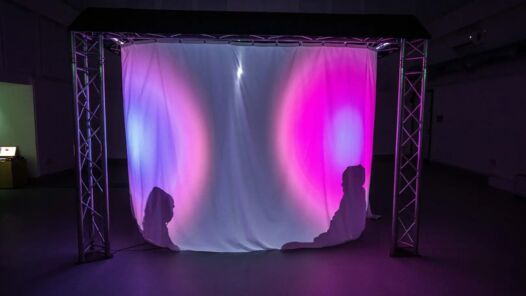
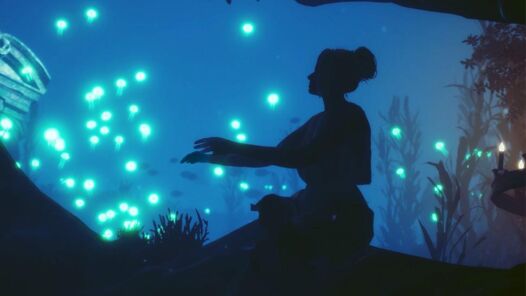
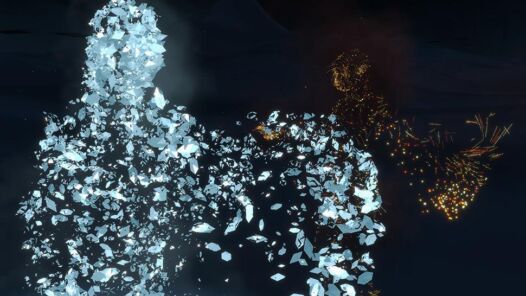
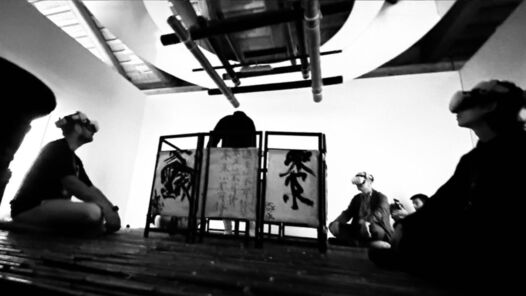
FRAMERATE is a timelapse LIDAR art installation by ScanLAB Projects that showed at SXSW. It encourages the audience to “think and feel in another time scale: geological time, seasonal time, tidal time.” I had a chance to talk with director & ScanLAB Projects co-founder Matthew Shaw about their volumetric capture techniques and desire to create art that helps us understand how machines perceive the world.

LISTEN TO THIS EPISODE OF THE VOICES OF VR PODCAST

https://twitter.com/AudienceFuture/status/1502645630476472325

This is a listener-supported podcast through the Voices of VR Patreon.

Music: Fatality

black-ice-vr-VC231226
Black Ice VR is a sci-fi horror immersive narrative that experiments between switching between 3rd person and 1st person POV, and it was produced as a part of the University of North Carolina School of the Arts’ The Media + Emerging Technology Lab (METL) 6-month Immersive Storytelling Program. (Disclosure METL has been a sponsor of the podcast advertising this program and I’ve served as a mentor on the first two years of the fellowship. See episodes #863, #967, & #970 for more context). I had a chance to have a brief conversation with XR creators Arif Khan (Writer & Director), Darren Woodland Jr. (Technical Artist & Sound Implementer), and Lawrence Yip (VR Developer) about their experience.

LISTEN TO THIS EPISODE OF THE VOICES OF VR PODCAST

This is a listener-supported podcast through the Voices of VR Patreon.

Music: Fatality

prototype-future-rites-VC231101

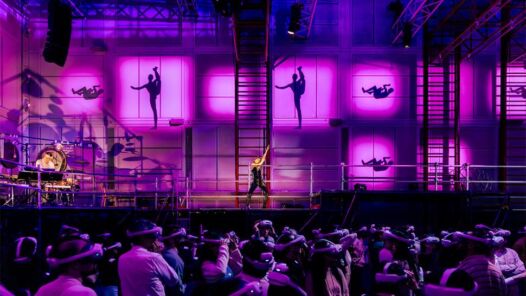
Future Rights was a prototype at SXSW that aimed to bring bringing Stravinsky’s ballet The Rite of Spring into VR. They were showing a short demo at SXSW, but they have plans for a sort of dance autotune and collaborative performance that uses AI to help augment people as they dance along to live ballet performers. I had a chance to do a quick check in with the collaborators on this project, which is a co-production between choreographer Alexander Whitley, director Sandra Rodriguez to get a bit more context on this unique project and how they plan on continuing to develop it in the future.

LISTEN TO THIS EPISODE OF THE VOICES OF VR PODCAST

This is a listener-supported podcast through the Voices of VR Patreon.

Music: Fatality

the-choice

The Choice is an interactive documentary that explores the issue of reproductive rights in Texas. The team uses a special stereoscopic compositing pipeline that combines depth sensor information with a stereo camera capture, but creates a shader to preserve stereoscopic differences of specular reflections in the texture that’s being projected onto a mesh. The end result is that it creates a more plausible face-to-face context to bear witness to testimony of traumatic experiences. The view is given the option to go down some branches by being able to chose which question to ask next, but the end result is trying to recreate experience of having someone share their story with you in the type of one-on-one intimacy that can be recreated within a volumetric context in VR. I had a chance to talk with collaborators Dr. Joanne-Aśka Popińska and Tom C. Hall about their technical innovations, but also the topic of reproductive rights through the personal story of a planned pregnancy that threatened the life of the mother and reveals the peculiarities of Texas politics that has cultivated an environment where doctors are either deliberately withholding or lying to patients if they believe the information they share may lead to decisions by the patient that goes against their personal political beliefs.

LISTEN TO THIS EPISODE OF THE VOICES OF VR PODCAST

This is a listener-supported podcast through the Voices of VR Patreon.

Music: Fatality

celine-tricart-keynote
Céline Tricart is an award-winning VR director who gave one of the main SXSW Keynotes about immersive storytelling, live action role play, and emotional bleed. She started as a writer, went to film school, made a cinematic VR documentary Sun Ladies VR, created a 6-DoF and interactive narrative The Key, has spent over 20 years doing LARPs, and recently starting a game design company. I had a chance to talk about he journey of storytelling across multiple mediums, and dive deeper into her experiences of LARPing, living stories, and becoming so connected to characters and situations that it bleeds into her life. We also unpack how she sees that storytelling is moving from 3rd person POV to 1st person POV and increasing the levels of immersion with VR, AR, immersive storytelling, and LARPing.

LISTEN TO THIS EPISODE OF THE VOICES OF VR PODCAST

https://twitter.com/kentbye/status/1503443050412003342

This is a listener-supported podcast through the Voices of VR Patreon.

Music: Fatality

liminal-lands-VC211437
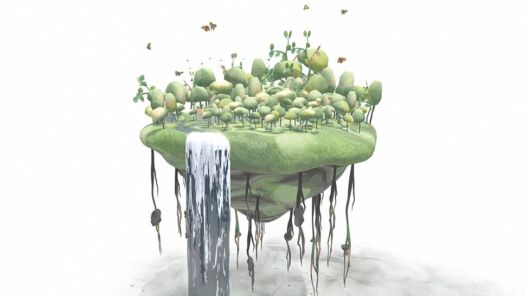
Liminal Lands is an environmental VR piece commissioned by Luma Arles to document and volumetrically capture different objects and organisms within “overlooked wetlands at the edge of the Mediterranean.” It’s a piece where the sound design adapts to your movement around the space, and there are also organic textures projected onto 3D objects that are also reactive to your movements. Artist Jakob Kudsk Steensen applies a fine arts aesthetic and production philosophy to his work, and the end result creates a sort of liminal experience that is hard to fully categorize — perhaps because part of Steensen’s intent is to blur those fixed categories into a more liminal space that spans both scale, but also space and time.

LISTEN TO THIS EPISODE OF THE VOICES OF VR PODCAST

This is a listener-supported podcast through the Voices of VR Patreon.

Music: Fatality

megan-thee-stallion-enter-thee-hottieverse-VC230715

AmazeVR is a VR Concert Platform that premiered part of an experience at SXSW that they will be taking on a 10-city concert tour called Megan Thee Stallion: Enter Thee Hottieverse. I had a chance to speak with AmazeVR’s Head of Creative Eric J. Krueger about the social VR and interactive aspects as well as their unique volumetric compositing of different techniques that gives a really high-fidelity resolution within the Quest. Overall, I was pleasantly surprised by the quality and entertainment within the experience, and the social dynamics of watching this with 100 other people in a movie theater will no doubt provide a visceral first-time VR experience for a lot of people. Their tour will be starting in Los Angeles on April 5th, and then headed to San Francisco, Chicago, Dallas, Houston, Atlanta, Miami, Charlotte, Washington DC, and ending in New York City with the last show on July 3rd.

LISTEN TO THIS EPISODE OF THE VOICES OF VR PODCAST

This is a listener-supported podcast through the Voices of VR Patreon.

Music: Fatality

peabody-awards-nonny

The Peabody Awards have expanded beyond the traditional categories of Entertainment, News, Podcast & Radio, Documentary, Arts, & Public Service, and into new formats of Digital and Interactive Storytelling that include Transmedia Storytelling, Interactive Documentary, Audio, Co-Creation, XR, Social Video, Game + Play, & Interactive Journalism. To mark this expansion, the Peabody Awards announced 16 Legacy Award winners yesterday, and moving forward these Digital & Interactive Stories will be honored at the same level as the traditional broadcast media winners. I was able to have three conversations with some of these Legacy Award Winners that have an explicit VR connection including Nonny de la Peña, Notes on Blindness, & Forensic Architecture.

I also wanted to talk with representatives from the Peabody’s to provide a bit more context to their curation and selection process for these legacy award winners, but also what this expansion means moving forward. I had a chance to talk with Dr. Jeffrey P. Jones, Professor of Entertainment & Media Studies at University of Georgia and Executive Director of the Peabody Awards as well as Yasmin Elayat, an artist, director, & Co-Founder of Scatter as well as a recently added jury member to the newly-formed Digital & Interactive Storytelling Board for the Peabody Awards. We talk about the 16 Legacy Award Winners as well the wide range of new fields and forms of interactive media that are being blended and fused together in this category.

LISTEN TO THIS EPISODE OF THE VOICES OF VR PODCAST

Peabody Award Legacy Winners for Digital & Interactive:

Trailblazer Award
Phil Yu
Like many people of color coming up in the 1980s and ‘90s, Phil Yu had grown accustomed to not seeing himself in mass media. But unlike many, Yu also got angry, and then he found a way to channel it. Angry Asian Man is a blog whose name is an ironic play on the model minority trope and asks: Why aren’t Asians allowed or expected to be angry? The blog began as a way for Yu to express himself and work through how he felt about not seeing his community reflected in media, but found further purpose after successfully helping to mobilize against a clothing company that had released T-shirts featuring racist caricatures of Asian people. This changed the blog’s course from criticism to also include calls to action, providing a look, via an Asian American lens, at everything from pop culture to politics to music to academia. As it became a destination for others seeking community, the blog again transformed into a type of short form conversation. The speed in which today’s audience can call out media for stereotypical representations and/or erasure was built off of the work that Yu has been doing for the last 20 years. He spoke up when others did not. He amplified the work of organizations covering Asian American issues so that they could find broader coalitions. With the message as important as the delivery and consumption medium, Phil continues to shine a light on Asian American issues beyond his blog and into podcasts and publishing. Mainstream media is listening now.

Field Builder Award
Nonny de la Peña
Nonny de la Peña has been at the forefront of emerging media throughout her career, earning the title of “Godmother of VR.” She was an important contributor during a historic period of discovery in beyond-broadcast digital media. Her example catalyzed a generation of storytellers and innovators to invest their genius towards meaning-making in emerging media forms. De la Peña brought important insights to the critiques that virtual reality is too immersive for certain content while making compelling arguments for VR journalism, offering eye-opening examples, and providing best practices for designing embodied experiences of challenging events. Collaborations with leading news organizations set standards in transparency, accuracy, and sourcing for new media. Significant areas of her innovation include room-scale 5DoF immersion; data visualization; flat game-engine storytelling; techniques to bring flat media documentation into immersive space, stimulating technologists to make VR headsets mobile, higher quality, and less expensive; and a platform that democratizes the immersive power of volumetric VR. Her pieces help audiences become intimately aware of the nuances of news issues and events spanning critical subjects like abortion, LGBTQ+ youth, police brutality, conflict zones, solitary confinement, melting ice caps, the Black Lives Matter movement, and more.

Foundational Award
ELIZA (1964)
Primary Credits: Joseph Weizenbaum, MIT Artificial Intelligence Laboratory
In 1966, Joseph Weizenbaum saw the potential in the computers of his day to create a program for the purpose not of processing information or doing scientific calculations, but for the sole intention of making a relationship. This program was ELIZA. ELIZA took the form of what we now call a chatbot. She was presented as a “mock (Rogerian) psychotherapist.” Participants would write to her and she would respond with relevant questions or statements that fueled further conversation. The perception of empathy from ELIZA was so strong that participants often requested privacy while talking to her. It can be easy these days to mistake ELIZA for her descendants—natural language personal assistants like Siri or Alexa. While this software has advanced considerably in the course of the last 50 years, the change in focus to transactional interactions—language as interface—obscures the revolutionary personal narratives that ELIZA created. ELIZA showed the world that a simple computer script could evoke not just one story, but as many stories as there were people who interacted with her. She opened the door to software as a tool not just for business or science, but also for emotional interactions, empathy, and connection.

Institutional Award Forensic Architecture (2010)
Primary Credits: Eyal Weizman
In the 21st century, states’ and corporations’ arsenals include drones, chemical gasses, computational surveillance, sensors, and disinformation, which are launched at targets remotely through complex computer interfaces and dizzying transnational networks. In these next-level true crimes, there is no obvious smoking gun. Conventional forensics cannot adequately find, collect, analyze, and present evidence to make a case against perpetrators. For the last decade, Forensic Architecture has directed a spectacular coordinated response, led by architect Eyal Weizman. The group has written a new language of evidentiary techniques called “counter-forensics” to advance justice and expose state, military, police, and corporate crimes of magnitude on behalf of advocates and affected communities. Using sophisticated architectural techniques such as lidar, radar, photogrammetry, and advanced platform software, for each case they build an elaborate digital 3D model of the scene of the crime. The team then situates individual pieces of evidence “on stage” within frameworks such as open-source data, satellite data, surveillance footage, citizen video, audio, mobile phone meta-data, allowing for the study of the relational dynamics. Forensic Architecture has co-created an entire new academic field and emergent media practice, using digital 3D modeling for human rights investigation and documentary, to speak truth to computational power on a planetary scale.

Always in Season Island (2010)
Fields & Forms: Interactive Documentary, Game+Play, XR
Primary Credits: Jacqueline Olive Additional Production Credits & Partners: Tell It Media, Bay Area Video Coalition
The creators of the virtual project Always in Season Island sought to confront the ongoing legacy of American racial terror following their 2019 documentary film (Always in Season) on the history of the lynching of African Americans, They recreated, in virtual life, the setting of the 1930 lynching in Marion, Indiana, when 10,000 white men, women, and children came to watch the torture and murder of two African American men. Avoiding gratuitous violence, “Always in Season Island” offered visitors tasks to complete and prompts to consider that either encouraged or stopped the lynching from occurring, ultimately pushing the conventions of the documentary form and challenging audiences to intimately examine their own capacities for both dehumanization and change.

The Beast, A.I. Transmedia Experience (2001)
Fields & Forms: Transmedia Storytelling
Primary Credits: Jordan Weisman, Sean Stewart, Pete Fenlon, and Elan Lee
Originally developed by a small team at Microsoft Games as a marketing campaign to support the 2001 film A.I.: Artificial Intelligence, “The Beast” played out over a massive network of fictional websites and other forms of media that combined to tell a sprawling tale set in the world of A.I.: Artificial Intelligence. Following clues hidden in the movie’s trailer and poster, those who found their way into the network were immersed in the storyworld and challenged with puzzles to unlock the next pieces of narrative. This mass-distributed form of storytelling, later dubbed an “Alternate Reality Game,” provided a template for a new way to tell stories over the internet and connected media.

Fatal Force: The Washington Post Police Shootings Database (2015)
Fields & Forms: Interactive Journalism Primary Credits: Steven Rich, Julie Tate, David Fallis
Additional Production Credits & Partners:
The Washington Post Amid outrage over the 2014 police killing of Michael Brown in Ferguson, Missouri, reporter Wesley Lowery suggested that The Post count every fatal police shooting in America. We now know that American police officers shoot and kill about 1,000 people a year, and The Post has consistently made the data accessible through graphics that show with stunning clarity how victims are disproportionately Black—more than a third of unarmed people—and overwhelmingly young and male. The most salient and impactful works of data journalism fill a void and answer crucial questions that the government or private sector choose not to. With the Fatal Force database, The Post’s work over seven years is an unwavering public service in the fight for criminal justice.

Feminist Frequency (2013)
Fields & Forms: Social Video
Primary Credits: Anita Sarkeesian
Following the 2009 launch of her feminist media criticism website by the same name, Anita Sarkeesian advanced our conservations about popular culture, and specifically the representation of gender in media and “geek” and gamer culture, through her Feminist Frequency YouTube channel. Her lightning rod series “Tropes vs. Women in Video Games,” exposed the persistent denigration of women in one of the most popular media forms in the world and angered parts of the largely male gamer demographic, prompting the #GamerGate scandal when she endured vicious online harassment and death threats. Through it all, she continued to tell stories in service of manifesting a better world for women, queers, and other marginalized people.

How Y’all, Youse, and You Guys Talk: NY Times Dialect Quiz (2013)
Fields & Forms: Interactive Journalism
Primary Credits: Josh Katz, Wilson Andrews
Additional Production Credits & Partners: The New York Times
4The New York Times’ work “How Y’all, Youse and You Guys Talk”—or, because of its sheer ubiquity, simply the “dialect quiz”—became a cultural touchstone immediately after its launch in 2013. After answering a series of questions about the words you use, the interactive graphic returns a map that, more often than not, pinpoints where you live or grew up. What started as a personal side project of graphics editor Josh Katz was used by tens of millions of visitors over the span of a few weeks and quickly became at the time the most-viewed piece of content in New York Times history for its ability to tell individuals a personal story about themselves while also drawing a limitless set of maps of cultural geography that still delights new readers today.

Journey (2012)
Fields & Forms: Interactive Narrative
Primary Credits: Jenova Chen
Additional Production Credits & Partners: SONY Computer Entertainment, Santa Monica
Studio Developer: THATGAMECOMPANY INC
Journey is quiet, abstract, and spiritual, yet riveting. As a player you are a robed figure, seemingly lost, while meeting anonymous strangers, other players searching for what they do not know. Journey shook the gaming world when it was released a decade ago, crystallizing the spirit of a burgeoning generation of indie game developers, whose tender, artisanal works recalled the wonder of the earliest days of gaming. In Journey we are encouraged to collaborate with anonymous strangers as opposed to shouting at them for competition or clout. We are asked to slow down, stop talking, and pay attention to history and the ecosystem around us.

Never Alone (Kisima Inŋitchuŋa) (2014)
Fields & Forms: Interactive Narrative
Primary Credits: Sean Vesce, Alan Gershenfeld, Gloria O’Neill
Additional Production Credits & Partners: Cook Inlet Tribal Council, Inc. E-Line Media
“Kunuuksaayuka,” a traditional Alaskan Iñupiat tale, follows a young girl, Nuna, who fights against an eternal winter storm threatening her community’s survival. For the 2014 atmospheric puzzle-platformer Kisima Inŋitchuŋa, this epic journey has been adapted by writer, storyteller, and poet Ishmael Hope (Iñupiaq and Tlingit) into an artful and accessible educational game. Throughout the game, players encounter powerful video vignettes of interviews with 40 Iñupiat Elders who share legends, cultural practices, and traditional world-views. Importantly, the project originated with Upper One Games, a for-profit subsidiary of Cook Inlet Tribal Council established in 2012 as the first Indigenous-owned commercial game company in the United States.

Notes on Blindness: Into Darkness (2016)
Fields & Forms: XR
Primary Credits: Arnaud Colinart, Amaury Laburth, Pete Middleton, James Spinney
Additional Production Credits & Partners: Archer’s Mark, Ex Nihiloin collaboration with Audiogaming, Novelab ARTE France With the Support of CNC
Notes on Blindness: Into Darkness is a beautifully crafted landmark 360 film project that premiered in 2016 in collaboration with an acclaimed flat feature film documentary. While the feature film (Notes on Blindness) told the story of an articulate professor documenting his transition from being a sighted to an unsighted person, the immersive piece gave audiences an experience of echolocation. In effect, the tables were turned, where sighted people shifted from sympathy for someone who “lost” a sense, to a realization that they have been so dominated by eye data inputs to their brain they have become “sound blind. The experience answered the “why immersion?” question with innovative design technique, a compelling experience, an emotional journey, and transcendent aesthetics—all elements of an excellent story.

Papers, Please (2013)
Fields & Forms: Game + Play
Primary Credits: Lucas Pope
Additional Production Credits & Partners: Developer and Publisher: 3909 LLC
First released in 2013, Papers, Please puts players in a position of authority in a dystopian police state. In this strategy simulation video game, the player is in the shoes of an immigration officer stationed in a country bordered by hostile neighbors. With little time to review and process documents, the player must make fast-paced decisions to determine who can cross the border. And with each wrong decision, the consequences can be dire, resulting in life or death stakes for your family who are dependent on your earnings. Papers, Please breaks away from the traditional tropes of kill or be killed but instead focuses on the ever-present complex, intricate, and personal choices resulting from geopolitical forces.

Quipu (2015)
Fields & Forms: Interactive Documentary, Audio Primary
Credits: Maria Ignacia Court, Rosemarie Lerner Additional Production Credits & Partners: Chaka Studios
In the 2015 web-based online documentary Quipu Project audiences click on colored-dot icons, each representing testimonies of more than 100 women from remote mountainous locations across Peru, who share their anonymous stories in voice messages after dialing a free phone number. In recording after recording, they recount being among the nearly 300,000 women (and thousands of men) brutally subjected to sterilization under the government of former president Alberto Fujimori in the 1990s. Quipu Project elegantly fused low-tech phone technology for recording with a high-tech digital interface for the user experience, brilliantly weaving together ancient and new technologies to create a powerful and poetic online collection of co-created, participatory oral histories in a movement for justice and survivor support.

Star Wars Uncut (2010)
Fields & Forms: Co-Creation Primary Credits: Casey Pugh
Additional Production Credits & Partners: Jamie Wilkinson, Chad Pugh, Annelise Pruitt, Bryan Pugh, Aaron Valdez, KK Apple, Todd Roman, Ivan Askwith
Star Wars Uncut—a 2010 online film produced, edited, and directed by Casey Pugh—is a crowdsourced shot-for-shot re-creation of Star Wars Episode IV: A New Hope, consisting of 473 segments, 15 seconds each, created and submitted by fans from all over the globe. In 2009, Pugh created a website where fans could sign up to re-create scenes from the original Star Wars film. When there were multiple contenders, there was a vote to determine whose work made it into the final film, which would then be altered in real time. Star Wars Uncut is a great example of fanfiction involving a beloved IP, a best-in-class show of how crowdsourced content can not only entertain, but also make a familiar story delightful in a new way.

World Without Oil (2007)
Fields & Forms: Co-Creation, Transmedia Storytelling
Primary Credits: Ken Eklund Additional Production Credits & Partners: Electric Shadows, Independent Lens, ITVS Interactive, Writerguy official credits: http://writerguy.com/wwo/metacontact.htm
Unfolding online in 2007, World Without Oil simulated a global oil shortage. Over the 32 days the game ran, each day played out one week of events, charting worldwide ramifications of a global oil shock. The game invited players from around the world to tell their own stories of how the oil shortage was affecting their lives, through blog posts, voice recordings, pictures, video, and other user-generated content. Collaborating on potential solutions to a global crisis, the players together helped create a fictional documentary, raising important questions of sustainability and resiliency.

For more information visit peabodyawards.com and follow #PeabodyAwards #StoriesThatMatter across Peabody Awards social media channels.

This is a listener-supported podcast through the Voices of VR Patreon.

Music: Fatality

on-the-morning-you-wake-4

On the Morning You Wake (To the End of the World) is now available for free on Oculus, and it’s a must-watch immersive story that won the best XR Experience at SXSW. It’s a three-part series that dives into the broader implications of a false missile alert sent to 1.4 million people in Hawaiʻi on January 13th 2018, which grounded the abstract concepts of nuclear non-proliferation into a viscerally embodied and human story about the realities of potential nuclear annihilation.

I’ve previously covered the first of three episodes at Sundance in a Voices of VR Episode #1047 discussion with the developers and impact producers, as well as in another chat featuring one of the co-writers and Indigenous poet Dr. Jamaica Heolimeleikalani Osorio in Episode #1064.

The Morning You Wake manages to translate a very abstract topic into a very personal story that manages to ground the existential threat of nuclear annihilation into an embodied experience as we hear about the range of reactions to this event, which is described in the piece as “nothing happened, but everything changed.” The threat of a nuclear exchange is also unfortunately even more timely as Putin put his Nuclear Deterrent Forces on High Alert on February 27th just days after Russia invaded Ukraine on February 24th.

I had a chance to briefly meet Alexander Glaser at the SXSW premiere of episodes #2 & #3, and he is at The Program on Science and Global Security based in the School of Public & International Affairs at Princeton University. In late 2016 and early 2017 after Donald Trump was elected President of the United States, Glaser’s work in Nuclear Non-Proliferation started to take on addition urgency as President Trump was starting to make threatening statements about North Korea like on August 8th, 2017 when he told the press, “They will be met with fire, fury, and frankly power, the likes of which this world has never seen before.”

It was around this time when Glaser reached out to Games for Change Susanna Pollack on a grant proposal for a VR application that could be used to connect diplomats to technical experts, and their collaboration evolved into using VR technologies to be able to tell a human story about the existential threat of nuclear weapons, which they settled upon the January 13th 2018 false ballistic missile event in Hawaiʻi as the best way to ground huge geo-political issues into very personal and relatable stories of crisis and mortality.

I wanted to follow up with an interview with Glaser and Pollack to get a bit more context on the origins of this project, learn more about how the previous project Notes on Blindness was a catalyst for this project, but also how they’re planning to use it in a number of different impact campaigns to use VR and the power of immersive storytelling to help further the discussion about this topic.

They’re going to be collaborating with a number of existing nuclear non-proliferation movements and organizations, and this VR piece were serve as a tool to help set a shared context to the embodied realities of an issue of nuclear anxiety that’s easy to disassociate from or imagine that the game theoretic dimensions of mutually assured destruction surely will never actually happen. But as the false ballistic missile alert in Hawaiʻi showed, and as the moving nuclear deterrence to high alerts in Russia indicate, then there are no guarantees that the world is immune for either deliberately or accidentally transgressing past some unknown threshold to trigger a nuclear exchange.

As part of Glaser’s work at Princeton, he created a chilling wargaming simulation that he posted to YouTube where it’s collected over 3 million views that he describes by saying, “Our team developed a simulation for a plausible escalating war between the United States and Russia using realistic nuclear force postures, targets and fatality estimates. It is estimated that there would be more than 90 million people dead and injured within the first few hours of the conflict.”

It’s one thing to watch this YouTube video, and then it’s quite another to see a similar situation modelled in Virtual Reality spatially all while there are veiled nuclear threats being talked about as a possible future that is similar enough to the false alert that 1.4 million people in Hawaiʻi lived through. So On the Morning You Wake (To the End of the World) carries an additional urgency and less abstracted context than it originally did when I first saw Episode #1 in January, and I wanted to get a bit more context from Glaser about some of the next viable steps for Nuclear Non-Proliferation and how he sees that an immersive story like this could help push forward this discussion in both the public and policy spheres.

Games for Change will be touring around this piece at different events over the next 12-18 months, and Susanna Pollack gave a bit of a sneak peak for what is being planned for this piece that has now taken on a lot more relevance in the political spheres in a zeitgeist moment that has the potential to deepen the conversation into more radical approaches to nuclear non-proliferation that Glaser speculates may be required to really move the needle on this issue. But it’s a massively huge issue with so many different entanglements amongst other political, economic, and cultural issues as Dr. Osorio points out in Episode #1064.

But now that this experience available for free on Oculus, then you can run your own impact campaigns by watching it, spreading the work, and sharing it with people who you think will resonate with the story. I found it deeply moving and emotional, and there are a number of resources affirmations that the team has on their Get Involved section on their website, but also the Impact Producer Michaela Ternasky-Holland discusses some of these more at the end of our discussion in Episode #1047.

Above and beyond being a really well-told story, this project is also masterfully technically executing being able to somehow magically fit 45-minutes of volumetric storytelling into on immersive experience. I had the opportunity to serve on the jury for SXSW, and we ended up selecting this as a standout winner amongst the 11 other experiences in competition. I collaborated on helping to write up a SXSW XR Jury statement along with Loren Hammonds and Nonny de la Peña about this project that I’ll share here as a conclusion:

ON THE MORNING YOU WAKE (TO THE END OF THE WORLD) is an emotionally impactful and beautifully told story, delivered with stunning technical craftsmanship. This project explores the potential of immersive experiences, refining the grammar of spatial narrative. This particular story deals with the urgency of nuclear disarmament that has very unfortunately come into sharp focus due to current events. It effectively presents a massive geopolitical issue and grounds it in emotional and personal stories, translating what are usually abstract concepts into an embodied context.

LISTEN TO THIS EPISODE OF THE VOICES OF VR PODCAST

https://twitter.com/kentbye/status/1507113532457775113

Here’s the trailer for On the Morning You Wake (To the End of the World)

This is a listener-supported podcast through the Voices of VR Patreon.

Music: Fatality

forensic-architecture
Forensic Architecture is an innovative interdisciplinary, non-profit research group that uses the tools & techniques of architecture to tell spatial stories of state-sponsored violence and human rights. Their 79 investigations since 2010 have be awarded with a Peabody Institution Award as a part of the new category of Digital & Immersive Storytelling. They use the spatial context to weave together many different types of data including “open-source data, satellite data, surveillance footage, citizen video, audio, mobile phone meta-data, witness testimony, and 3D representations of physical objects and people.” They have been pioneering the fusion of this media as they strive to produce a spatial context that is elevated to the rigor of evidence that could be admitted into a court of law. They’ve been using lots of techniques like photogrammetry and reconstruction of 3D models, and they hope one day to put a judge into a virtual reality headset to display some of their spatial stories & spatial contextualization of evidence. They lean heavily into concepts like “situated knowledges” & “situated testimony” to use these spatial contexts to evoke eye witness testimony for state-sponsored violence and human rights violations. I had a chance to talk with Forensic Architecture Research Coordinator Robert Trafford about the underlying design philosophies, and an overview of some of the spatial storytelling innovations that have earned them a Peabody Award.

LISTEN TO THIS EPISODE OF THE VOICES OF VR PODCAST

The Killing of Mark Duggan [uses VR for embodied perspective]

Cameroon’s Secret Torture Chambers

The Beating of Faisal al-Natsheh, Occupied Hebron, Palestine [uses VR for situated testimony]

This is a listener-supported podcast through the Voices of VR Patreon.

Music: Fatality