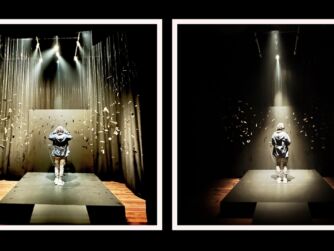
I did an interview with Resh Sidhu, Senior Director of Innovation of Specs and Developer Marketing at Snap, at Snap’s Developer Conference of Lensfest. See more context in the rough transcript below.
This is a listener-supported podcast through the Voices of VR Patreon.
Music: Fatality
Podcast: Play in new window | Download
Rough Transcript
[00:00:05.458] Kent Bye: The Voices of VR podcast. Hello, my name is Kent Bye, and welcome to the Voices of VR podcast. It's a podcast that looks at the structures and forms of immersive storytelling and the future of spatial computing. You can support the podcast at patreon.com slash voicesofvr. So continuing my coverage of LensFest 2025, today's interview is with Resh Sidhu. She's the Senior Director of Innovation of Specs and also leading up developer marketing at Snap. And so I had a chance to sit down with Resh after she had moderated the Q&A with the CEO Evan Spiegel and the CTO Bobby Murphy. And I had a chance to sit down with him And I wanted just to get a sense of the story that Snap is saying in terms of this vision towards spectacles. You know, they've been doing augmented reality lenses for 10 years now. They had a really amazing exhibition tracing the evolution of all these different lenses that they've had over the past decade and focusing on self-expression. So frontward facing cameras being able to overlay these augmented reality effects and to be able to modulate people's identity and to enable people to express themselves in new and novel ways. So they are really innovators of that and have persistently kept that up. And in the process of doing that, they've developed a whole Lens Studio for basically their game engine for developing these types of augmented reality types of experiences. And so they're moving the perspective from facing at someone's face in terms of self-expression, and they're pointing it out at the world to create a completely new paradigm of computing. And they're a social media company. And so they're very interested in finding new ways of connecting people and allowing them to connect with their friends in new and novel ways. But also they have a lot of opinions on what the future of computing might be and what kind of new opportunities might be coming up in terms of commerce and shopping and technology. They've got partnerships with lots of different companies that are out there. And so I had a chance to just kind of get a sense of what's happening with their brand activations, their partnerships, and also cultivating and enabling the developer ecosystem, which is ultimately going to be developing a lot of these different applications. So we're covering all that and more on today's episode of the Voices of VR podcast. So this interview with Rush happened on Thursday, October 16th, 2025 at the Snap Developer Conference of LensFest happening at the Snap headquarters in Santa Monica, California. So with that, let's go ahead and dive right in.
[00:02:20.270] Resh Sidhu: My name is Resh Sidhu. I am Senior Director of Innovation, Specs and Developer Marketing here at Snap. Really, my role is twofold. It's to make sure that we create the tools for developers to succeed and build incredible experiences on our Snap ecosystem. So everything from creating Snapchat mobile lenses to immersive experiences on specs, spectacles, which are wearable. And our goal also, as we look to next year, Evan announced at AWE we are launching specs, which are a consumer-facing version of our future computer.
[00:03:04.394] Kent Bye: Nice. Maybe you could give a bit more context as to your background and your journey into this space.
[00:03:10.322] Resh Sidhu: Yeah, I've spent a lot of time in advertising agencies over 25 years working for the world's biggest brands as a executive creative director, leading creative teams, but my work has always been about that intersection of creativity and technology. I love using technology in a way that can connect people, technology in a way that can create real human experiences, utility, and often working with brands It's helping brands understand how you can use immersive experiences to connect with audiences in a way that they never fathomed. And that love and passion for technology started in my very early days of VR, as you know, and just really being passionate about technology, everything from VR to AR and now AI. What I love to do is embrace those technologies and find ways in which we can create experiences that really impact people's lives. So the journey has been a kind of end-to-end journey. And I came to Snapchat because I absolutely loved all of the AR technology that they had. And the ability to be able to be in a role that brought me closer to developers and also brought me closer to technology has been a real game changer.
[00:04:23.459] Kent Bye: And so here at the LensFest 2025, Snap has a whole exhibition here showing 10 years of augmented reality lenses. And so Snapchat has really been at the forefront of bringing AR technologies to consumers in a way that Snapchat identifying as a camera company of transforming the way that people use cameras. And so just curious to hear some of your reflections on Snapchat and the ways that it really put the camera first and how augmented reality has really transformed the way that people are able to connect to their friends and express their identity and how you start to think around those two things, both identity as well as the connection that these technologies have been able to enable through Snapchat.
[00:05:05.376] Resh Sidhu: Yeah, you know, it's incredible when we think about it. Kent, it's been like 14 years and here today we have like the celebration of like 14 years of lenses over a decade of creation. And what's amazing, we went from vomiting rainbows and puppy dog ears to now some of the most immersive AR and AI lenses that you can imagine. But for Snapchat and for everything that we've been building here, it was always about connecting people. It was always about using technology as a way to bring people together. When you open Snapchat, you open to the camera. And that means that you open to you. It's about putting you first. You're able to connect and express yourselves. And I think that idea of self-expression, no other platform has done it in the way Snapchat has done. And over the period of time that we have done it for, Over a decade, we've been building and developing our technology, creating lenses that allow friends and families to connect with each other. And also, it's so much joy and fun, and it's playful. You know, Bobby said it best at the beginning of his keynote. You know, we've spent over a decade building these lenses, and they are fun, playful, some even a little weird, but they bring joy. And the root of everything is how do they bring people together. So it's been a formidable decade. I'm tremendously excited about what that next decade is going to become.
[00:06:29.025] Kent Bye: Yeah, I know that a lot of Snapchat has been you open the camera and there's like a front facing camera that's pointing at the face of the user, more of the selfie camera. And the spectacles are something that's more head worn and more camera facing out into the world. So just curious to hear a little bit how you start to think around this perspective shift from the first person perspective where you're looking at the individual to looking at the world and how you start to think around how does something like Spectacle start to fit into the DNA of what Snap and Snapchat have been doing, and what's the story that you say for why build head-mounted AR glasses? What is it that you really see as where the future of computing and technology is going to go? Just curious to hear a little bit more around how you start to think around that story.
[00:07:14.133] Resh Sidhu: you know when you think about snapchat you always think about snap as the snapchat platform and lenses but you know what's incredible and over the past kind of decade we've also been solving for a different problem you know and that is like in technology has brought us together in many ways but it also has taken us away from the things that are really important, allowing ourselves to be present. Spectacles is a step towards what the future of computing can be, something that allows us to still be in the real world and actually out and about, but being able to access that technology in a way that feels effortless, but doesn't take us out of the moment. What I love about specs is it meets you where life is, in the moment. And what we're finding and what we're seeing is experiences and lenses that are utility in the moment, whether I'm traveling and it can translate in real time for me, or whether I'm fixing my car and it can help me understand that. Access to that in the moment, in real time, in the real world, is really going to change how we think about computing. We've been tethered to our devices, tethered to screens, but now with specs, we're able to be actually free from that in a way that we never fathomed. I think there's something incredibly exciting about what AR, AI, and the convergence of that is enabling us to do on a wearable device that is fundamentally going to change how we think about needing our mobile phone. It won't be from day one, but it is absolutely going to shift the paradigm of how we think about whether we're working, playing, engaging, learning. There's such a spectrum of what you can do and that's an incredibly exciting era of technology to step into.
[00:09:04.568] Kent Bye: Yeah, there's an analyst that I really look towards for understanding the evolution of technology where it goes through these distinct evolutionary phases where there's an academic idea, custom bespoke enterprise applications that are very handcrafted and more of like location-based entertainment types of context for XR, and then consumer launch where you have people from the general public buying the technology, and then you have the mass ubiquity where the technology eventually gets to the point where everybody's using it. so i feel like a lot of what's happening in the xr industry is that companies like meta have in some ways tried to skip over that enterprise phase and try to go direct to consumer market i was really happy to see at augmented world expo was include location-based entertainment because it feels like that's a real niche where it feels like they're already deploying these glasses that are essentially dev kits but to consumers where they have a way that they're able to get people in and out of these experiences quickly and have a profitable business model to have a bite-sized experience, but it's not requiring the consumer to actually buy and invest into these headsets. So just curious to hear a little bit around the location-based entertainment strategy for as you launch these, because it seems like anyone who's trying to do a consumer launch that there's all these blocks for the price, the cost. It seems like this is where the technology is going, but to really lean upon what's happening in the enterprise spaces, but also LBE to facilitate business models that can help the technology to grow more organically.
[00:10:29.371] Resh Sidhu: Yeah, it's a great question. If we take a step back for a minute, Kent, we were so intentional about launching our developer kit first for Spectacles. We put it into the hands of developers because we really wanted to learn from this community, and we found with Snapchat that's an incredible way to work. By putting it into the hands of developers early, we were able to learn and still are today a tremendous amount from not only in terms of what are they building, what are they loving, what can we improve and Clue are a phenomenal example of that, a success story of that. they were able to take spectacles and monetize that and turn that into a thriving business. We actually had them, they're here today. We talk about them a lot because as you said, it's a great example of not trying to run before you can walk. Wearable glasses are going to be a technology that is going to take a moment to really become habitual to become behavior. It's going to be those early adopters from day one. And these kind of location-based experiences allow people to actually try it out and have a taste for it. And you heard one of the developers ask Evan a great question on stage today. When you think about location-based services and traveling and games and entertainment and sports, it becomes incredibly compelling. Why? these wearables are going to become something that people will want to reach out for. And when they're beginning to engage them in that form, then you know there's a tremendous opportunity for people to be using them on a much more regular and daily basis. And then that's when we cross that chasm from early adopters to really mass market.
[00:12:08.360] Kent Bye: And I know that the fleet management tools seem to be developed in direct response to some of the needs for Include to be able to help manage large sets of these different headsets as they're managing all the power and
[00:12:19.110] Resh Sidhu: We're really, you know, I think something that I will say is that every bit of feedback, we are listening to the developers, we are hearing what you were saying. They wanted Camera Kit to be, you know, it's totally free, but they also wanted to be able to remove the branding and the watermark. We're listening, we're responding to that. The kits to enable spectacles and multiple devices to be connected at the same time is such something so important to those that are doing enterprise experiences and location based experiences. And the feedback that we are getting is like it's a game changer. Thank you for doing that. So we want to hear more from the developer community. And I think this really what it does, Ken, is it sets us up for successful consumer launch. It really helps us understand the need and the desire because you can have the most fanciest tech in the world. You can have all the big marketing budgets in the world. But if you don't have experiences on there that people really care about and want to reach out and use. then it won't succeed. And I believe that we have experiences today on our current Spectacles device that people are absolutely loving and they're real utility experiences. We're finding that those are the ones that help you learn or improve your fitness or, hey, how do I open my fridge and see these ingredients and cook something? In the moment, being indoors and outdoor Those type of experiences, utility based and location based experiences are really becoming the creme de la creme of what we think people are going to gravitate towards.
[00:13:49.028] Kent Bye: I know a lot of what you've also been working on at Snap has been more of these brand activations or working with storytellers and maybe just give a bit more context for the Arcadia production studio that's here at Snap and how you foresee as you move forward if you expect to see more collaborations with these studios, storytellers, ways that you can start to do immersive interactive experiences in maybe theme parks or location-based, site-specific locations, because to me it feels like those are relationships and partnerships that Snap has been building and cultivating over the years, and just curious to hear a little bit more elaboration of what's happening already on the Snap and Snapchat platform, and where you hope that might be going here with Spectacles as they start to launch.
[00:14:33.220] Resh Sidhu: I mean, I think at Lensfest we shared a few of the brands and the partners that we were already working with. Everybody from, you know, Paramount with their Avatar experience to Star Wars and ILM. Who doesn't want to be a Jedi? And what we're finding is, you know, I lead a studio that is an innovation studio and we work on branded partnerships. And what we're finding is that As we enter this new era of spatial computing for brands, it's an incredibly exciting moment. The reason is because brands are always looking for ways to connect with their audience and ways in which are authentic, intuitive. So this now becomes an incredibly interesting platform of how can we connect with a generation, a whole new generation in a whole new different way. So we're seeing truly innovative brands really adopting this early and wanting to be part of that journey with us. And it takes brands that are investing in innovation, you know, and getting in there early to understand, well, what does this mean for us as a brand? And what does it mean for storytelling? What does it mean for a story like Star Wars that is so well loved, but now can exist on AR and AI glasses and I can be a Jedi and move rocks wherever I am for brands, for entertainment, for IP. It's an incredible way to think about a whole new platform that is going to open up a whole new way in which you can connect with audiences and create immersive experiences. We're seeing brands really gravitate towards this. And what's remarkable is the creativity that is coming out because the very nature of spatial computing demands that we rethink what an experience is. This is not a lift and shift from a mobile experience or a web experience. This is creating something net new. So it's forcing brands to really think about their brand story and how they can connect with their audiences. I think early brands that are coming and working with Snapchat are really going to be true innovators and setting the stage for what is going to be a phenomenal decade of brands building experiences that are made for the real world and also made to connect people in ways they never imagined.
[00:16:54.184] Kent Bye: And I know as developers are starting to look at these different platforms and start developing monetization and figuring out what type of business model to build a business around, it's an emerging technology. And so for the last 11 years, I've been watching to see all the different ways that developers have tried to piece together all the different types of different projects they're working on. But as you start to think around these new announcements that are being announced here at the LensFest in terms of Commerce Kit and having the ability to have users buy things within the context of a lens. And also, there is a separate Snapchat program, the Lens Creator program, where you have your lens goes viral enough, then you can potentially get revenue share for some of those. But it seems like the spectacles are going to be small enough that it may not be viable strategies to do spectacles only experiences although you know a lot of these making stuff on the institute you can have it both on the spectacles and on the snapshot platform so there are ways to maybe have things on both realms but i feel like there's going to be things that are only specific to the spectacles platform that may not be viable to rely upon that as a strategy so just curious to hear a little bit more around adding something like commerce kit and how you start to see What type of businesses folks can start to create once they are able to monetize different things within the context of these lenses?
[00:18:11.646] Resh Sidhu: Yeah. You know, what we're trying to do with our lens creator rewards, with our experiences that allow developers to monetize, what we're trying to do is create the platforms where they can build businesses. And I think in the very early days, it's going to be really understanding the developers that are building and the types of experiences that they're creating, and then the audiences that are engaging with that content. Commerce Kit was very intentional. We were hearing from developers, we want to build experiences, we want to build the ability to be able to buy in lens purchases. And so one of the examples we showed was, you know, a yoga lens experience where you can do yoga anywhere out in the world. But then you also might want to buy some yoga items. You know, what I love about spectacles is when you're out in the world, the desire to shop can happen at any time. So why can't I look at the shirt you're wearing now and say, hey, where did you get that from and just order it? With spectacles, I can do that. and to me that is thinking about what the future of commerce and shopping can be why do we have to can't go to a retail store i'm here today i see someone over there i'm like those sneakers are fly i have spectacles on what are they where can i get them from and i've bought them to me that is the future of shopping and when we think about that We've been tied to our phone or tied to our laptop to be able to order things or go into retail store. There is a huge shift that is going to happen in the way that we shop and the way that we buy. And I think setting our community up and our developers up for success with CommerceKit is just us straight out of the gate saying we're going to make it easy. We're going to make it as easy as possible. And at first it's going to be different because it is. I mean, do you remember us shifting from web-based experiences and then buying things on our mobile phone and then buying things from social media, how dubious we all were? And now I'm on social media and I don't hesitate to buy something. And whenever I'm wearing the spectacles, I'm like, I want to be able to shop the world and I can shop from anywhere. For brands, that's incredibly exciting. Again, opens up a whole new avenue of the world becomes your store. So for us, it's tremendously exciting. And we're listening, as I said, we're hearing from developers how we can create the tools to help them monetize. And like you said, Lens Studio is a phenomenal software. You can build on Lens Studio, you can deploy not only to Snapchat, but also to Spectacles. I think that is something that is going to be tremendously exciting. And you know, you heard Bobby and Evan say, who knows? Right now it's on Snapchat ecosystem, but in the future, more to come.
[00:20:51.343] Kent Bye: Well, I had a chance over the last couple of days to see around three quarters of all the different lenses that have been released over the last year or so. And so it gave me a great sense of what has been happening on the platform. And one of the things that was announced at the keynote that I haven't had a chance to see or demo yet is the Adidas partnership. And so I'm just curious if you can maybe elaborate a little bit of what that type of experience might look like. Because you start to see a 3D model of the shoes. And I'm just curious to hear a little bit more around where you expect that to go.
[00:21:16.291] Resh Sidhu: Yeah, I think what's incredible about all of the partnerships that we have and with brands, whether it's an entertainment IP, you can tell your story or bring your story to new consumers in a different way. When it comes to brands and their products, you can shop completely differently. That becomes tremendously exciting. You know, when we go in store, we pick something up, it's tactile, we can touch it. But when we're shopping on our phone and devices, everything is 2D. The world is 3D. What I love about Spectacles is that you can shop in a space, I can see a shoe, I can literally rotate it around, and then I can use AI, which I love, and voice AI to actually say, okay, what about this in a different color? Is this a good shoe for running? It's just making everything so much more seamless and easy and effortless. That means the future of shopping. And for any brands, as I said, and any brands that want to bring their products to audiences in a different way, it becomes incredibly compelling. And we know 3D immersive experiences just have a higher engagement level and there's a higher propensity to buy. And you can bring that up anywhere. indoors, outdoors, you can see the whole range of product inventory. I think that's going to be something that and again, we're working with a number of brands that's going to be tremendously exciting going forward.
[00:22:39.073] Kent Bye: I'm curious to hear
[00:22:41.331] Resh Sidhu: and spectacles. What's that? Don't you want to buy a pair of sneakers and spectacles? I'm like, let's do it, right? I'm curious, Kent, because you've been such a phenomenal voice in the industry. You talked about the shoes, being able to see the shoes and that product experience. But what else is exciting you? I'd love to hear.
[00:22:58.868] Kent Bye: Well, being here at the hackathon, I was adjudged to see all the different experiences that folks are creating with Superbase. And it was only 25 hours that they were able to actually make something, so it was a very short time. But just to hear how we're kind of moving beyond just the game engine logic with Unity and Unreal Engine and moving more into web services types of paradigms of development and so ways that you're bringing other types of software and services and integrating all that in and something like Superbase to have like a Postgres database and have more of like a backend and persistence in the applications and I think it's going to transform what's possible from more of an ephemeral experience into more of a utility application that you come back to and have data stored. But getting away from the game engine logic and more into these other software and services that are more web-based and ways that you're able to kind of start to integrate that So that's what I'm really curious to see here. And also just how Snap has been really developer-centric, and so really listening to the developers and just being at Meta Connect. There was announcements of their new platforms, and it wasn't until the second day of the developer keynote where there was a coming soon, maybe we'll have this available for developers. But Meta seemed to be very focused on their first party apps. and not making it a top priority to say, yes, developers, you can develop for these new platforms that we have. So it was almost like an afterthought. Whereas I think here at Snap, it feels like we're really at the forefront, the emphasis of really working with the developers and really listening to them. And so what I've been impressed with is seeing how location-based entertainment is something that I've seen a lot of traction in over the years. seeing include at awe and then to see here how now there's even like fleet management tools that have been developed in response to some of the early traction that you've seen so you know why i'm excited just to see a company that's out there that is not in the top of the top of the fortune 500 that is got their own priorities but is really working in collaboration with a broader developer ecosystem that i think it's refreshing just to see how much that snap seems to be emphasizing and building those relationships, both with the developer community, but also with the broader ecosystem. Because there is AI that is a disruptive force that, you know, there is a tension between what's happening in Silicon Valley and what's happening in Los Angeles, Snap being based here in LA. You're kind of in a world where you're doing a lot of AI-based stuff with a tech stack, but also trying to, I guess, navigate the privacy implications, but also like how do we move forward in this world that is moving towards AI and AI generated content in a way that isn't just moving like OpenAI and Sora where everything's just AI generated and everything's got the synthetic layer. That's some of the things I'm curious to see as things move forward is how do you navigate this line of where AI is at and how you integrate it in a way that is respecting creators and not displacing that creative work. but in a way that is empowering users, but also how do you navigate being in right relationship to all the different stakeholders when it comes to these AI systems. So that's something that I'm curious to see how Snap continues to walk that tightrope.
[00:26:02.034] Resh Sidhu: I love that. I love hearing you say that. And you're spot on. We've always been developer first. Always. And, you know, it's absolutely truth that this platform exists because of this developer community and this richness and this truth. It's ruthless truth about the product and how we make it better. And there is this... passion to really stay close and forever be a developer-first business. For us, we know the developer community is tremendously important. When our developers are excited about building on something, that just makes the road to the consumer launch so much more successful. And we want them to continue building amazing experiences. And we are constantly listening to them. I mean, our Reddit community... Evan and Bobby are in there every other day listening to the Reddit community. We're hearing what they're saying and we're loving what everybody is building. And I think that really is the epitome of the difference between Snap and other companies out there. For us, we have always, always wanted to build experiences that are human and authentic and actually make computing more human. And that's a very epitome of everything that we've done. And that is from Snapchat, which went from ephemeral messaging to now Spectacles, which lets you be out in the real world, not pulling you away from it and being fully present, but yet enjoying and being able to access technology in a way that is authentic to you. And as Bobby said on stage, our commitment to privacy has never, never wavered. And that will continue into our Spectacles devices as well.
[00:27:40.515] Kent Bye: So just to follow up on the AI, I'm just curious to hear how you navigate the balance between what the developers want to do with all the AI tools versus all the stakeholders with the concerns and rights around the brands and IP holders and how you start to navigate that landscape of AI.
[00:27:56.721] Resh Sidhu: It's always a balance. We know this. And I think we're very intentional about the tools that we put out and democratizing access to the tools. There is going to be more tools coming out on Lens Studio. As I said, Bobby just announced Lens Studio AI. It is phenomenal. you know what it does it enables actually our developer community to have more time doing the things that they want to do when you can use AI to code faster create assets faster it allows you to actually focus on being more imaginative and being more creative and getting content out there at a speed that we could never have fathomed so I think that's tremendously exciting as a business and as a company and None of that happens without making sure that we are committed to privacy, we are committed to creating tools that are safe for our developers and also not rushing out and putting stuff out in the market that is not thought through. So we're very intentional about what we put out. We care about our community, we care about the tools that are in the hands of our developers. And ultimately, we want to create a space where you can do your best work, but it's a safe environment. And that's tremendously important within Snap's DNA. You know, I'm excited that Bobby said our internal teams are just building the coolest AI tools that we can barely keep up. things that we couldn't do two days ago we can now do within hours and I think it's that that we need to lean into as a community. How are we going to harness the creativity of AI and how do we be mindful and respectful about protecting ourselves as a community and protecting our developers and making sure that we actually put out content, put out tools that are thoughtful, considered, that just remain true to what Snap has always been about.
[00:29:46.920] Kent Bye: Great, and finally, what do you think the ultimate potential of all these XR technologies with AR, AR glasses, AI, and all these things together, and what they might be able to enable?
[00:29:58.126] Resh Sidhu: I'm so excited, Kent, about AR and AI finally converging. I'm also excited about how fast our technology has moved. We've moved from big, clunky, bulky devices to something that is a slimmer, more stylish form factor. I'm tremendously excited about the consumer launch next year. Snap has been leading the AR space. We have converged our AR and our AI tools. And we now have a device that we know developers are loving. And at the heart of it, developers are consumers. So we're super excited about that coming to the market. And, you know, We've been first in many things. We were the first to do ephemeral messaging, first to do stories, and we're going to be first to be putting out a consumer product that is actually going to deliver true utility. So I'm tremendously excited to get this into the hands of people. And also remember, this is a journey. This is about an iterative journey where the first consumer-facing specs are out in the world, and then we've got a lot of work to do to continue to build on that and improve on that. And for me, I think a decade from now, I want to be able to shop like we talked about. I want to see that shirt or see those sneakers and be like, yeah, I just want to buy them in real time. I want to learn things that I couldn't fathom learning in a way that I couldn't fathom experiencing. And I think specs are really the future of computing.
[00:31:22.165] Kent Bye: Awesome. Well, Rush, thanks so much for joining me here on the podcast. And, you know, I've been in the industry for 11 years and it just, you know, seeing what's possible with the HoloWins 1 and 2 and see how that form from actors and the spectacles. It's really exciting to see this get out into the consumers next year and to see what already what the developers are doing. So thanks so much.
[00:31:40.387] Resh Sidhu: Thank you for all your support as well. And thank you for being here. I think it's really, the energy is palpable. The excitement is palpable. And when you have such an incredible bunch of developers and industry leaders like yourself excited about it, you know you're onto something magical.
[00:31:55.752] Kent Bye: Awesome. Thank you.
[00:31:56.392] Resh Sidhu: Thank you. Thanks, Ken.
[00:31:58.476] Kent Bye: Thanks again for listening to this episode of the Voices of VR podcast. And if you enjoy the podcast, then please do spread the word, tell your friends, and consider becoming a member of the Patreon. This is a supported podcast, and so I do rely upon donations from people like yourself in order to continue to bring you this coverage. So you can become a member and donate today at patreon.com slash voicesofvr. Thanks for listening.