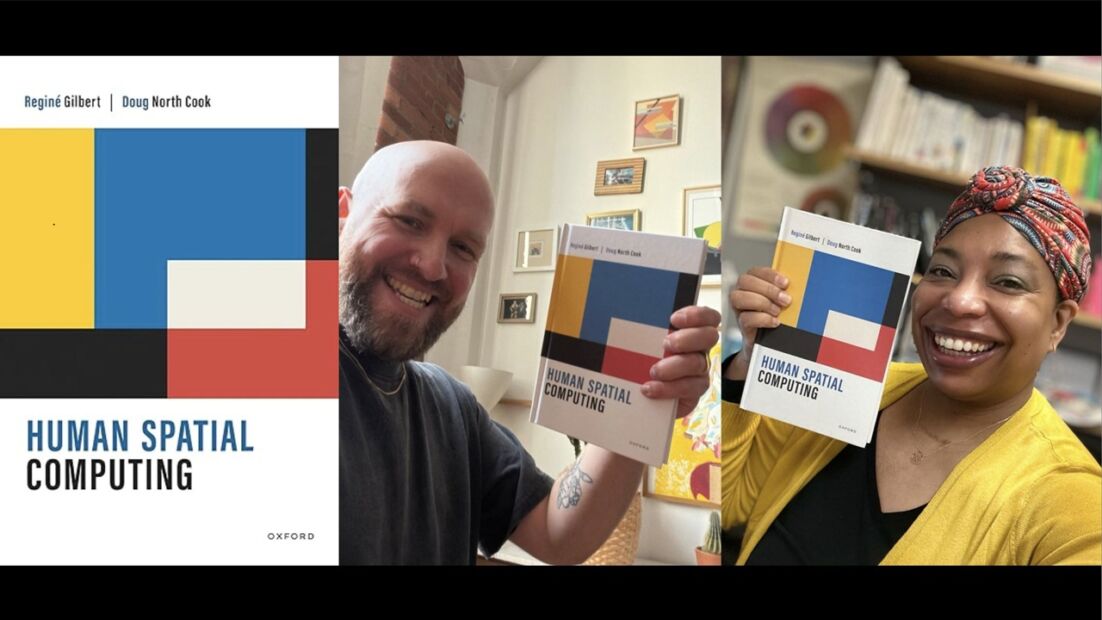
The Human Spatial Computing book was published by Oxford University Press on February 5, 2026, and I had a chance to interview the co-authors Reginé Gilbert and Doug North Cook a few weeks after it launched. They alternative as the lead author on each chapter, which provides a comprehensive overview of designing for XR through a variety of different lenses. The entire book is grounded in human rights and ethics, with a recurring focus on how to design experiences that are inclusive and accessible to as diverse of an audience as possible.
There’s a helpful recap of the history of human computer interaction that goes way back to desire to recreate reality with the Leonardo da Vinci paintings and the imaginative worldbuilding creating new realities by science fiction writers. Other topics covered include insights from universal design principles, industrial design affordances, architecture, neuroscience, and ethics. Here’s a list of the chapters of the book, which we also do a brief recap and overview throughout the course of this interview.
- Why Should We Care about Ethics?
- The Story of Human–Computer Interaction
- What Connects Us All
- Universal Design for Spatial Computing
- Merging Human Creativity with Technology
- The Body
- Affordances of Immersive Technology and the Future of Computing
- Spatial Computing and the Brain
- Where Do We Go From Here?
There are also a lot of questions and activities at the end of each chapter, which makes this Human Spatial Computing book a compelling textbook option for folks teaching XR design.
This is a listener-supported podcast through the Voices of VR Patreon.
Music: Fatality
Podcast: Play in new window | Download